A Mom Found Out Her Daughter Had Been Rehearsing How to Ask for Help With Homework for Almost a Week Before She Finally Said Anything

Most parents expect their children to ask for help when they are struggling with school, but that is not always how it happens. Some children quietly convince themselves that asking questions is a sign they are falling behind or letting someone down.
One mother learned this in a heartbreaking way after discovering that her daughter had spent several days practicing a simple conversation she was too afraid to begin. By the time the truth came out, it changed how their family talked about school, mistakes, and the courage it takes to admit you need help.
A Change That Seemed Too Small to Notice
Melissa noticed that her ten year old daughter, Ava, had become unusually quiet after school. Normally, Ava would rush into the kitchen talking about recess, funny classroom moments, or the latest chapter book she was reading.
Instead, she went straight to her room every afternoon with her backpack. She always said homework was “going fine,” so Melissa assumed nothing was wrong. After all, Ava had always been an independent student.
Evenings Started Looking Different
As the week continued, Melissa realized Ava was spending much longer at her desk than usual. She would hear pages turning, pencils being sharpened, and long stretches of silence.
Whenever Melissa peeked inside the bedroom, Ava quickly smiled and insisted everything was under control. The answers sounded confident, but the smile never quite reached her eyes.
Melissa considered asking more questions but decided she did not want to pressure her daughter.
A Conversation Behind a Closed Door
One evening Melissa walked past Ava’s bedroom while carrying laundry.
She heard her daughter quietly whispering to herself.
“Mom, could you help me with something?”
A short pause followed.
“No, that’s not right.”
Then Ava tried again.
“Mom, I don’t really understand my math assignment.”
Melissa froze in the hallway.
It sounded as though Ava was rehearsing a conversation with someone who was not there.
Pretending She Had Heard Nothing
Melissa did not interrupt.
Instead, she quietly walked away and finished putting away the laundry. She wanted to understand what was happening before embarrassing her daughter.
That night she could not stop thinking about those whispered sentences. Why would a child practice asking her own mother for help?
Dinner Felt Unusually Tense
The next evening everyone gathered around the dinner table.
Ava laughed at her younger brother’s jokes and talked about art class, but she never mentioned homework. Melissa noticed her glance toward the math workbook sitting on the kitchen counter several times before quickly looking away.
It became obvious that something was weighing heavily on her mind.
The Truth Finally Came Out
After dinner Ava slowly carried her backpack into the living room.
She stood beside the couch for several seconds without speaking.
Finally she took a deep breath.
“Mom… could you maybe help me with math?”
Melissa smiled gently and said, “Of course.”
Instead of looking relieved, Ava burst into tears.
A Week of Practicing One Sentence
Once Ava calmed down, Melissa asked what had happened.
Ava admitted she had been practicing how to ask for help almost every day for nearly a week. She kept worrying that her mother would think she had not been paying attention in class or that she was becoming lazy.
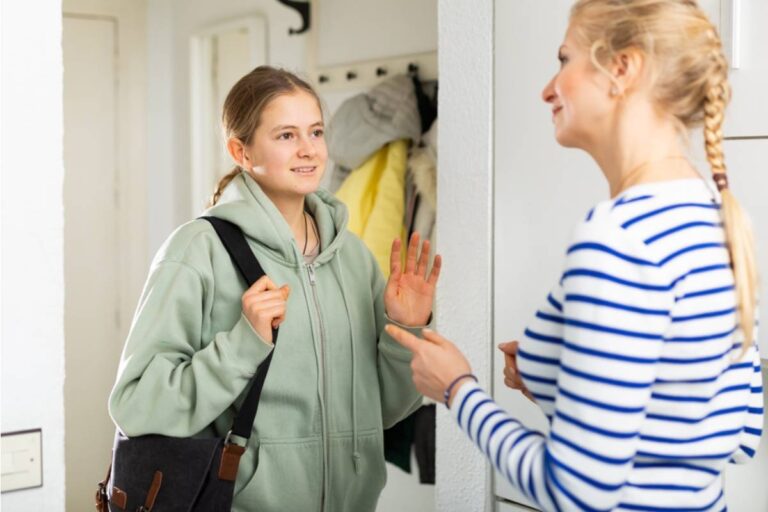
Every afternoon she stood in front of her bedroom mirror trying different ways to ask.
Each version sounded wrong in her own mind.
A Classroom Experience She Never Mentioned
As they worked through the assignment together, Ava quietly shared something she had never told anyone.
Earlier that month another student had asked several questions during math class. A few classmates sighed loudly and whispered that the lesson was taking too long.
Although the teacher kindly answered every question, Ava decided she never wanted to be the reason other students became impatient.
From that day forward, she stopped raising her hand whenever she felt confused.
Looking Beyond the Homework
Melissa realized the math problems were only part of the issue.
The real struggle was fear.
Ava had convinced herself that asking questions disappointed people. She believed adults expected her to understand everything immediately because she had always earned good grades.
Melissa gently explained that struggling with new material was normal, even for excellent students.
Reaching Out to the Teacher
The following morning Melissa sent a thoughtful email to Ava’s teacher.
She did not blame anyone.
Instead, she explained what Ava had shared and asked whether there were ways to encourage students to feel more comfortable asking questions.
The teacher responded with genuine concern and thanked Melissa for letting her know.
She admitted she had never noticed how those classmates’ reactions might affect quieter students.
A Small Change Inside the Classroom
The next week the teacher introduced an anonymous question box.
Students could write down anything they did not understand without putting their names on the paper. At the beginning of each math lesson, the teacher answered several questions from the box.
To everyone’s surprise, it quickly filled up.
Many students had been confused about the same topics but were too embarrassed to admit it aloud.
Ava realized she had never been the only one struggling.
Confidence Began Returning
At home Melissa changed her evening routine.
Instead of asking, “Do you have homework?”
She started asking, “What was the hardest thing you learned today?”
The question made difficult moments feel normal instead of embarrassing.
Soon Ava began sharing challenges before they became overwhelming.
Sometimes she even laughed about mistakes that would have upset her only weeks earlier.
An Unexpected Moment at the Library
One Saturday Melissa and Ava visited the local library.
While choosing books, they overheard a younger boy telling his father he did not understand fractions.
Without thinking, Ava smiled and quietly said, “It’s okay to ask. I had to ask for help too.”
The boy nodded and continued talking with his dad.
Melissa watched the interaction with quiet pride.
Her daughter had gone from fearing those words to encouraging someone else to say them.
A Note Hidden Inside a Notebook
At the end of the school year Melissa found a folded piece of paper tucked inside one of Ava’s notebooks while cleaning out her backpack.
It contained several handwritten versions of the same sentence.
“Mom, can you help me with my homework?”
“I think I need help.”
“I don’t understand this.”
Some lines were crossed out. Others had tiny corrections written above them.
Melissa realized she was holding the evidence of a conversation her daughter had rehearsed over and over before finding the courage to speak.
She hugged Ava that evening and told her she never had to practice asking for help again. Their family had learned something much more important than a math lesson. They learned that confidence is not built by pretending to know every answer. It grows when children discover they are safe admitting what they do not know. From then on, questions became welcome in their home, mistakes became part of learning, and no one ever had to stand alone rehearsing a request for help behind a closed bedroom door.