A Mom Says Her Son’s Best Friend Has Been Eating Lunch Alone Every Day for Three Weeks and None of the Teachers Have Said a Word

It started in the cafeteria line when she saw her son sit down without his usual friend. The other boy was already seated at a table by himself, quietly opening his lunch with no one around him. At first she assumed it was just a one off situation, maybe a missed connection with classmates that day. But when she looked again the next afternoon, the same boy was in the same seat alone. Her son did not seem to notice at first, focused instead on his own group of friends. Still, the pattern was already forming even if no one was naming it yet.
A small detail that made her pause
On the third day, she watched as her son waved briefly at his friend but did not sit with him. The boy waved back, then lowered his eyes and stayed where he was. The rest of the table continued talking without acknowledging him. There was no obvious conflict or argument, just separation that looked too consistent to be accidental. The mother asked her son later if everything was okay between them. He shrugged and said they were still friends, just not sitting together right now.
The silence from teachers that felt strange
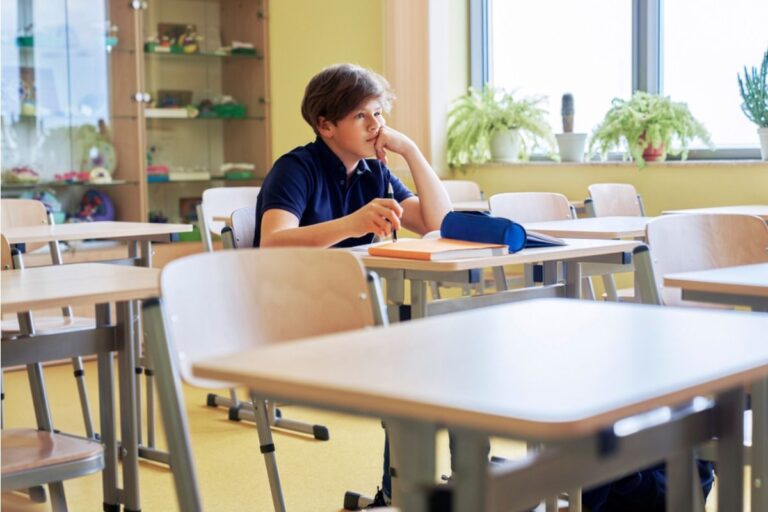
A week passed, and she began wondering why no staff members seemed to intervene. The boy continued sitting alone every lunch period, always in the same corner table. Teachers walked past him regularly without stopping or commenting. It did not look like disciplinary isolation, just quiet absence. That lack of attention made her more uneasy than the situation itself. She expected at least someone would have noticed.
A conversation with another parent reveals a gap
She mentioned it casually to another parent during pickup, expecting reassurance. The other parent paused and said they had not heard anything about it. When she described the pattern, they seemed surprised but unsure how to respond. They suggested kids sometimes change groups naturally without it being a problem. That answer did not match what she had been observing daily. It felt too consistent to be just a phase.
Her son gives a vague explanation
That evening, she asked her son again why his friend was eating alone. He said the friend had just been “doing his own thing lately.” When she pressed for more detail, he said nothing bad had happened, they just sat separately now. His tone suggested it was not something he had thought deeply about. That lack of concern bothered her more than any conflict would have. It felt like something had quietly shifted without anyone addressing it.
The cafeteria observation that changed her perspective
She decided to go into the school early one day and observe during lunch. From a distance, she saw the boy walk in and scan the room before sitting alone again. A few students passed by his table but did not join him. No one teased him or spoke to him, but no one included him either. It was a kind of invisible separation that looked intentional without being openly hostile. That made her realize this was not a single event but an ongoing pattern.
A teacher’s brief response raises more questions
She emailed one of the teachers asking if there had been any issues with the student socially. The response came later and was very general, saying students often adjust friendships throughout the year. There was no mention of concern or intervention. That neutrality felt odd given what she was seeing daily. It suggested either nothing had been reported or it had not been considered serious. Either possibility made her more unsettled.
Her son’s friend opens up unexpectedly
One afternoon, the boy ended up at their house for a short visit. While the kids were in another room, he quietly mentioned that lunch had just become awkward over time. He said he was not invited to sit with the group anymore, but no one had told him directly why. He did not seem angry, just confused about how it happened. That explanation changed the situation from a misunderstanding to a gradual exclusion. It was not a single incident but a slow drift.
The group dynamic that no one addressed
The mother started paying closer attention to how her son’s friend interacted with other students. He was not completely alone in class or during activities, but lunch remained consistent isolation. Other kids seemed unsure whether to include him, often hesitating before walking past. That hesitation suggested an unspoken rule rather than random choice. No one appeared openly responsible, yet the outcome was the same every day. It was exclusion without confrontation.
A subtle shift in her son’s awareness
After a few more days, her son began noticing the pattern too. He said it felt like his friend just stopped “joining in” naturally. When asked if anyone had told him not to sit together anymore, he said no. That answer made the situation harder to explain. It suggested social separation without a clear cause or decision point. The ambiguity made it difficult for anyone to step in.
A school event reveals the divide more clearly
During a school activity, students were grouped randomly for projects. Her son and his friend were placed together briefly but ended up splitting tasks unevenly with others. The friend was quietly reassigned between groups without comment. No teacher addressed the shift directly. It felt like participation was happening, but inclusion was still uneven. That contrast made the lunch situation even more noticeable.
Her attempt to raise it officially
She finally contacted the school administration to ask if they had observed any isolation concerns. The response was cautious, stating that social grouping was part of normal development. They said they would monitor the situation but did not see clear evidence of bullying. That answer did not match what she had witnessed repeatedly. It left her feeling like the situation existed in a space between concern and dismissal. Nothing concrete was being named.
The quiet reality that remains
Over time, the boy continued eating lunch alone most days. No clear reason was ever confirmed publicly, and no formal action was taken. The school continued functioning normally around it. Her son still interacted with him in class but rarely at lunch. What remained was a pattern everyone could see but no one fully addressed. The silence around it became part of the routine itself.