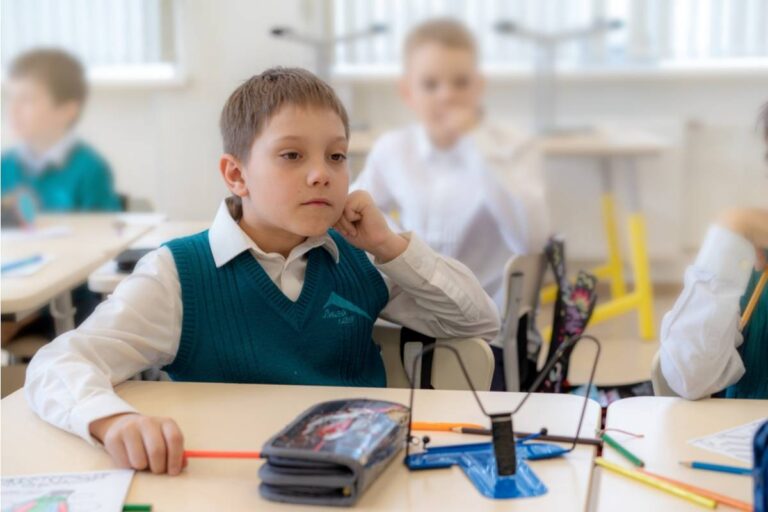
Dad Says He Refused to Let His Son’s Teacher Keep Calling on Him to Demonstrate Problems He Hadn’t Learned Yet in Front of the Class

When my son started sixth grade, he actually looked forward to math class. He liked solving puzzles, finished his homework without much help, and rarely complained about school. That changed within a few weeks when he began saying he hoped his teacher would forget he existed. At first I assumed he was exaggerating because middle school can be overwhelming. Then I learned what had been happening almost every day during math lessons.
A Routine That Left Him Frozen
My son told me his teacher regularly called on students without warning to solve new problems on the whiteboard. Normally I would not have objected because participating is part of learning. The problem was that she often called on students before explaining the lesson. He would stand in front of the class staring at equations he had never seen before. His classmates would whisper guesses while he struggled to figure out where to even begin.
His Confidence Started Disappearing
Within a month, he stopped raising his hand altogether. Homework that used to take twenty minutes suddenly stretched into an hour because he second guessed every answer. He told me he felt stupid before math class even started because he expected to be embarrassed again. My wife noticed he complained of headaches every Sunday night. We both realized this was becoming more than ordinary school stress.
The Teacher Saw It Differently
I emailed his teacher to ask why my son kept being selected for demonstrations before instruction. She replied that productive struggle helped students develop critical thinking skills. According to her, nobody was expected to have perfect answers during those activities. She believed working through mistakes publicly benefited the entire class. I understood the educational theory, but it did not match what my son was experiencing.
The Notebook Told Another Story
One evening I flipped through his math notebook while helping him study. Several pages contained half finished problems with notes like “Got stuck at the board” or “Everyone was waiting.” On one page he had erased an answer so aggressively that the paper nearly tore. It looked less like schoolwork and more like evidence of frustration. Seeing those pages made my concern impossible to ignore.
Another Parent Reached Out
A father from my son’s class called after hearing I had contacted the teacher. His daughter had been coming home upset for the same reason. She told him students secretly hoped someone else would be called because nobody wanted to stand at the board before learning the material. Apparently several classmates had started pretending not to make eye contact with the teacher. The pattern was affecting more than just my son.
I Sat in on a Class
The principal allowed me to observe one morning without the students knowing why I was there. About fifteen minutes into the lesson, the teacher wrote a brand new type of equation on the board. Before explaining it, she asked my son to solve it in front of everyone. He stood silently for several seconds while nervous laughter spread through the room. Watching it happen with my own eyes made it clear why he dreaded math.
A Conversation After the Bell
After class, I politely asked the teacher why she had chosen him again. She explained that she intentionally picked different students so everyone would experience the challenge. I told her there was a difference between encouraging effort and putting children in situations where they had no tools to succeed. She insisted the discomfort was temporary. I replied that my son’s confidence had been disappearing for weeks.
The Principal Asked More Questions
The principal invited several students to share their experiences privately. Without speaking to one another beforehand, they described nearly identical feelings. They said they were afraid of making mistakes before they even understood the lesson. One student admitted she sometimes pretended to search her backpack just to avoid being noticed. Their stories revealed a classroom culture built more on fear than curiosity.
The Lesson Structure Changed
The following week, the teacher introduced a different routine. She demonstrated the concept first, then let students practice in pairs before inviting volunteers to explain their thinking. Students were still encouraged to make mistakes, but they had a chance to understand the material beforehand. The room felt noticeably calmer during my second observation. Even students who had stayed silent before began participating.
My Son Raised His Hand Again
A few weeks later he came home excited about solving a difficult problem during class. This time he had volunteered after practicing with his group. He admitted he still felt nervous walking to the board, but it was a different kind of nervous because he actually knew what he was trying to do. Instead of fearing humiliation, he wanted to see whether his solution worked. That small shift changed everything.
The Teacher Shared an Honest Reflection
At our final conference, the teacher admitted she had underestimated how her approach affected quieter students. She said she had focused so much on encouraging resilience that she overlooked the difference between challenge and public embarrassment. She thanked the families who had spoken up respectfully instead of simply requesting transfers. Hearing that meant a lot because it showed she had genuinely reflected on the feedback. My son listened quietly before smiling for the first time in one of those meetings.
Looking Back on the Decision
Some people later told me I should have trusted the teacher’s methods without questioning them. I disagree because parents and teachers are supposed to work together, not avoid difficult conversations. My son did not need school to become easier. He needed the opportunity to learn before being asked to perform. By the end of the year, he enjoyed math again, and that was all the proof I needed that speaking up had been the right decision.