
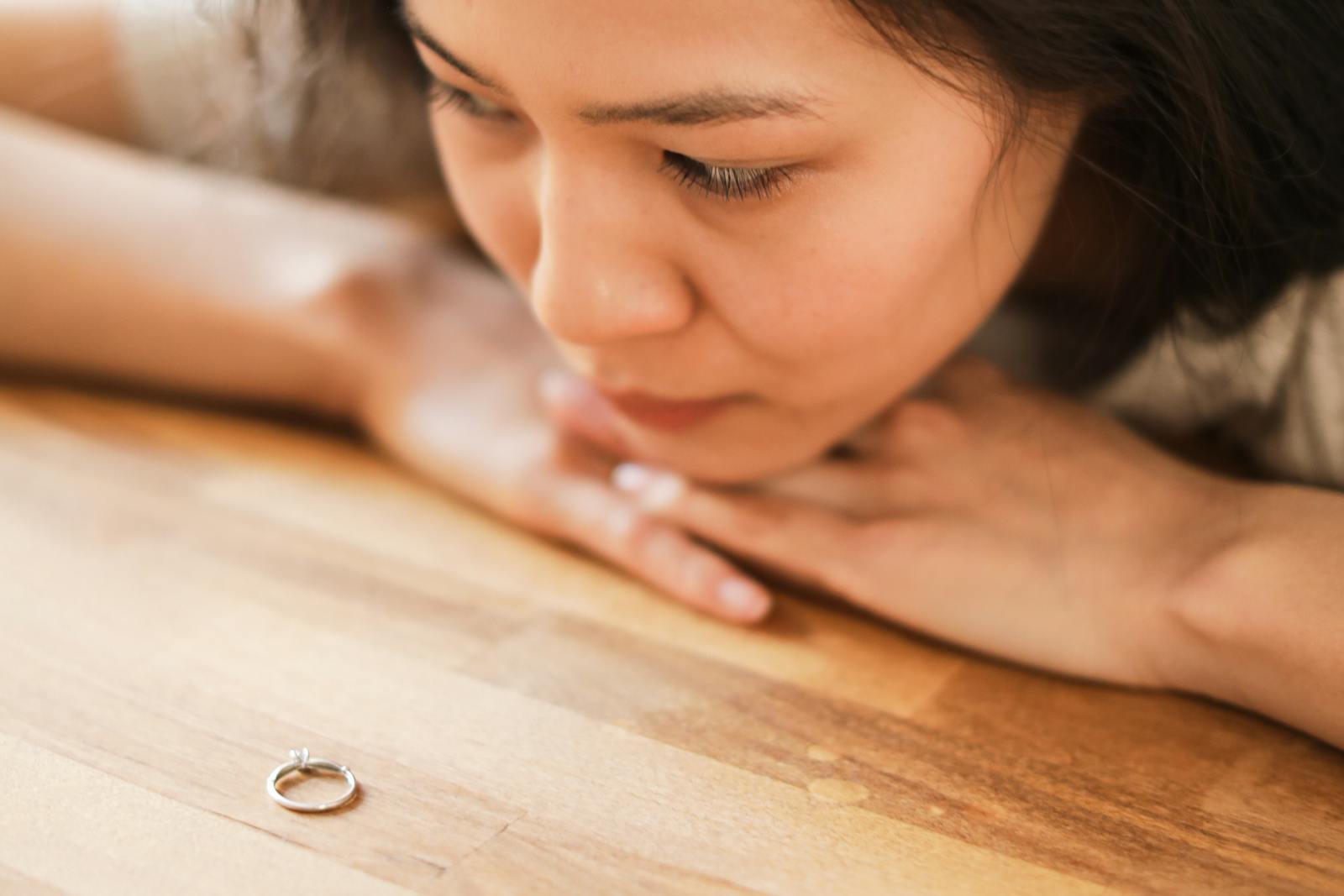
Margaret Jan Feike Was Pregnant With Her Fourth Child When Her Husband Died Suddenly. A Relative Told Her, ‘This Will Make Them Stronger.’

In April 2000, Margaret Jan Feike’s husband, Keith, died suddenly. She was left a single mother of three, and she was pregnant with a fourth. Their youngest daughter, Dianna, was born three weeks later.
In the middle of that grief, one of Keith’s relatives offered a line meant as comfort. The relative said there was no reason to feel sorry for Feike and her young children, because “This will make them stronger.” Those five words stayed with her for years, she wrote in an essay first published by HuffPost and republished by BuzzFeed on Nov. 19.
A Marriage That Began in 1989
Feike and Keith married on March 4, 1989. Eleven years later, he was gone, and she was raising three children while expecting a fourth.
Dianna’s birth, three weeks after her father’s death, meant the family’s newest member arrived into a house already in mourning. Feike was caring for a newborn and three young children while grieving her husband.
The relative’s words were meant to look on the bright side. To Feike, they implied that her children would somehow come out ahead because their father had died.
Years of Being ‘Strong’
The loss of her husband turned out to be the first of many hard years. In her essay, Feike describes going through bankruptcy and foreclosure and losing her job. Her oldest daughter used heroin. Her father developed Alzheimer’s disease, and her mother died of terminal cancer.
Through all of it, Feike kept going. Eventually, a therapist named Elizabeth gave her a name for what she was feeling: “resilience fatigue.”
The idea runs against the way people often talk about hardship. The American Psychological Association describes resilience as the process of adapting to difficult or challenging life experiences, and says outlook, social support and coping strategies all shape how well people adapt. Hardship alone is not on that list.
What Helped Instead
Feike’s recovery came through treatment and time. She took antidepressants and anti-anxiety medication and went through cognitive therapy and EMDR. The APA describes EMDR as a structured therapy in which a person briefly focuses on a traumatic memory while receiving side-to-side stimulation, usually eye movements, to make the memory less vivid and less painful.
Seven years later, she reports that her mental health is better and that her children are doing well. Her older daughter became a psychiatric nurse. Her younger daughter is working toward a nursing degree.
Feike also points to research. Citing the Society for Personality and Social Psychology, she writes that “the only type of growth that seems to arise consistently is deepened relationships” after adversity, and that this happens when supportive relationships are already there.
What Not to Say to a Grieving Parent
Her conclusion is simple. “Pain does not build resilience; lending support does,” she writes.
She doesn’t offer a script. Instead, she argues that “it’s better to say nothing than to imply they’ll somehow benefit or be improved as a result of their misfortune,” and that a sympathetic ear can be enough. Her personal essays on grief have also appeared at Modern Loss, an online community built around honest writing for people navigating loss.
For a widowed parent raising young children, the difference is concrete. One kind of comment asks the family to find meaning in a loss. The other simply stays with them in it.
Parent Diaries has shared other stories of parents navigating loss and family expectations, including a widow who regrets letting her husband’s family take over their holidays and Ashley Salazar, who let relatives raise her daughter.
Get stories like this by email. Sign up for The Parent Diaries Letter.
This article was produced with AI assistance and edited for accuracy against the sources linked above.