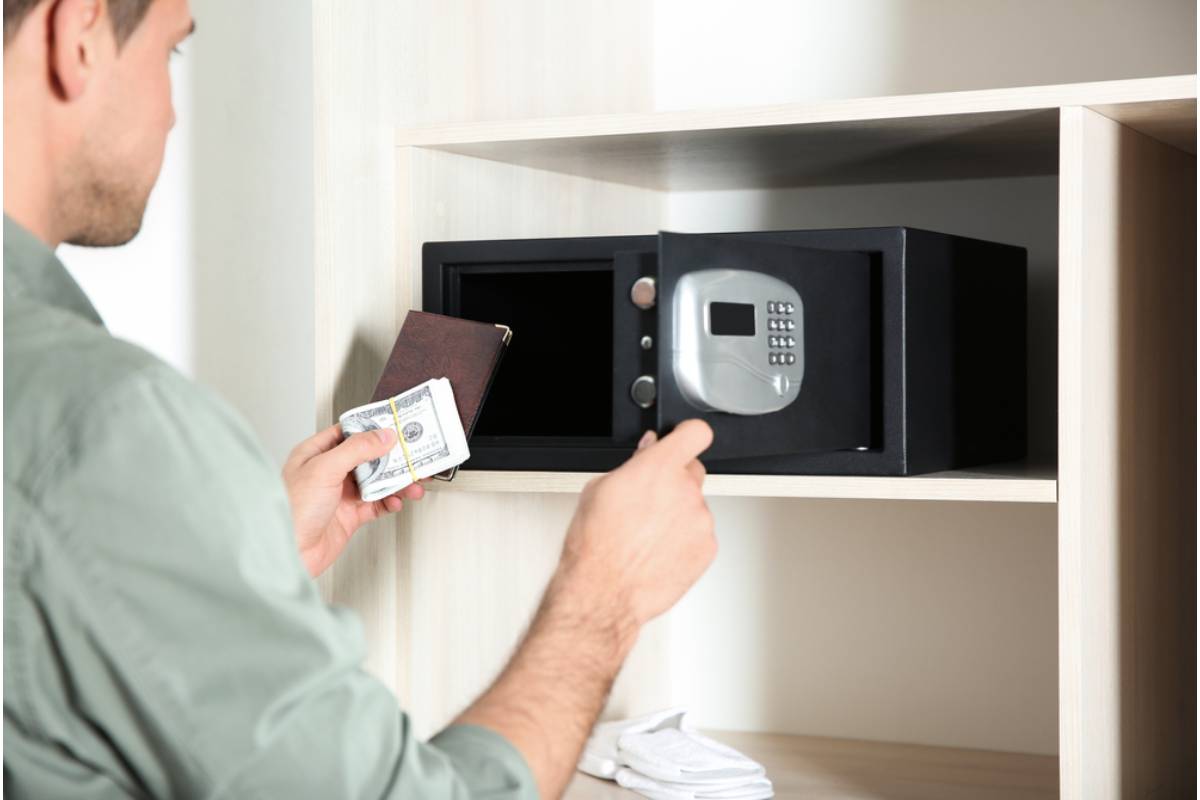
A Dad Says His Teen Started Locking Everything in a Safe, and Now Trust Inside the House Has Completely Broken Down

When 17 year old Brandon Hayes from Texas started locking his personal belongings in a small safe in his bedroom, his father assumed it was just a phase of wanting privacy. But over time, more items disappeared into that safe, and the atmosphere at home began to shift.
What once felt like an open household slowly turned into a place where everything required permission. The safe became more than storage. It became a symbol of growing distance between father and son. And soon, trust inside the home began to crack in ways neither expected.
The First Item That Went Into the Safe
It started with a notebook. Brandon said it was personal and did not want anyone reading it. His father agreed without much thought. But the next day, Brandon added headphones, then documents, then his phone charger. Each addition felt small on its own, but together they formed a pattern.
A Father Notices the Change
Brandon’s father, Mark, first realized something was different when he saw the safe on the desk. It was small, black, and locked with a code. When he asked about it, Brandon simply said it helped him stay organized. Mark nodded, but he could not ignore the growing distance in his son’s behavior.
Conversations Start Getting Shorter
At dinner, Brandon began keeping his answers brief. When asked about school or friends, he responded with one or two words. Mark tried to engage him more, but the effort felt one sided. The silence between them became more noticeable than the conversation itself.
A Routine Changes Without Explanation
One evening, Mark noticed Brandon checking the safe before leaving for school. Then again when he returned. It became part of his daily routine. When asked, Brandon said it was nothing important. But the repetition made it feel like something very important was being protected.
A Request That Gets Denied
Mark once asked if he could borrow a charging cable from the safe. Brandon refused. The refusal was polite but firm. Mark was surprised at how quickly the boundary was drawn. It was the first time he felt excluded from something inside his own home.
A Mother Tries to Mediate
Brandon’s mother suggested that Mark give him space. She said teenagers often go through phases of privacy and control. Mark agreed in theory but struggled emotionally with it. He felt like space was turning into separation. The house felt quieter each day.
School Becomes a Second Point of Concern
A teacher later mentioned that Brandon had become more withdrawn in class. He avoided group discussions and kept his belongings close. When asked about home life, he changed the subject. The teacher suggested that something might be affecting his sense of trust.
The Safe Becomes a Symbol
By this point, the safe was no longer just an object. It represented something larger. Mark began noticing how often Brandon checked it before interacting with anyone. Even conversations seemed paused by the presence of it. It was as if everything important was being kept behind a locked barrier.
A Heated Exchange Finally Happens
One night, Mark asked Brandon directly what he was hiding. The question led to a sudden argument. Brandon said he was protecting his privacy. Mark said he felt shut out of his own son’s life. The conversation ended with both of them walking away frustrated.
A Family Dinner Without Words
The next family meal was unusually silent. Brandon barely spoke. Mark avoided eye contact. His mother tried to keep the conversation going, but it felt forced. The safe in Brandon’s room seemed to sit in everyone’s mind even though it was not in the room.
A Discovery That Deepens the Rift
Mark later noticed that Brandon had started writing things down before locking them away. He never shared what those notes were. When asked, Brandon said they were not meant for anyone else. The secrecy made Mark more uneasy than before.
A Counselor Suggests Distance and Dialogue
The family eventually sought advice from a counselor. They were told that trust issues often grow when communication is replaced by assumptions. The counselor suggested structured conversations instead of confrontations. Both father and son agreed reluctantly to try.
A First Attempt at Rebuilding Trust
During one conversation, Brandon explained that he felt judged whenever he left things out in the open. Mark admitted he felt excluded and worried. For the first time, both spoke without interrupting. It was not a solution, but it was a start.
The Safe Stays, But Something Changes
Brandon did not stop using the safe, but he began leaving some things outside it again. Mark did not demand access, but he asked more questions with less pressure. The tension did not disappear, but it softened slightly. Trust was still fragile, but no longer completely broken. And inside the house, both father and son were slowly learning how to share space again without fear.