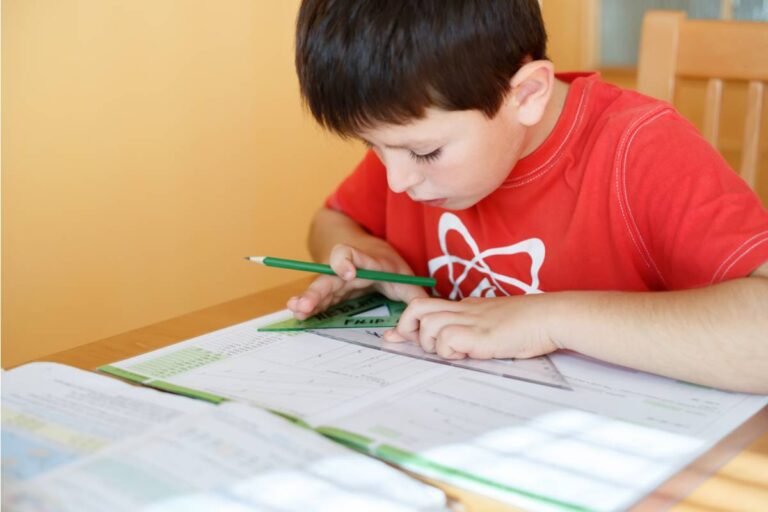
A Mom Says Her Son’s Teacher Told the Class to Raise Their Hand if Their Parents Help With Homework, and He Was the Only One Who Didn’t Raise His

Rebecca never expected a casual question after school to leave her feeling completely unsettled. Her nine year old son, Mason, tossed his backpack onto the kitchen floor and quietly asked if parents were supposed to help with homework every night.
She answered that some families did and some did not because every household was different. Mason nodded without saying much else, but something about his expression told her the conversation was far from over. She soon discovered that a single moment in his classroom had made him question whether he was facing school completely alone.
An Ordinary Lesson Took an Unexpected Turn
Earlier that day, Mason’s teacher paused before beginning a math lesson and asked the class a simple question. “Raise your hand if someone at home helps you with homework.” Nearly every hand went up without hesitation. Mason looked around the room, kept both hands in his lap, and hoped nobody would notice. Unfortunately, the teacher did.
Every Pair of Eyes Turned Toward Him
The teacher glanced around the classroom, smiled politely, and said, “Looks like almost everyone has support at home.” Then she noticed Mason sitting quietly. Several classmates turned to look at him after realizing he was the only student with his hand down. Nobody laughed, but the silence felt worse than teasing. Mason later admitted he wished the moment would end as quickly as possible.
There Was More to the Story Than Anyone Knew
Rebecca worked evening shifts at a local hospital while Mason’s father drove long distance delivery routes throughout the week. Most nights Mason completed his homework at the dining room table by himself before either parent made it home. If he became confused, he reread his notes or checked examples from class until he figured things out. His parents always reviewed report cards and attended conferences, but nightly homework help simply was not possible. Mason had never considered that unusual until that day.
A Classmate Asked an Innocent Question
During recess, one of Mason’s friends walked beside him and casually asked, “So who teaches you your homework?” Mason shrugged and replied that nobody did because he handled it himself. His friend looked genuinely confused and said he could not imagine finishing assignments without his mom sitting nearby. The conversation was brief, but it stayed with Mason for the rest of the afternoon. For the first time, he wondered if independence looked like neglect to other children.
Rebecca Heard the Truth at Dinner
That evening Rebecca noticed Mason barely touched his meal. After several minutes of quiet, he finally asked whether she wished she had more time to help him study. Rebecca immediately put down her fork and asked what had happened. As Mason described the classroom discussion, she felt a knot form in her stomach. He quietly admitted, “It felt like everyone knew something about my family that I didn’t want them to know.
The Teacher Was Surprised by the Phone Call
The next morning Rebecca called the school and asked if she could speak with Mason’s teacher. She remained calm and explained why the classroom question had upset her son. The teacher sounded genuinely surprised because she believed she had been encouraging parent involvement. She admitted she never considered how the question might affect children whose families had different schedules or circumstances.
Another Student Shared a Similar Experience
Later that week the school counselor mentioned Rebecca’s concerns during a staff discussion without identifying Mason. One teacher quietly admitted another student had once cried after a similar classroom activity involving family volunteers. That child lived with a grandparent who worked multiple jobs and could rarely attend school events. The conversation reminded several teachers that seemingly harmless questions often carried hidden emotional weight. They realized students rarely explained those feelings out loud.
Mason’s Homework Folder Told a Different Story
When the teacher reviewed Mason’s assignments more carefully, she noticed something she had overlooked for months. His homework was consistently neat, complete, and thoughtfully organized. Whenever he made mistakes, he corrected them after reading classroom feedback instead of relying on someone else to point them out. She realized he had quietly developed strong problem solving habits on his own. His independence deserved recognition instead of becoming a reason to feel isolated.
The Class Had an Honest Conversation
Rather than pretending the moment had never happened, the teacher addressed the class a few days later. She explained that families support learning in many different ways and that no two homes look exactly alike. Some parents help with homework, others work evenings, some speak different languages, and some encourage their children simply by asking how school went. She apologized for asking a question that might have made anyone feel left out. Several students nodded as they began thinking about their own families differently.
An Assignment Changed the Perspective
The teacher replaced the next planned homework discussion with a writing activity called “Someone Who Helps Me Grow.” Students could write about anyone who encouraged them, whether it was a parent, sibling, grandparent, neighbor, coach, librarian, or even a trusted friend. Mason chose to write about both of his parents because they taught him responsibility by believing he could solve problems on his own. His classmates shared a wide variety of stories that reflected how different every family really was. The classroom suddenly felt much more welcoming than it had earlier that week.
Rebecca Received an Unexpected Letter
A handwritten note arrived in Mason’s backpack before the weekend. The teacher thanked Rebecca for calling instead of letting frustration build into resentment. She admitted the conversation had changed the way she planned classroom discussions and promised to be more thoughtful in the future. Rebecca appreciated that the letter contained no excuses and no defensiveness. It simply acknowledged that good intentions sometimes need better understanding.
Mason Walked Into School With New Confidence
The following Monday, Mason left for school carrying the same backpack but a different sense of confidence. He no longer believed he was the only child facing homework without someone sitting beside him every evening. More importantly, he understood that his family’s love was not measured by raised hands in a classroom. His parents supported him in ways that fit their lives, and that was enough. Sometimes the strongest lesson a child learns has nothing to do with the homework waiting inside the folder.