A Retired Detective Told College Students to Put Old Work Boots Outside Their Doors, but His Safety Plan Goes Much Further

A woman preparing to live independently asked retired detective Michael Arterburn for advice, and his response ranged from a simple piece of wood to alarms and pepper gel. In its September 2, 2026, report, the New York Post described how Arterburn, known online as Killer Bee Tactical, was sharing practical security ideas for young adults moving into dorm rooms and apartments. Several of his recommendations stood out because they involved inexpensive objects rather than elaborate security systems.
Arterburn spent 23 years in law enforcement as a detective specializing in domestic violence, according to the published coverage. He presented his suggestions as ways to make unwanted entry more difficult, create an audible warning, or discourage someone from approaching a residence. The advice does not establish that any individual product can guarantee a person’s safety or prevent an attack.
His Experience Helped Shape the Advice
Arterburn’s professional background was central to the message he shared with his online audience. In the video described by news reports, he referenced his experience interviewing people who had committed sexual assault before offering recommendations for people living away from home. His suggestions addressed both residential security and precautions for students who spend time alone outside their homes.
A September 7 VICE report about Arterburn’s college safety recommendations also described his use of inexpensive barriers, alarms and deterrents. The coverage identified him as an online safety personality with a substantial social media following. His advice attracted attention partly because it challenged the assumption that preparing for emergencies always requires expensive equipment.
A Wooden Rod Can Add an Obstacle to a Sliding Glass Door
One of Arterburn’s first recommendations involved sliding glass doors, which can be found in some dorms and off-campus apartments. He suggested measuring the door’s track and having a hardware store cut a wooden dowel to the appropriate length. When positioned correctly in the track, the rod acts as an additional physical obstacle to opening the door.
Arterburn’s stated goal was not to make a residence completely impenetrable but to make an attempted entry more difficult and noisy. The approach is specifically relevant to compatible sliding doors, not every type of entrance or window. Students should also check with housing staff before installing anything that might violate building rules or interfere with emergency exits.
Alarm-Equipped Door Braces Offer Another Layer of Protection
Arterburn also recommended door braces equipped with alarms as an alternative security measure. Depending on the design, these devices can add resistance at an entrance while producing a sound when someone attempts to move the door. The combination of physical resistance and an alert was part of his broader emphasis on making unauthorized entry less straightforward.
A brace is not a universal replacement for a properly functioning lock, and its usefulness depends on the door, floor surface and installation. Students should follow the manufacturer’s instructions and confirm that their housing provider permits the device. An alarm also cannot guarantee that someone will hear it or respond in time.
His Work Boots Trick Relies on What a Potential Intruder Might Assume
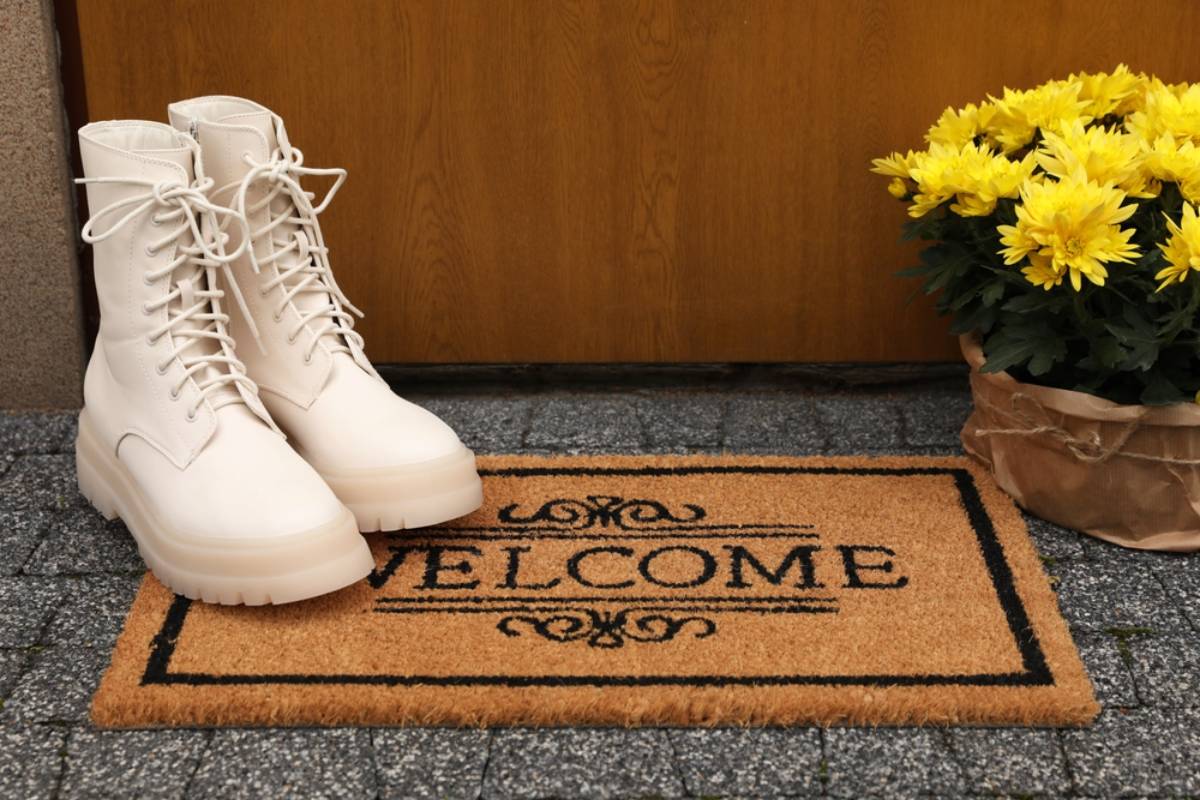
Perhaps the most surprising recommendation involved a pair of worn men’s work boots. Arterburn suggested finding a large, used pair at a thrift store and placing it outside the front door of an apartment or residence. The idea is to create the impression that a physically imposing man might live inside, potentially making a stranger reconsider approaching the property.
The suggestion is inexpensive, but its effectiveness depends entirely on what another person assumes after seeing the footwear. Boots cannot reinforce a lock, alert a resident to an attempted entry or reliably prevent someone from entering. Arterburn’s advice also included bringing the boots inside occasionally, rather than leaving the same pair permanently on display.
Pepper Gel Was Another Item on His List
Arterburn included home-defense pepper gel among the products he recommended for personal protection. The coverage described the product as having a reported range of approximately 20 feet, with a gel formulation that is less likely than a conventional aerosol spray to disperse through the air. He presented it as one possible option for someone looking for a defensive tool.
Those product claims should not be mistaken for a guarantee of performance in a real emergency. Range, handling, effectiveness and the possibility of affecting other people depend on the specific product and circumstances. Anyone considering pepper gel should read its instructions, understand the risks of using it indoors, and check applicable laws and campus housing policies before carrying it.
Projectile Launchers Require More Careful Consideration
Arterburn’s recommendations also included home-defense projectile launchers powered by carbon dioxide. These devices appeared alongside pepper gel in the coverage of his safety advice, but they are different from simple alarms or physical door barriers. A device that launches a projectile introduces additional questions about handling, injury risk and legal restrictions.
Descriptions of these products as non-firearms should not be treated as proof that they are permitted everywhere. Legal classifications can vary, and colleges may have their own restrictions on weapons or weapon-like devices. Students considering such equipment should verify the relevant laws and written housing policies rather than relying on a social media recommendation alone.
Small Door-Wedge Alarms Can Provide an Audible Warning
Door-wedge alarms were another item on Arterburn’s list of relatively simple security products. Depending on the model, a device positioned beneath a door can resist movement and sound an alarm if the door is pushed. Such a warning may alert an occupant or attract the attention of someone nearby.
Students should test any permitted device according to its instructions and understand how to remove it quickly from inside the room. It must not interfere with evacuation during a fire or another emergency. As with other alarms, the benefit depends on whether the sound is audible to someone who can take appropriate action.
Motion Lights and Driveway Alerts Can Help People Notice Activity
Arterburn also recommended solar-powered outdoor motion lights and driveway alerts. Motion-activated lighting can illuminate an area when movement is detected, while driveway alerts can notify an occupant that someone or something has entered a monitored area. These tools may be most relevant to off-campus properties where tenants have control over the exterior space.
Not every college student will have access to a private driveway or permission to install outdoor equipment. Students living in managed properties may need to ask the landlord or residence staff before changing exterior lighting or adding monitoring devices. Reporting a malfunctioning light or an insecure entrance is a practical alternative when residents cannot make those changes themselves.
Personal Alarms Can Attract Attention During a Walk or Run
Personal alarms were another recommendation for students who walk or run alone. These compact devices are designed to emit a loud sound when activated, drawing attention to a situation rather than physically stopping an attacker. Arterburn included them alongside portable pepper gel as possible additions to an individual’s safety preparations.
An alarm is most practical when it is easy to reach and the owner understands how to activate it quickly. Students can also plan routes that lead toward occupied buildings, staffed areas or other places where assistance may be available. Carrying a device is only one part of preparing for an uncomfortable or dangerous situation.
Faraday Bags Address a Different Kind of Security Concern
Arterburn’s list included Faraday bags for electronic devices and key fobs. These pouches are designed to block electromagnetic signals, making them potentially useful for limiting communication with certain keyless-entry vehicle systems. Their purpose is different from that of a door brace, motion light or personal alarm because they address signal access rather than physical entry into a residence.
The potential benefit depends on the particular vehicle system and the quality of the pouch. Someone considering one for a car key should verify that the specific product actually blocks the relevant signal. Using a signal-blocking pouch for a phone also requires care because the same property can interfere with ordinary communications.
Situational Awareness Still Matters Outside the Front Door
Arterburn’s recommendations focused heavily on equipment, but established campus safety guidance also emphasizes everyday decisions. The UCLA Police Department’s campus safety advice encourages students to use well-lit, populated routes, remain aware of their surroundings and consider walking with another person when possible. It also recommends checking who is outside before opening a residence-hall door and reporting building security problems.
These habits can be useful whether a student is returning from the library, finishing a late workout or walking home after an evening class. Familiarity with safer routes and available assistance can make it easier to respond when circumstances change. Such guidance should support students, not imply that a person is responsible for preventing another person’s misconduct.
Working Locks and Secure Building Access Remain Essential
The more ordinary side of residential security is still important. The University of Oregon Police Department’s crime-prevention guidance advises residents to lock doors, avoid allowing unfamiliar people to follow them into secured buildings and report malfunctioning doors or windows. Those measures address vulnerabilities that inexpensive gadgets may not be able to correct.
Students should learn how residence-hall keys, identification cards, visitor access and after-hours entry work at their particular school. If a door fails to latch or a lock stops functioning, they should notify housing staff or the property manager promptly. A maintenance problem with a building’s security should not be left for an individual student to solve with a portable device.
Campus Support Services Belong in Any Safety Plan
Equipment cannot replace knowing whom to contact during an emergency or where to find support after an incident. Students can look up campus police contact information, emergency numbers, residence-life staff and available escort services before they need them. Familiarity with these resources can reduce the time spent searching for help under pressure.
For concerns involving sexual harassment or assault, a campus Title IX office, survivor advocate or counseling service may explain available support and reporting options. The RAINN campus sexual violence prevention and response resource encourages students to identify relevant support services before a crisis occurs. Access to these services is part of a broader approach to student safety that goes beyond buying equipment.
The Bigger Lesson Is to Add Layers Without Expecting a Guarantee
Arterburn’s unusual checklist brings together several different ideas: physical barriers, audible warnings, outdoor lighting, personal alarms and devices intended to influence a potential intruder’s decisions. Each addresses a different circumstance, and the benefits of one item do not automatically transfer to another. None makes a residence or a person completely invulnerable.
Students can begin with the basics by checking their locks, learning the rules for their accommodation and saving emergency contact information. They can then consider additional measures that fit their living arrangements, budget and local requirements. The central value of Arterburn’s advice is its reminder to think about safety before a problem arises, rather than assuming a single purchase can eliminate every risk.