A Teacher Says a Student Told Her He Learned to Read Upside Down So He Could Answer Faster Than the Kids Sitting Across From Him

Mrs. Harper first thought she had misunderstood her student when ten-year-old Noah turned his worksheet upside down and began reading it aloud. Then he explained why he did it, and she realized the strange habit wasn’t a trick he had picked up for fun. Noah had discovered a way to compete with the classmates sitting across from him without ever asking anyone for help.
The Worksheet Turns Upside Down
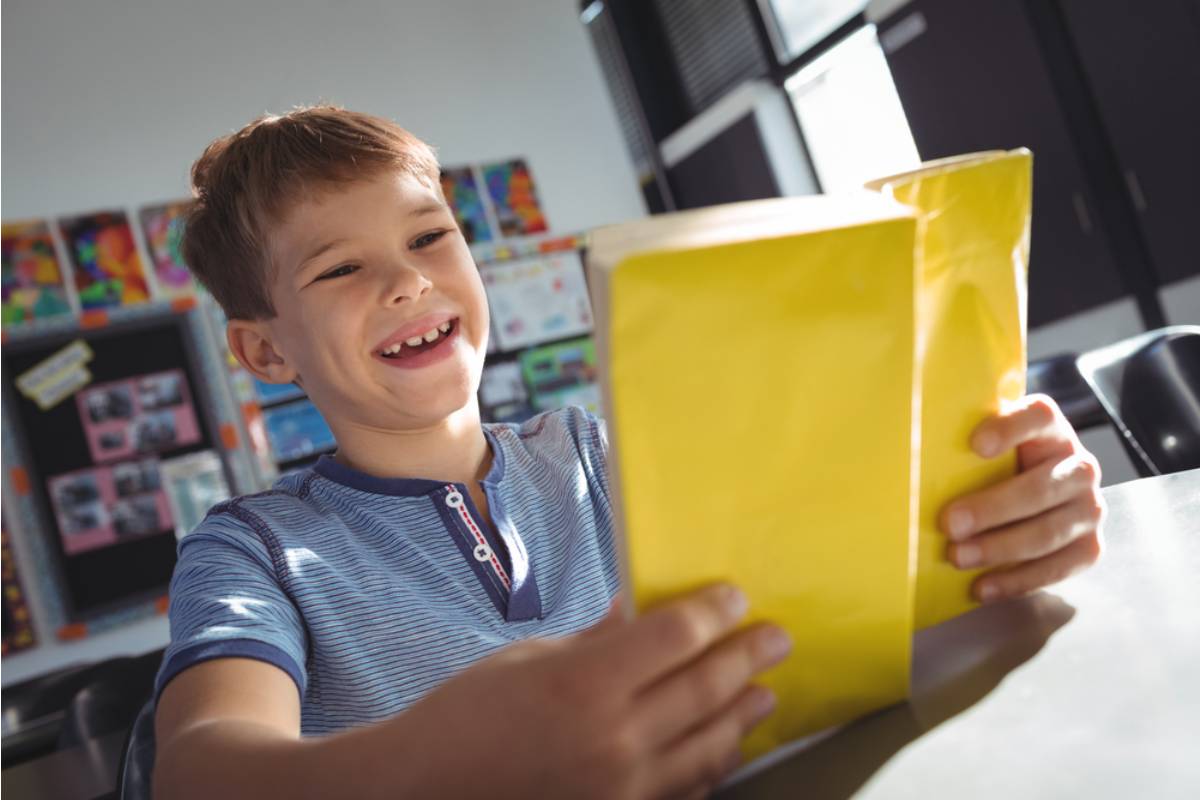
Mrs. Harper was walking between the desks during independent reading when she noticed Noah holding his worksheet in an unusual position. His paper was rotated completely around, with the printed words facing him upside down from everyone else’s perspective.
She stopped beside his desk and asked, “Noah, why is your paper upside down?” Without looking embarrassed, he replied, “It’s easier this way.” Mrs. Harper smiled because she assumed he was joking, but Noah continued reading without changing the paper.
His Answer Comes Before Everyone Else’s
A few minutes later, Mrs. Harper asked the class a comprehension question. Several students looked down at their worksheets, searching for the answer, but Noah’s hand shot into the air almost immediately.
Mrs. Harper called on him, and he gave the correct answer. A boy across the table groaned and said, “How did you already find it?” Noah simply shrugged and went back to reading his upside-down page.
The Teacher Starts Paying Attention
Mrs. Harper watched Noah more carefully during the rest of the lesson. Whenever she asked students to locate a sentence, Noah seemed to find it unusually quickly.
He wasn’t just holding the paper upside down occasionally. He was reading entire paragraphs that way, moving his finger beneath the reversed lines as naturally as the other children followed ordinary text.
After class, Mrs. Harper asked him to stay behind for a moment. “You’ve been doing this for a while, haven’t you?” she asked.
Noah nodded.
“I Learned Because of Them”
Mrs. Harper asked Noah when he had started reading upside down. He thought about it before answering, “Last year.”
“Why?” she asked.
Noah looked toward the doorway to make sure the other students had left. Then he said, “Because of where I sit.”
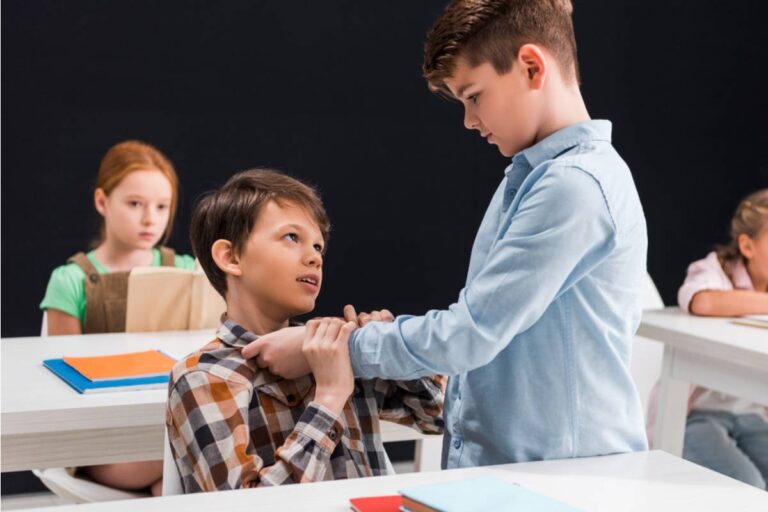
Mrs. Harper didn’t understand. Noah explained that he was often seated across from another student during small-group activities, and he could see that student’s worksheet more clearly than he could see his own.
The Other Kids Were Always Faster
Noah told her that some classmates seemed to find answers faster than he did. When the teacher asked everyone to find a word, he would still be searching while other students were already raising their hands.
“I thought they were just smarter,” he said.
Mrs. Harper asked whether anyone had told him that. Noah shook his head. “They didn’t have to. They always finished first.”
That answer made Mrs. Harper pause. Noah had apparently turned a simple classroom arrangement into a private competition he had never discussed with anyone.
The Trick Becomes a Skill
Noah explained that one afternoon he had accidentally picked up a classmate’s worksheet and realized he could read the words even though they were upside down.
“At first I could only read a little,” he said. “Then I practiced.”
Mrs. Harper asked where he practiced. Noah admitted he sometimes sat at home with comic books and turned them upside down. He would read one page normally, flip the book around, and try to read it again.
“I wanted to get faster,” he said.
His Mother Had No Idea
Mrs. Harper called Noah’s mother, Denise, after school. Denise sounded confused when the teacher mentioned the upside-down reading.
“He does what?” she asked.
When Noah got home, Denise asked him to demonstrate. He grabbed a children’s book from the living room, flipped it around, and began reading aloud without hesitation.
Denise stared at him. “How long have you been able to do that?”
Noah shrugged. “I don’t know. A long time.”
The Reason Hurts More Than the Trick
Denise initially thought the ability was impressive. Then Noah explained that he had practiced because he hated feeling slower than the other kids.
He told his mother that he sometimes knew the answer but didn’t raise his hand because another student had already answered. He worried that if he took too long, people would think he wasn’t smart.
Denise sat beside him and asked, “Who told you being second meant you weren’t smart?”
Noah didn’t have an answer.
Mrs. Harper Changes the Seating
The next morning, Mrs. Harper quietly rearranged the small-group tables. She made sure Noah wasn’t positioned directly across from another student’s worksheet.
Noah noticed immediately.
“Did you move me?” he asked.
Mrs. Harper nodded. “I changed the groups.”
He looked relieved, but then he asked whether he still needed to use his upside-down reading trick. Mrs. Harper smiled and said, “You don’t need it to prove anything to me.”
The Class Discovers His Secret
Mrs. Harper had hoped the matter would remain private, but during a reading activity Noah accidentally flipped his paper upside down in front of the entire group.
A student named Marcus stared at him. “Are you actually reading that?”
Noah hesitated.
Before he could answer, another student laughed and said, “That’s impossible.”
Noah looked at Mrs. Harper, clearly unsure whether he should demonstrate it.
Noah Reads the Paragraph
Mrs. Harper told him he could show them if he wanted to, but he didn’t have to.
Noah turned the paper toward the group and read the paragraph aloud. He stumbled on one unfamiliar word, stopped, corrected himself, and continued.
The room became quiet.
Marcus leaned closer. “You can really read it like that?”
Noah nodded.
“That’s actually crazy,” Marcus said.
For the first time, Noah smiled instead of looking defensive.
The Teacher Makes One Rule
Mrs. Harper used the moment to address the class. She told them that everyone had different ways of learning and that being fast didn’t automatically mean being better.
She also explained that nobody should use another student’s work to get answers. Noah’s upside-down reading ability was impressive, but the goal wasn’t to use it to copy.
Noah immediately raised his hand and said, “I don’t copy. I just like seeing how fast I can read.”
Mrs. Harper replied, “Then let’s make sure you’re competing with yourself.”
A New Challenge Appears
Mrs. Harper gave Noah a new reading challenge. Instead of trying to beat classmates to the answer, he would track how accurately he could read difficult passages in both directions.
Noah became fascinated.
He started recording which words caused him trouble and practiced them later. He discovered that upside-down reading wasn’t actually faster for every type of text, but he could switch between orientations surprisingly well.
The competition that had once made him anxious became a private experiment he controlled.
Another Student Asks for Help
A few weeks later, Marcus approached Noah during independent work.
“Can you teach me how to do that?” he asked.
Noah laughed. “It’s hard.”
Marcus turned his worksheet upside down and immediately complained that everything looked ridiculous.
Noah showed him how to start with short words instead of trying to read an entire paragraph. Marcus practiced for several minutes before giving up.
“I don’t get it,” he said.
Noah grinned. “That’s okay. I practiced for months.”
Noah Finally Understands What Happened
One afternoon, Mrs. Harper asked Noah whether he still felt like he needed to be the fastest reader in the class.
He thought for a moment.
“No,” he said. “Because I know I can read it.”
That was the first time he had separated knowing something from proving it.
Mrs. Harper told him that confidence wasn’t always about being first. Sometimes it was knowing you could take your time and still belong in the room.
The Upside-Down Book Comes Home
Months later, Denise found Noah reading on the couch with his book turned normally.
She asked whether he had stopped reading upside down.
“No,” he said. “I just don’t have to do it all the time.”
Denise smiled and asked whether he still practiced.
“Sometimes,” Noah replied. “It’s fun now.”
That answer mattered more to her than the unusual skill itself.
He wasn’t doing it because he was afraid of being behind anymore.
The Reading Contest
Near the end of the school year, the class held a friendly reading challenge. Students were paired up and asked to read unfamiliar passages for accuracy rather than speed.
Noah was paired with Marcus.
Before they began, Marcus whispered, “Are you going to use your upside-down thing?”
Noah shook his head.
“Why not?”
“Because then you’d complain.”
Marcus laughed.
They both read normally, and neither one cared who finished first.
The Question That Stayed With Mrs. Harper
After the students left, Mrs. Harper found Noah’s original worksheet still tucked inside a folder. She turned it upside down and stared at the words for a moment.
What had initially looked like a strange classroom habit had actually been the visible part of a much bigger problem. Noah had been trying to solve a feeling of inadequacy without telling anyone he was struggling with it.
His unusual skill had grown out of insecurity, but once someone understood the reason behind it, the same skill became something he could enjoy rather than something he needed to use as armor.
Noah’s Last Demonstration
On the final week of school, Mrs. Harper asked Noah whether he wanted to demonstrate his upside-down reading to the class again. He agreed, but this time he didn’t do it because he wanted to prove he was faster.
He read a short passage upside down, then turned the page normally and read another one. When he finished, the class applauded.
Marcus shouted, “Do the hard one!”
Noah laughed and said, “Next year.”
Mrs. Harper watched him return to his seat and realized how much had changed.
At the beginning, Noah had believed that being fast was the same as being smart. By the end, he had learned that a strange skill could be impressive without becoming a test of his worth.
And when he packed his backpack that afternoon, he didn’t take the upside-down reading habit with him as something he needed to survive school.
He took it with him simply because it was something he could do.