A Teacher Says She Finally Asked What Was Wrong With Today’s Students After Watching Kids Ignore Every Rule, and the Responses Made Her Question Everything

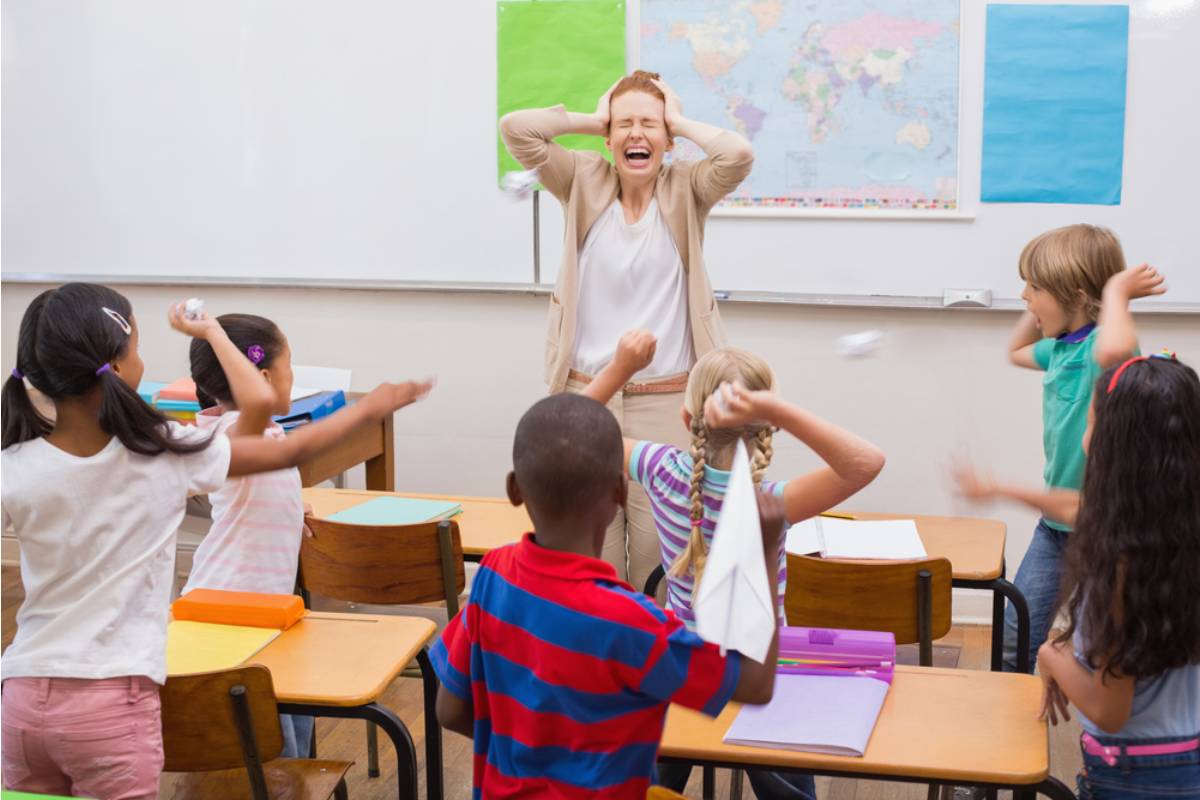
A substitute teacher reached a point where the daily chaos in classrooms was becoming impossible to ignore. After only a few months on the job, she had already seen students struggle to stay seated, remain quiet, follow lesson plans, and even sit through tests without turning the room upside down. One day, she finally decided to ask why so many children seemed determined to make school harder for themselves and everyone around them.
Her frustration quickly turned into a much bigger conversation about parenting, technology, school, and the world children are growing up in. While some people agreed that screens and a lack of boundaries were playing a role, others pushed back and argued that adults and broader social problems deserved more attention. Somewhere between the complaints and disagreements, one thing became clear: not every child fit the troubling pattern she had been seeing.
She Had Only Been Subbing for a Few Months
The teacher explained that she had been working as a substitute for only a couple of months. Even in that relatively short period, she had already noticed a pattern that left her increasingly exhausted. It seemed like almost every grade came with its own version of the same problem.
Students often struggled with things that should have been relatively simple in a classroom. Sitting down, listening to instructions, completing the assigned work, and staying quiet during a test apparently felt like enormous challenges to many of them. The substitute began wondering whether the problem was just the schools she visited or whether something much bigger was happening.
The Simplest Instructions Became a Battle
From the teacher’s perspective, the basic routine of school should not have been particularly complicated. Students were expected to sit in their seats, complete the work in front of them, and eventually go home. Yet getting them to follow even that simple sequence could turn into a constant struggle.
Instead of quietly completing assignments, some students wanted to wander around, talk over lessons, or ignore directions entirely. Tests were especially frustrating because even the expectation of silence seemed difficult for some children to handle. The substitute described the restlessness as more than an occasional annoyance and said it was becoming a genuine problem.
She Started Looking Beyond the Classroom
After seeing the same kinds of behavior repeatedly, the substitute began wondering what was causing it. She became convinced that the problem could not simply be blamed on one bad class or one difficult teacher. Something, in her view, had changed in the way many children were being raised and entertained.
Her frustration eventually extended to parents, whom she felt were sometimes failing to provide enough boundaries or accountability. She wondered whether some parents were simply too busy, too distracted, or too reluctant to enforce rules. But even as she vented, she recognized that there were clearly other forces shaping children’s behavior.
Screens Quickly Became Part of the Conversation
One of the biggest things she blamed was the amount of time children spend staring at screens. She pointed to platforms such as TikTok and YouTube and argued that constant entertainment could make ordinary classroom activities feel painfully slow by comparison. In her view, children seemed less comfortable with boredom and less willing to focus without constant stimulation.
The idea struck a chord with at least one person who responded to her story. A response from a person said phones, social media, and technology could be a major factor in shorter attention spans and a growing dependence on having everything immediately available. The person also connected the issue to changing parenting habits and what they saw as a decline in accountability and work ethic among some students.
One Teacher Said Even Technology at School Was Making Things Worse
Another person shared an example from a first day as a substitute that seemed almost too ironic to be true. The students had their phones taken away by the school, but the replacement was not exactly a technology-free environment. They were given tablets for schoolwork, and some students immediately used them to play games and watch YouTube instead.
That experience left the substitute wondering whether removing one screen really solved anything when another screen simply appeared in its place. The person jokingly suggested that schools might need to bring back periods of sitting quietly with nothing to do. The exaggerated idea of a daily boredom session reflected a real frustration with how difficult some students seemed to find even a few moments without stimulation.
Another Person Said the Problem Starts at Home
A response from a person argued that classroom behavior often reflects what children learn at home. The person said they had repeatedly seen entitlement, poor accountability, and disrespect among students and believed those habits were often reinforced outside school. From their perspective, teachers were sometimes expected to fix behaviors they did not create.
Another response echoed that idea more bluntly by saying that everything begins at home. The discussion then shifted toward the relationship between parents and the kind of environment children experience before they ever enter a classroom. The substitute agreed with the basic point and replied that she always tries to look at the adults around a child rather than simply blaming the child.
But Not Everyone Blamed Parents
The conversation took a sharp turn when someone argued that children themselves should not carry the blame for every problem adults create. A response from a person suggested that students are growing up in a world shaped by larger failures in education, government, the economy, and social institutions. From that perspective, it was understandable that some young people might feel disconnected from traditional ideas about authority and responsibility.
The response also pointed out that students are being asked to care about institutions they may not fully trust. The person argued that children absorb the conditions around them rather than inventing them. That idea challenged the simpler explanation that bad parenting or screens alone could explain everything happening inside today’s classrooms.
One Comment Connected the Problem to Trust
Another response from a person focused specifically on the way children are taught to view authority. The person pointed out that simply telling young people to respect every adult automatically may not work when they have also seen adults misuse positions of authority. In that view, respect cannot always be demanded without also being earned.
That perspective gave the discussion an entirely different direction. Instead of asking only why students were restless or disrespectful, it raised the question of what children are actually being taught to believe about teachers, schools, and other adults. The substitute had started the conversation looking for a simple explanation, but the responses were making the issue look considerably more complicated.
Poverty Was Mentioned as Another Piece of the Puzzle
A response from a person argued that parents are often working long hours and may not have the time or energy people assume they have. The person connected the issue to poverty and said financial pressure could affect how families function. Their point was that judging parenting without considering the circumstances surrounding a family might leave out a major part of the story.
That idea added another layer to the discussion. A child’s behavior in a classroom could be influenced by far more than whether someone was allowed too much screen time at home. Stress, family circumstances, school experiences, and the broader environment could all potentially shape how a student handles authority and frustration.
A Grandparent Shared a Very Different Example
Then came an example that reminded everyone that not all children are behaving the same way. One person shared a story about a nine-year-old grandson they regularly watched before and after school. The child reportedly noticed when classmates talked too much, did his own work, and asked questions when he needed help.
The child also demonstrated something the substitute feared was becoming increasingly rare: the ability to handle responsibilities before moving on to entertainment. After completing his schoolwork while home sick, he eventually went to play on a VR system. His story served as a reminder that technology itself was not automatically producing bad behavior, since the same child could use it after taking care of his responsibilities.
The Substitute Heard From Someone Who Had Given Up Caring
A particularly revealing response came from a person who said they had experienced similar behavior while working in traditional classrooms. They described spending so much time dealing with student conflicts that a normal class period could become little more than an exercise in preventing one child from attacking another. The experience had been so draining that they eventually became emotionally detached from the constant chaos.
The person admitted that they had cried frequently during their first few years before eventually reaching a point where they simply stopped caring as much. Their story showed another possible consequence of the behavior problem: it does not only affect students. Over time, constant classroom disruption can change the way adults approach the job too.
Then Someone Reminded Her That Good Kids Are Still Out There
Despite all the frustration, several people made a point of saying that respectful and hardworking students still exist. One person shared that they regularly see children who are kind, responsible, and genuinely interested in learning. The problem, in their view, was not every child but the fact that the difficult students could dominate so much of a teacher’s attention.
The substitute seemed to recognize that distinction herself. She admitted that there are certain children who still give her hope for the future. Those students may be quieter and less noticeable than the ones disrupting a classroom, but they are part of the reason she continues showing up.
She Started Wondering What These Kids Are Preparing For
Another part of the substitute’s frustration came from what she believed some students were expecting from the future. She said she had encountered children who seemed interested almost entirely in becoming influencers or streamers rather than discussing traditional goals or careers. To her, it sometimes felt as though school was competing with an entirely different idea of success.
Yet even that observation opened another question. Children are growing up surrounded by new careers, online personalities, and platforms that did not exist in the same form for previous generations. What looks unrealistic or distracting to one adult may simply seem like a normal career possibility to a child who has spent their entire life surrounded by the internet.
The Conversation Ended Up Being About More Than Kids
What began as a substitute teacher venting about restless classrooms quickly turned into a debate about nearly every force shaping childhood. Screens, parenting, poverty, school systems, authority, family relationships, and economic conditions all entered the conversation. Each explanation seemed to account for part of what teachers were seeing, but none explained everything.
The most interesting twist was that the people responding did not completely agree on what was wrong. Some saw a lack of boundaries at home, while others pointed toward technology or broader social problems. Still, several people arrived at the same basic observation: there are plenty of respectful, capable children out there, even if the most disruptive ones are often the hardest to forget.
She May Never Get a Simple Answer
By the end of the discussion, the substitute still did not have a single explanation for why classroom behavior had become such a challenge in her experience. She had started by asking what was wrong with the kids and ended up hearing arguments about the world adults had built around them. The answer, apparently, was far messier than simply blaming one generation.
A response from a person summed up the sentiment by reminding everyone not to blame the children first. The substitute agreed, saying that she always looks toward the adults and circumstances surrounding them. After only a few months in the classroom, she may still be frustrated, but the conversation gave her something else to think about: the difficult behavior might be the most visible part of a much larger story.