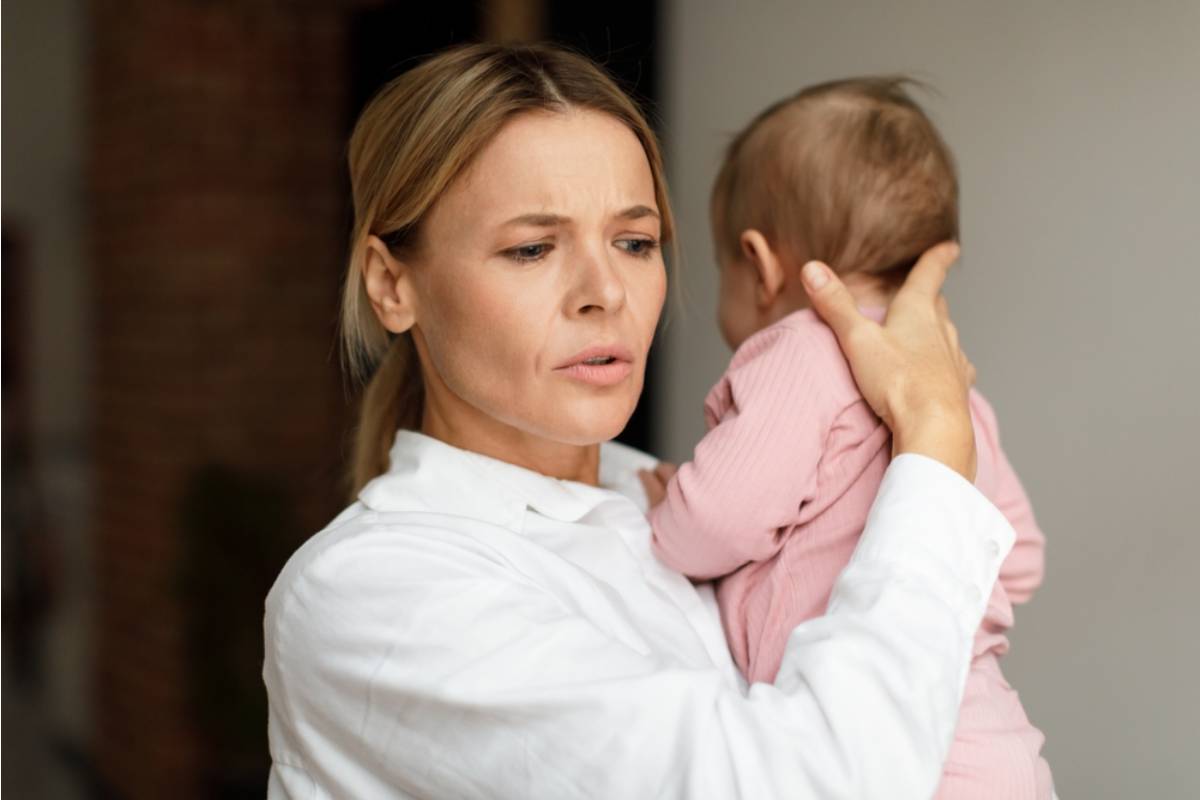
A Woman Says Her Husband Came Out as Trans Just Four Weeks After Their Baby Was Born, and She Can’t Stop Thinking About Why He Chose That Moment

A person shared her story after her husband told her that he is transgender and plans to transition to a woman. The conversation came only four weeks after she had given birth to their youngest child, leaving her trying to process an enormous change while still recovering from childbirth. Instead of having time to settle into life with a new baby, she suddenly found herself wondering what the future of her entire family would look like.
She explained that the couple had been together for seven years and were raising two young children. Her husband had apparently been carrying feelings of gender dysphoria for years before finally telling her what he had been experiencing. She said the timing of the revelation was almost impossible for her to separate from the pain she was already experiencing in the postpartum period.
She Was Still Trying to Recover From Giving Birth
The mother said she was already struggling emotionally and physically after the birth of their second child. She had experienced severe postpartum difficulties after their first child as well, so she knew that the weeks after delivery could be particularly difficult for her. She had even told her partner only three days earlier that she was struggling and needed support.
That made the sudden disclosure feel even more overwhelming to her. She was not saying that her husband’s identity was wrong or that he should hide who he is forever, but she could not understand why something so life-changing had to be revealed while she was in such a vulnerable state. For her, the timing became almost as painful as the news itself.
Her Husband Said the Feelings Had Been There for Years
According to the mother, her husband told her that the gender dysphoria had started when he was around 19 and continued until he was 29. He then said he had pushed those feelings down for years, believing he could keep them buried and continue living the life he had built. At 43, however, he told her that he could no longer keep doing that.
That revelation added another layer to an already complicated situation. The mother suddenly had to look back on seven years together while realizing there had been a deeply personal struggle she knew nothing about. She said she had never suspected that her husband was carrying something so significant throughout their relationship.
She Started Wondering Whether the Marriage Could Survive
The mother admitted that she did not believe the marriage would survive the changes ahead. The issue was not simply that her partner was transitioning, but that she was trying to understand what the transition meant for their relationship, their children, and the life they had expected to share. She said she could not currently imagine returning to the way things were before the conversation.
Even so, she was trying to separate the relationship from the parenting responsibilities they still shared. Her husband had already agreed to help her move back to the area where her family lives, which gave her at least one practical path forward. For the moment, she appeared more focused on creating stability for herself and the children than on deciding every detail of the future.
The Two Young Children Made Everything More Complicated
The couple were not dealing with a private relationship issue involving only two adults. They also had two young children whose routines, sense of security, and understanding of their family could all be affected by a separation. The mother knew that whatever happened between the adults would eventually become something the children had to navigate as well.
Some responses from people who had experienced family changes themselves pointed out that the older child could also be adjusting to becoming a sibling while the family was suddenly facing another major transition. That meant there was pressure to protect as much consistency as possible. The mother seemed aware that she could not simply make decisions based on her own feelings without considering how those decisions might shape the children’s lives.
One Response Came From Someone Who Had Seen Something Similar
A response from a person described going through a similar situation with a friend who was postpartum with two children. According to that person, the friend initially felt as though her entire life had fallen apart and could not picture a happy future beyond the crisis. The response said the couple eventually separated, and the mother later found a new relationship in which she was very happy.
The point of that response was not that every family would follow the same path. Instead, it offered the mother a reminder that the life she could currently imagine might not be the only life available to her. At a moment when everything seemed impossibly heavy, that small glimpse of a possible future appeared to give her some reassurance.
Another Parent Said the Timing Changed Everything
A person who said they had a transgender spouse described a very different timeline for their own experience. Their partner came out while they were beginning the IVF process, which meant there was still significant time for both people to process what was happening. They said they spent a long time discussing whether staying together made sense before reaching a decision.
That story highlighted something the mother kept returning to throughout her own account. She was not asking people to debate whether someone should transition or whether gender identity was legitimate. She was trying to understand how a couple could cope with such a major revelation while one partner was only weeks removed from giving birth.
She Could Not Stop Thinking About the Three Days Before the News
The detail that seemed to haunt the mother most was how recently she had admitted that she was struggling. Only three days before her husband told her about his plans to transition, she had explained that she needed help during a difficult postpartum period. From her perspective, that made the timing feel especially painful because she had been asking for emotional support just before the entire situation changed.
Several responses focused on that same sequence of events. People said that even life-changing news unrelated to gender could feel overwhelming if delivered during such a fragile period, especially when a newborn was involved. The mother appeared to be wrestling with the feeling that her own crisis had been pushed aside just when she most needed her partner’s attention.
The Family Was Suddenly Discussing a Move
As the situation developed, the mother began thinking practically about where she and the children might live. She said her current plan was to move back to the place where her family is from, and her partner had already agreed to help make that possible. That made the separation feel less hypothetical because a real change of home was now becoming part of the conversation.
At the same time, the move could also provide support that she desperately needed. Being closer to relatives might give her another layer of help while she recovered and cared for two young children. Even though the future remained unclear, having a concrete plan seemed to give her something to hold onto while she figured out everything else.
She Said She Was Trying to Put the Bigger Questions on Hold
One of the clearest things the mother communicated was that she did not want to make every decision immediately. She said her partner was willing to put the transition-related conversations on hold for the moment, giving her some time to breathe and deal with the situation one piece at a time. That pause mattered because she was still physically recovering and adjusting to a newborn.
She also made it clear that delaying the conversation did not erase what had already happened. She said she could not get past the fact that this information had arrived during what should have been a precious period with her baby. Even if the discussion was temporarily paused, the emotional impact of the timing was something she knew she would have to work through.
Her Feelings Were Focused More on the Timing Than the Identity
The mother repeatedly clarified that she was not looking for arguments about transgender people or opinions about whether her husband’s transition was right or wrong. Her pain centered on the circumstances surrounding the disclosure and what the change meant for their marriage. She wanted to hear from people who had survived something similar, particularly people who could understand the combination of postpartum recovery, parenting, and relationship upheaval.
That distinction shaped many of the responses she received. Several people said their concern was not about the husband’s gender identity but about how difficult the timing could be for someone caring for a newborn. The mother seemed desperate for someone to acknowledge that both things could be true at once: her partner could be honest about who he is, while she could still be devastated by when she learned about it.
Some People Told Her to Focus on Herself and the Children
As the conversation continued, many responses encouraged the mother to concentrate on her own recovery and the children rather than trying to solve the entire future of the relationship overnight. One person told her to draw strength from being a parent and reminded her that she could eventually get through the crisis, even if she could not see that clearly yet. Another emphasized that the family’s immediate need was stability.
That advice may have been easier to hear than suggestions about the marriage itself. The mother was already dealing with sleepless nights, postpartum recovery, and the demands of caring for a baby, so adding pressure to reach an immediate relationship decision could have made things even harder. For now, taking care of herself and keeping the children’s routines steady appeared to be the most manageable starting point.
She Still Had to Grieve the Life She Thought She Was Building
Even without knowing exactly what the future would look like, the mother was already grieving something. She had entered the postpartum period expecting to be building a family life with the same partner she had known for seven years, only to discover that he had been carrying a deeply personal struggle she had never known about. That meant she was not just responding to a new piece of information, but reconsidering years of memories and plans.
There was also grief in knowing that the early weeks with her newborn had been overshadowed by a crisis she never expected. She wanted to enjoy that period with her baby, yet much of her attention had been pulled toward questions about the marriage and the future. That conflict between a joyful milestone and a painful upheaval became one of the central themes of her story.
The Future of Their Family Was Still Unwritten
For the moment, the mother did not know exactly what would happen next. She was considering moving closer to her family, preparing for the possibility that the marriage could end, and trying to understand how her partner’s transition would affect their children. Nothing had been completely settled, which left her living in a strange space between the family she had known and the one she might soon have.
Still, one thing had become clear to her: she could not ignore her own needs simply because her partner was going through an important personal transformation. The family would have to find a way through the situation one decision at a time, with the children still at the center of everything. What began as one devastating conversation had suddenly become a turning point that could reshape the family’s entire future.