Days After He Was Born, Kyrie Stanley Began Vomiting Bright Green Fluid. Doctors Found Nerve Cells Missing From Part of His Colon.

Kyrie Stanley was only days old when the vomiting started, and it was not the ordinary spit-up new parents expect. The newborn was bringing up bright green fluid, and his belly had swollen badly.
His mother, Chantaniea “Niea” Stanley, of Canton, Michigan, watched him go from a brand-new baby to a hospital transfer. At 4 days old, Kyrie was moved to Corewell Health Children’s in Royal Oak, where doctors found the cause, according to a Nov. 19 release from Corewell Health.
Nerve Cells That Were Never There
Kyrie was diagnosed with Hirschsprung’s disease, a rare condition in which nerve cells are missing from part of the colon. Without those nerves, the bowel cannot push waste along the way it should.
The National Institute of Diabetes and Digestive and Kidney Diseases describes it as “a birth defect in which some nerve cells are missing in the large intestine,” which leaves the intestine unable to move stool and causes a blockage. Some babies show signs of that blockage shortly after birth, the agency says.
The condition is uncommon. According to the National Library of Medicine’s MedlinePlus Genetics, it occurs in about 1 in 5,000 newborns. In roughly 80% of cases, the nerve cells are missing only from the last segment of the large intestine. In about 20%, they are absent from most of it, a more severe form.
Two Months Before Surgery
Kyrie could not go straight into an operating room. He spent two months receiving specialized care until he was strong enough for surgery, Corewell Health said.
The corrective operation was performed by Dr. Ameer Al-Hadidi, a pediatric colorectal surgeon and clinical lead of the hospital system’s new Colorectal Center for Children.
Surgery is the standard path. The National Organization for Rare Disorders says nearly all cases need an operation to remove the section of bowel without normal nerves and join the healthy ends, known as a “pull-through” procedure. For babies who are premature, very small or critically ill, surgeons may do it in stages, sometimes with a temporary colostomy first. Most children go on to have a good to excellent quality of life after successful surgery, the group says, though some need ongoing bowel care.
Signs Parents Are Told to Watch For
The MedlinePlus Medical Encyclopedia lists symptoms in newborns and infants that can point to the disease, including:
- Failure to pass meconium shortly after birth
- Failure to pass a first stool within 24 to 48 hours after birth
- Vomiting and poor feeding
- Poor weight gain
- Infrequent but explosive stools
NORD notes that a swollen abdomen and abdominal pain are also common in affected newborns, both signs Kyrie showed in his first days.
Babbling ‘Mama’ at 9 Months
Today, Kyrie is 9 months old and thriving, Corewell Health said. He is gaining weight, meeting his developmental milestones, babbling “mama” and “dada,” and crawling.
His mother told the hospital that anyone who met Kyrie now would never guess how much he has already been through.
His care is part of why Corewell built its new program. The Colorectal Center for Children treats infants, children and teens with conditions including Hirschsprung’s disease, anorectal malformations, severe constipation and bowel problems tied to congenital or neurologic conditions. The team brings together pediatric surgery, gastroenterology, urology, nursing, nutrition, psychology and rehabilitation.
The center is based in Royal Oak, with patients also seen in Troy and Dearborn. Corewell says it is one of only two comprehensive pediatric colorectal centers in Michigan and among about two dozen nationwide. Dr. Al-Hadidi said the program was created to fill a significant gap in pediatric specialty care in Southeast Michigan, where many families previously had to travel out of the region for this level of care.
Other families have faced their own newborn diagnoses that started with a single worrying sign, like Sonny Stubbs, who noticed something about her son’s eyes that staff had missed, and the parents of Bailey and Jacobey Severns’ third son.
For the Stanleys, the green vomit in those first days turned out to be the clue that led to the right diagnosis, two months of care and a surgery that let Kyrie start growing like any other baby.
Get stories like this by email. Sign up for The Parent Diaries Letter.
This article was produced with AI assistance and edited for accuracy against the sources linked above.
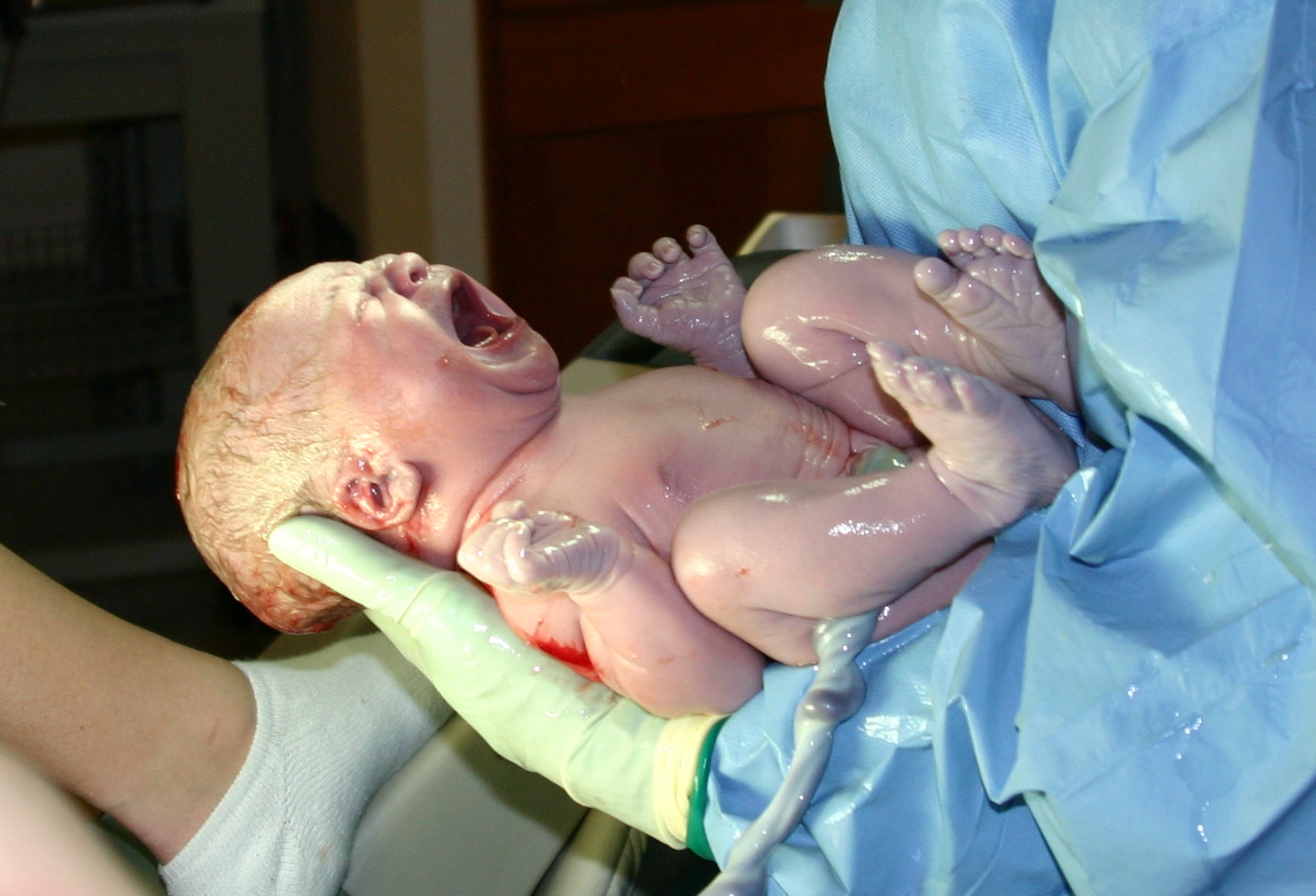
Image: Ernest F, CC BY-SA 3.0, via Wikimedia Commons