Sonny Stubbs Noticed Something About Her Newborn Son’s Eyes That Neither the Hospital Staff Nor His Pediatrician Caught

The thing Sonny Stubbs saw in her newborn son’s eyes turned out to be a rare birth difference called bilateral chorioretinal coloboma, and Emerson has since been diagnosed as legally blind. Neither the hospital staff nor his pediatrician noticed anything unusual at birth, according to a Newsweek profile of the family.
It was Stubbs, an artist and stay-at-home mom, who noticed it. Emerson was born on Sept. 6, 2024, by emergency C-section, and she held him about six hours later. At his 2-month appointment she raised her concern, and his pediatrician referred him to a specialist who made the diagnosis.
A mother’s doubt, then a referral
Stubbs told Newsweek that as time passed she noticed something distinctive about Emerson’s eyes but initially doubted herself, worried that she was overreacting. Her husband, Ben, is an award-winning tattoo artist, and the couple have two children, Emerson, now 2, and Scout, 5 months.
The specialist diagnosed bilateral chorioretinal coloboma and warned the family that Emerson would likely have very limited vision. Later tests showed that his optic nerve is not affected, Newsweek reported. Doctors do not believe he has central vision, which is the part of sight used to see fine details straight ahead, and he has been diagnosed as legally blind.
Stubbs told the outlet that vision therapy suggests Emerson has blind spots but may see more than doctors first expected.
What a coloboma is
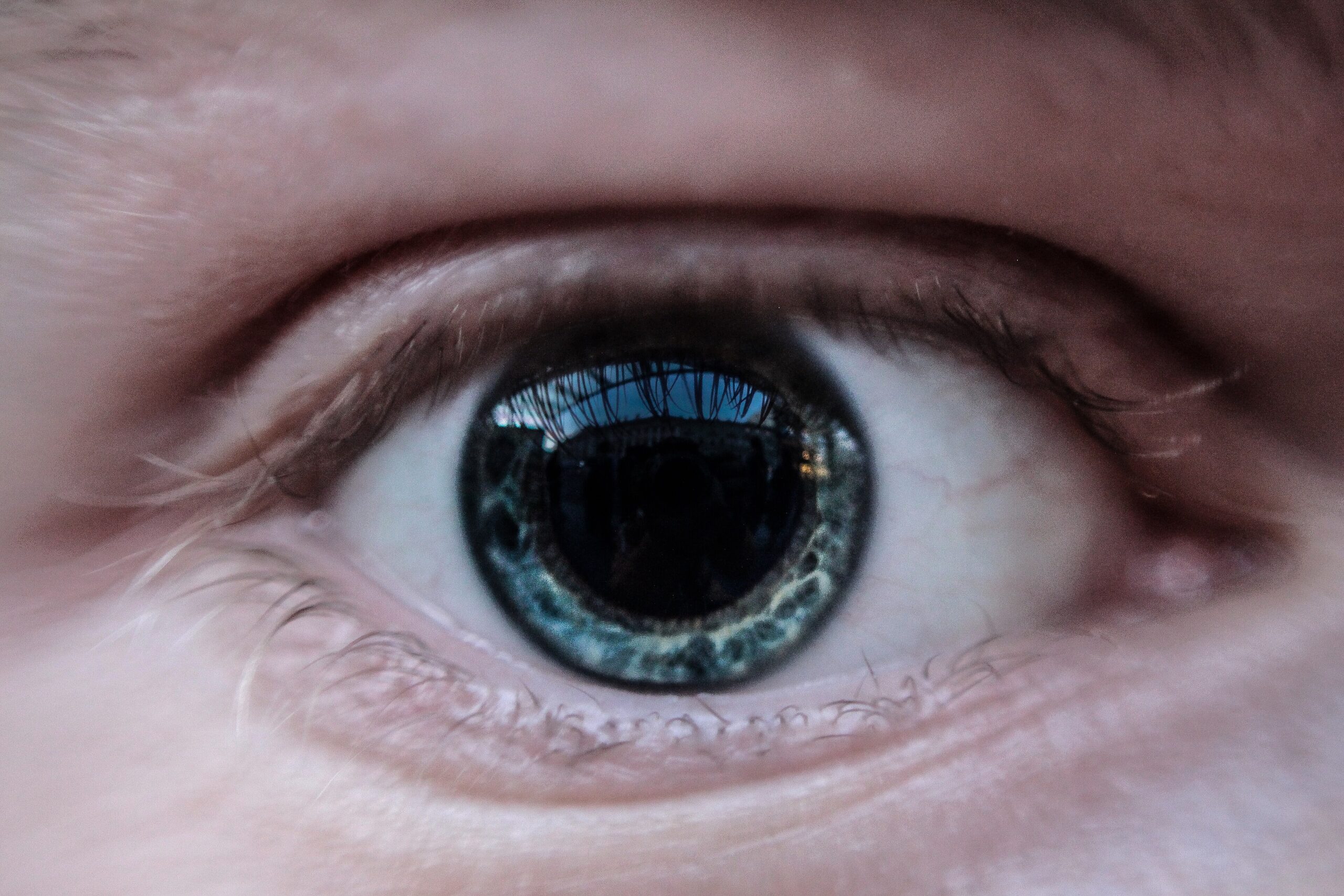
The American Academy of Ophthalmology describes coloboma as a birth defect in which normal tissue in or around the eye is missing. It can affect one or both eyes, and the two eyes can be affected differently. A small gap at the bottom of the developing eye normally closes early in pregnancy, the academy says, and if it does not, a coloboma forms.
The type matters. The academy lists lens, optic nerve, iris and chorioretinal, or retinal, forms. Front-of-eye colobomas such as an iris coloboma produce a keyhole or cat-eye pupil, while back-of-eye colobomas can reduce vision and cause gaps in the field of vision, such as loss of upper or side vision. The academy notes that vision loss may not be noticeable at birth and that some children are sensitive to light.
The National Eye Institute says in its coloboma overview that some people have no symptoms while others have vision loss or blindness, low vision or light sensitivity. It says a coloboma may be visible at birth, and that if it is not, a doctor can diagnose it with a comprehensive dilated eye exam.
How common it is, and why the numbers vary
Estimates of how often it occurs differ by source. MedlinePlus, the National Library of Medicine’s health resource, says coloboma occurs in approximately 1 in 10,000 people and that some people with it are probably undiagnosed because it does not always affect vision or appearance. The AAO’s clinician reference, EyeWiki, puts ocular coloboma at about 0.5 to 2.2 per 10,000 live births. Newsweek cited a 2011 JAMA Ophthalmology study that estimated roughly 1 in 2,000 to 2,500 live births.
The causes are largely genetic. The NEI says it usually results from abnormal or changed genes that affect eye development, that it sometimes runs in families, and that it often occurs alongside conditions affecting other parts of the body, including CHARGE syndrome and Wolf-Hirschhorn syndrome. MedlinePlus adds that coloboma that occurs alone is called nonsyndromic or isolated. EyeWiki recommends a genetics referral for patients with bilateral uveal coloboma.
What legally blind means for a toddler
The NEI’s page on low vision defines low vision as a vision problem that makes everyday activities hard and that glasses, contact lenses, medicine and surgery usually cannot correct. It recommends asking an eye doctor about vision rehabilitation. The page does not define legal blindness or discuss supports for children.
MedlinePlus says large retinal colobomas, or ones that affect the optic nerve, can cause low vision that glasses cannot fully correct. EyeWiki says the most important predictor of visual outcome is identification of normal foveal anatomy, and that refractive error and amblyopia are common, so the visual potential of the affected eye should be maximized. It also lists a notable retinal detachment risk with posterior colobomas, reported at 23 percent to 42 percent in one source, and recommends dilated exams every 6 to 12 months to monitor.
The NEI says treatment cannot replace the missing tissue but can help people make the most of their vision, through glasses or contact lenses, low vision aids, and treatment of related conditions such as cataracts or glaucoma. It adds that children often benefit from early intervention and specialized care.
Life with a diagnosis
Stubbs told Newsweek that the family’s anxiety was intense at first, centered on Emerson’s quality of life and whether he could draw, which matters to both parents as artists. She said Emerson is often complimented on his eyes, and that most questions from people are curious rather than negative.
She said she shared his story to offer hope to other parents. She raises him exactly the same way as his sister, Newsweek reported, and says that patience is the biggest challenge.
Another parent whose child’s eye problem showed up in the first months of life is Marcelle Miller, who noticed a faint cloudy ring in her 3-month-old daughter’s right eye, a discovery that has already led to four surgeries. In both families, a parent noticed a change in a baby’s eyes first.
Get stories like this by email. Sign up for The Parent Diaries Letter.
This article was produced with AI assistance and edited for accuracy against the sources linked above.
Image: Kamil Saitov – CC BY 4.0/Wikimedia Commons