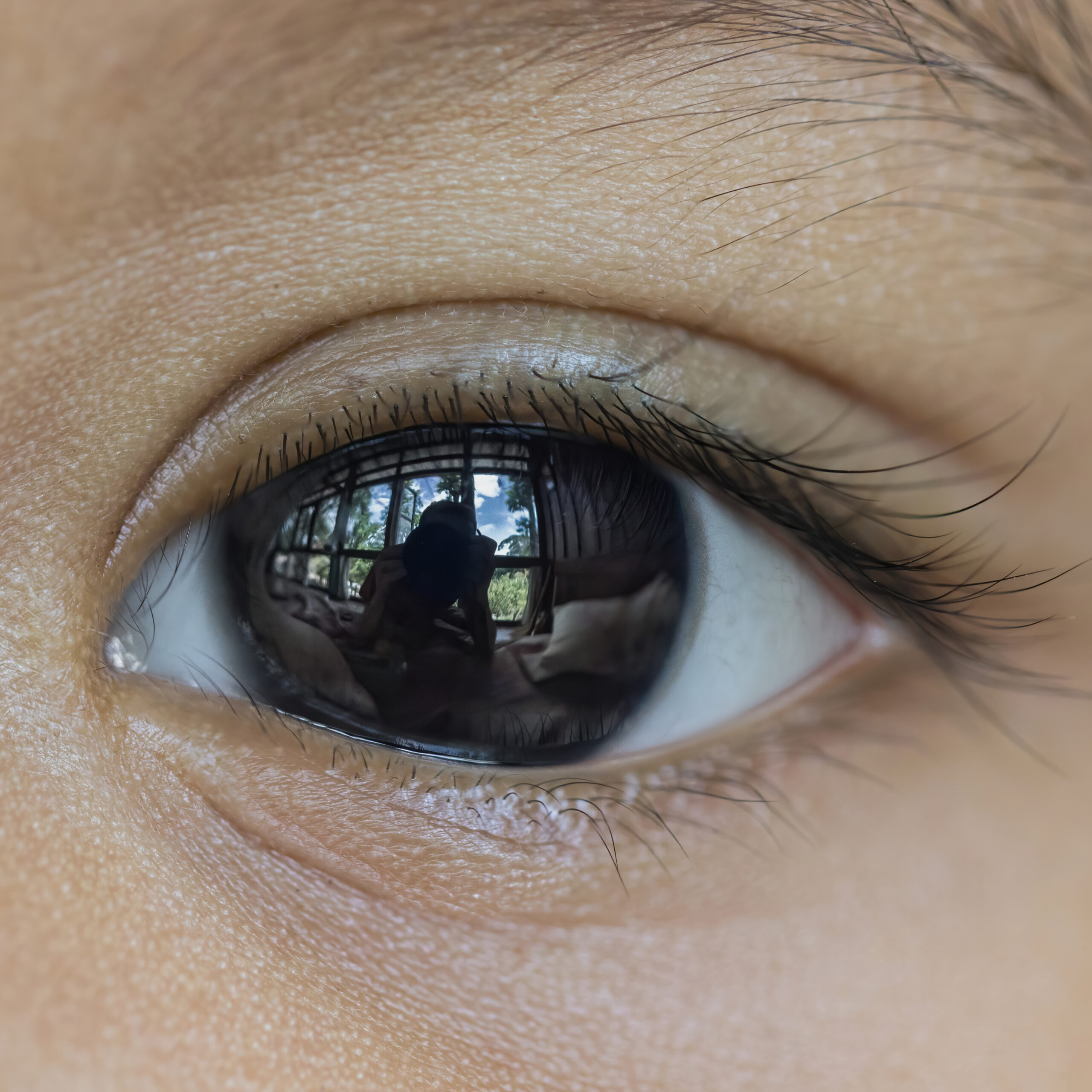
Marcelle Miller Noticed a Faint Cloudy Ring in Her 3-Month-Old Daughter’s Right Eye, and What Doctors Found Has Already Meant Four Surgeries

Marcelle Miller’s daughter has bilateral congenital cataracts, a clouding of the lens in both eyes that was present from early infancy. The little girl has had four surgeries so far to remove the clouded lenses and replace them with artificial ones, Miller told Newsweek.
It started with something Miller almost could not see. When her daughter was 3 months old, she noticed a very faint, small cloudy ring in the baby’s right eye and took her to be checked. A few weeks later, a doctor confirmed the cataracts, and they turned out to affect both eyes.
A perfect pregnancy and a faint ring
Miller became a mother at 22. She works as a realtor in Europe, according to Newsweek, which did not name the country or her daughter. She described the pregnancy as going very well, with a slight placental hematoma that resolved with rest and no morning sickness. Her daughter arrived after 42 weeks, following 21 hours of labor and about seven minutes of pushing. “Everything was perfect,” Miller said.
That is why the ring in the baby’s eye was so unexpected. Miller researched what she had seen online and first came across the term congenital cataracts there. When the doctor’s diagnosis came weeks later, she said she cried for a week straight and called it a “life sentence.”
What congenital cataracts are
A cataract is a clouding of the eye’s lens. Newsweek reported that congenital cataracts affect roughly 3 to 4 in every 10,000 births in the United States. The American Academy of Pediatrics’ HealthyChildren.org calls them rare but a leading cause of vision loss in children, and says a cataract usually shows up as a white reflection in the center of the pupil.
The NHS lists other signs in babies and young children: eyes that look white or cloudy, trouble following moving objects or focusing on faces, eyes that wobble from side to side and a squint. The NHS also notes that congenital cataracts are checked for at the newborn physical exam.
Often there is no clear explanation. HealthyChildren.org says the cause is frequently unknown, though inheritance, eye injury and infections during pregnancy are among the possibilities. The Mayo Clinic similarly lists genetic disorders, infections during pregnancy, childhood disease and trauma as possible causes of childhood cataracts. In Miller’s case, doctors suspect a genetic mutation found in the baby’s father’s blood may be linked. Newsweek reported that it is not believed to directly cause the cataracts but may contribute, and the family is still waiting for more information.
Why surgery could not wait
The family was referred to a specialist. Miller said treatment had to happen soon because light could not fully reach the eyes, which would stunt visual development.
That urgency matches what eye doctors describe. The American Academy of Ophthalmology explains that vision develops in the first few years of life, and says that a cloudy lens present at birth can keep vision from developing properly in that eye, a condition known as amblyopia, or lazy eye. Fixing the underlying problem is not enough on its own, the Academy says, because the amblyopia itself also has to be treated.
HealthyChildren.org adds that when a cataract blocks most light, the lens is surgically removed. Most pediatric ophthalmologists recommend surgery in the first month after birth for those cases, and a baby is then fitted with a contact lens or eyeglasses. A lens implant is recommended at about age 2.
Treatment does not end in the operating room. The Academy of Ophthalmology says the most common approach to amblyopia is patching the stronger eye to force use of the weaker one, with blurring drops or blurring glasses as alternatives. It says vision loss from amblyopia can be prevented, with the best results when treatment starts before age 7 or 8. HealthyChildren.org notes that after cataract treatment, the unaffected eye is often patched to help the treated eye develop, typically until about age 10.
Four surgeries and what comes next
Miller’s daughter has now had four surgeries that removed the clouded lenses and replaced them with artificial ones. Newsweek did not give dates or details for each operation separately.
The NHS says cataract surgery in a child usually takes about an hour under general anesthetic, and that when both eyes are affected they may be operated on separately to allow recovery time. Vision is often blurred at first and improves as the eye heals, and a child may still need glasses afterward.
Recovery has its own routine. The NHS says babies may stay in hospital overnight, while older children usually go home the same day. Eye drops are needed for the first few weeks, and an eye shield may be worn at night. For parents, that means the work of caring for a child after cataract surgery continues long after the operation is over.
Miller’s daughter will need glasses or contact lenses, she said. She has had no visual aids since her operations, refuses glasses, and needs contacts. Her eyesight is starting to plateau, Miller said, but it is not noticeable to people who do not know about the condition. More surgeries are likely in the future, and Miller hopes they will be less invasive.
A mother’s hope
Seeing her daughter after surgery “broke something inside” her, Miller told Newsweek. She said the diagnosis has been harder on her than on her daughter.
Miller hopes her little girl will have a normal life, and she encourages other parents facing a similar diagnosis to hold onto hope.
Get stories like this by email. Sign up for The Parent Diaries Letter.
This article was produced with AI assistance and edited for accuracy against the sources linked above.
Image: Basile Morin – CC BY-SA 4.0/Wikimedia Commons