A Daughter Says She Called the Police After Her Mom Was Left Outside Her Door for Hours, and Now She Can’t Stop Wondering If She Did the Right Thing

A person shared his story about a night that turned into one of the most painful decisions she had ever made. For years, she had kept her distance from her family after growing up in a difficult home and eventually deciding that no contact was healthier for her. She had built a life with her boyfriend and a roommate, and she believed she had finally created the kind of peace she never had as a child. Then one evening, she arrived home and discovered that her past had been sitting outside her front door.
Her mother had somehow been brought there by her brother, who had driven for nearly two hours and left her waiting without telling anyone. The daughter had no warning, no plan, and no idea what she was supposed to do when she finally saw her mother outside. She already knew her mother struggled with severe mental illness, but seeing her in that condition at her own home was still shocking. Suddenly, the carefully separated life she had built collided with the family situation she had spent years escaping.
Her Brother Had Left Her There Without Warning
The first thing that stunned the daughter was learning that her brother had dropped their mother off without making contact. He apparently left her outside the house for hours, waiting until the daughter and her boyfriend eventually returned. Nobody had discussed whether she could stay there, and nobody had arranged professional help or somewhere safe for her to go. The daughter was left trying to understand how such an enormous decision had been made without her.
She admitted that she already had complicated feelings toward her brother because he frequently struggled financially and often asked her for money or assistance. Still, seeing her mother abandoned outside her home forced her to consider that her brother might have reached the end of his ability to cope. Whatever his reasons were, he had effectively placed the entire crisis on her doorstep. She now had to make a decision that neither sibling had properly prepared for.
Her Mom Was Saying Things That Terrified Her
The situation became even more frightening when her mother began speaking in ways that convinced the daughter she was deeply disconnected from reality. She talked about needing a vaccine that supposedly kept her alive and repeatedly questioned the daughter about who her real mother was. These were not normal family arguments or signs of someone simply being upset. The daughter recognized that her mother needed medical attention, but she was not equipped to provide it herself.
She also remembered that her mother had been diagnosed with bipolar disorder when the daughter was still in elementary school. That history made the night even more complicated because she had spent much of her childhood witnessing how severely her mother’s illness could affect the family. The daughter felt sympathy for her mother while also feeling a powerful need to protect herself and the people living with her. Those two emotions were fighting each other at the exact moment she needed to make a decision.
She Knew She Could Not Let Her Stay
The daughter lived with her boyfriend, while their roommate was fortunately away that weekend. Even with that temporary break in the household, she knew she could not simply bring her mother inside and hope everything would somehow work itself out by morning. She had left home at 18 specifically to escape the environment she had grown up in, and inviting that situation back into her home felt impossible. She also did not believe it was fair to place her boyfriend or roommate in an unsafe or unpredictable situation.
That realization came with an enormous amount of guilt. She was not saying that her mother deserved to be abandoned or that she did not care about her suffering. She was saying that she was not trained, prepared, or emotionally capable of becoming her mother’s full-time caregiver. For the daughter, opening the door was not just about giving someone a bed for one night, because she feared that once her mother entered, there might never be a clear way to get her back out.
Calling The Police Felt Like The Only Option
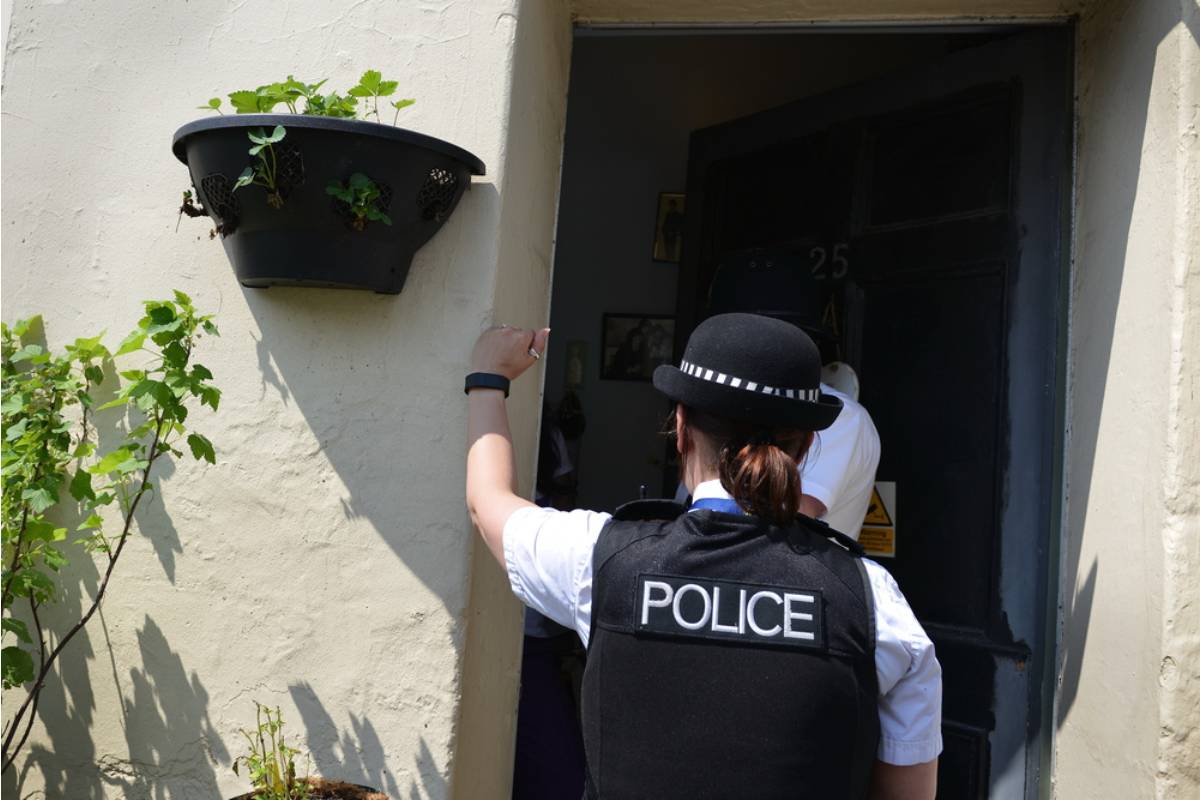
After talking it over with her boyfriend, the couple decided to contact the police. The daughter knew that calling authorities could lead to consequences she could not control, but she could not think of another safe way to handle what was happening. Her mother would not leave, appeared severely confused, and had nowhere else to go. Eventually, the police arrived and took her into custody.
The title of the story made it sound as though the daughter had deliberately sent her mother to jail, but the reality was more complicated. She had called for help, and the officers made their own assessment before deciding what action to take. Still, knowing that her mother was now in police custody did not make the daughter feel relieved. Instead, she immediately began wondering whether she had made a terrible mistake.
The Regret Started Almost Immediately
Once the immediate crisis ended, the daughter was left alone with her thoughts. She described feeling intense anxiety and a deep aching sensation in her chest as she replayed everything that had happened. She could not stop asking herself whether she should have done something differently. Maybe she should have tried harder to calm her mother, she wondered, even though she knew she had no idea how to manage a severe mental health crisis.
A response from a person pointed out a frightening possibility she had not wanted to consider. If her mother had wandered away from the house, been injured, hit by a car, or harmed herself, the daughter might have carried an even heavier burden of guilt. The decision had not been between a perfect option and a cruel option. She had been forced to choose between difficult possibilities while dealing with a person who clearly needed professional intervention.
One Person Remembered Making A Similar Choice
A response from a person shared a painful memory from childhood involving their own mother and a long-term mental health facility. That person described being involved in getting their mother into a car because the mother did not want to go willingly. The memory had remained a deep emotional scar for years. Yet the response also made an important distinction: loving someone does not necessarily mean being capable of caring for them.
The story struck a chord because the daughter was struggling with exactly that conflict. She felt sorry for her mother, but sympathy did not magically give her the training, resources, or emotional strength required to manage a severe psychiatric crisis. Another person reminded her that a professional facility might actually give her mother a better chance of receiving lasting care. Suddenly, the daughter’s decision looked less like rejection and more like an attempt to get the problem into the hands of people equipped to handle it.
Her Brother Was Not Exactly Innocent Either
Several responses also turned their attention toward the brother who had dropped their mother off. Leaving someone outside another person’s home without permission was clearly an alarming decision. The daughter was understandably angry that he had forced her into a crisis without warning. But some people also wondered whether his actions came from desperation rather than simple carelessness.
A response from a person suggested that the brother might have been overwhelmed after carrying the situation for a long time. That did not excuse abandoning their mother outside the daughter’s home, but it offered another explanation for why someone might make such a drastic choice. The daughter had spent years distancing herself from her family, so she had not witnessed everything her brother may have been dealing with behind the scenes. For the first time, she found herself wondering whether two damaged siblings had both been trapped by the same impossible situation.
People Reminded Her That She Was Not A Caregiver
Another response from a person told the daughter that she was not a trained mental health professional and should not be expected to become one overnight. The commenter emphasized that protecting herself was also part of the equation. The daughter had worried so much about what would happen to her mother that she had almost forgotten that her own safety and stability mattered too. The reminder gave her permission to acknowledge that she had limits.
Other people urged her to focus on getting her mother connected to appropriate medical care rather than trying to solve the entire situation personally. They pointed out that she could not force her mother to recover by herself. She could care about what happened to her mother while still refusing to bring her into a home where nobody was prepared to manage her condition. That distinction became increasingly important as the daughter processed the night’s events.
The Question Of Jail Versus A Hospital Haunted Her
One of the biggest fears was whether her mother had been taken to a police cell or somewhere where she could receive psychiatric treatment. Several responses hoped that the officers would recognize the severity of the situation and arrange for an evaluation. The daughter had not called because she wanted her mother punished. She had called because she believed something was seriously wrong and needed to stop the situation from becoming even more dangerous.
A response from a person described the arrest as only the beginning of the situation, not the final solution. The legal system, medical system, and family would all potentially have to deal with what came next. That uncertainty was difficult for the daughter because she wanted to know that her decision had actually helped her mother. Instead, she was left waiting and wondering whether she had simply moved the crisis somewhere else.
Someone Told Her The Decision Might Actually Save Her
A response from a person who had dealt with a severely mentally ill family member offered perhaps the strongest reassurance. They explained that sometimes a family reaches a point where keeping the person at home is no longer safe or sustainable. Eventually, their own family had needed authorities to intervene because nothing else had worked. Although the situation remained heartbreaking, professional care at least provided food, shelter, supervision, and access to medication.
The daughter’s situation was not identical, but the comparison gave her a different way of looking at the night. Maybe the goal was not to personally rescue her mother from every consequence of her illness. Maybe the goal was to stop the crisis from getting worse and allow people with the right resources to intervene. That did not erase the guilt, but it gave the guilt a little less control over her.
She Was Asked To Think About What Would Have Happened If She Said Yes
One response raised the question the daughter had been avoiding. Even if she had let her mother inside that night, what would have happened the next morning? Her mother still would have needed somewhere safe to stay, and the daughter would still have been facing the same larger problem with far fewer options. A temporary solution could easily have turned into a permanent crisis inside her home.
That possibility changed the way she viewed the decision. Letting her mother inside might have felt kinder in the moment, but kindness did not automatically make it sustainable or safe. The daughter realized that she had not been choosing between compassion and cruelty. She had been choosing between an immediate intervention and a situation that could have become far more difficult for everyone involved.
Her Childhood Made The Guilt Even More Complicated
The daughter’s decision could not be separated from her childhood. She had grown up with the effects of her mother’s illness and eventually left home at 18 because she wanted a different life. Years of distance had been her way of protecting herself, not simply punishing her family. Now that same family history was making her question whether she had any right to say no when her mother needed help.
A response from a person reminded her that caring about a sick parent does not erase the damage caused by years of difficult experiences. Another person described having to make similar choices and learning that some situations cannot be fixed by one family member’s sacrifice. The daughter had spent years trying to create a stable life, and it was reasonable for her to protect that stability. Her mother needed care, but that did not automatically mean the daughter had to become the person providing it.
The Real Twist Was That She May Have Been Helping Her Mom
By the end of the responses, the daughter was being encouraged to see the police call through a completely different lens. She had initially viewed it as the moment she had failed her mother, because someone she loved was now in custody because of a decision she made. But several people argued that the call may have been the only realistic path toward getting her mother evaluated and treated. The painful choice might actually have been the first step toward professional help.
That possibility did not make the night easy to accept. The daughter still had anxiety, guilt, and grief over how badly the situation had deteriorated. But she was beginning to understand that loving someone does not require destroying your own home, safety, or mental health to prove it. She had not created her mother’s illness, and she could not cure it by herself.
Now She Has To Decide What Comes Next
The immediate crisis was over, but the larger family problem remained. Her mother would eventually need some kind of plan, her brother would have to confront his own responsibilities, and the daughter would have to decide how much contact she was willing to have going forward. None of those decisions needed to be made in one night. For the first time, she could step back and recognize that there were limits to what one person could solve.
The daughter may eventually choose to stay in contact with her mother, help coordinate resources, or keep her distance. Whatever she decides, the key realization is that she does not have to sacrifice the life she worked so hard to build simply because her family has reached a crisis point. The story began with her feeling like the worst daughter in the world for calling the police. It ended with a much harder but more hopeful thought: perhaps asking for help was the most responsible thing she could have done.