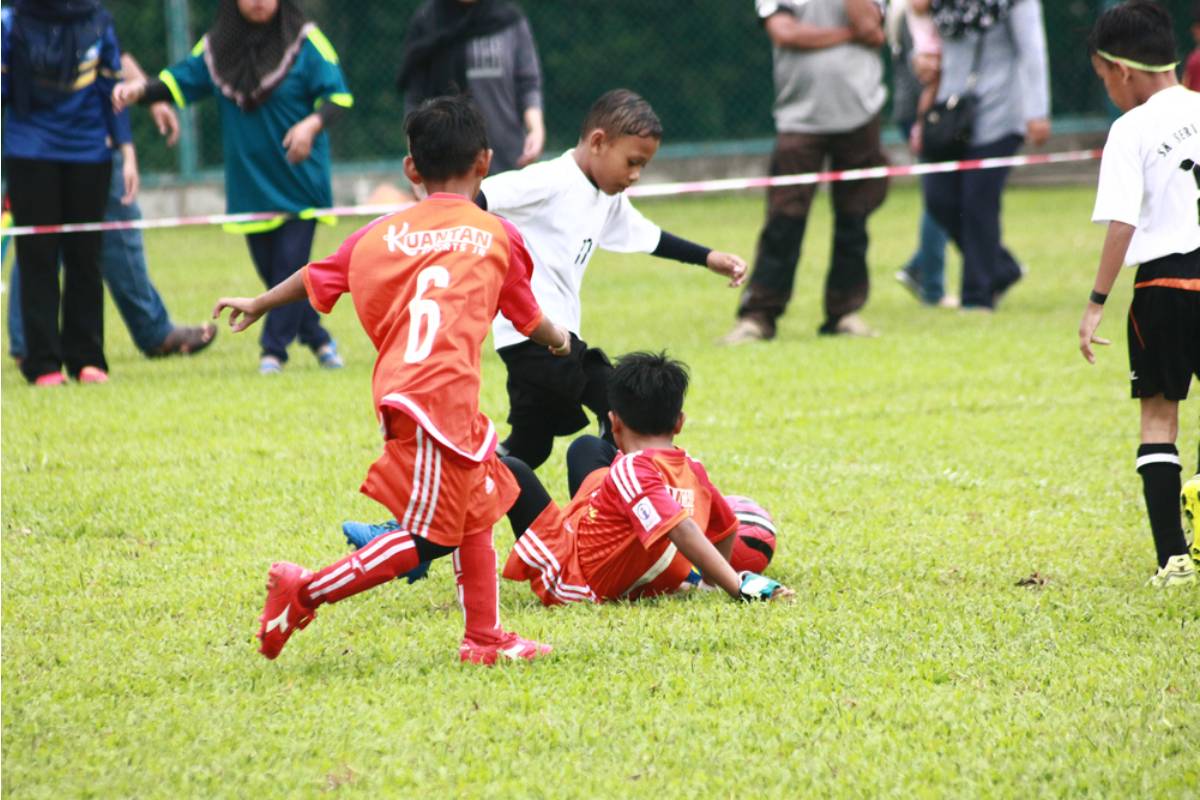
A Mom Says Her Son’s First Soccer Match Was Still Scheduled After Three Hours of Heavy Rain, and She Had No Idea Kids Were Expected to Play Through It

A mom was getting ready for her four-year-old son’s very first soccer match when she realized the weather might become a bigger problem than she expected. Rain had already been falling heavily for around three hours, and the forecast suggested it would continue throughout the entire day. She had assumed a match for children that young would probably be canceled.
Instead, the schedule still showed the game going ahead. The situation became even more confusing because the child’s soccer practice had been canceled the previous day because of rain. With the big day approaching, the mom wanted to know whether playing in heavy rain was actually normal for young soccer players.
Yesterday’s Cancellation Made It More Confusing
The previous day’s cancellation had given the mom a completely different impression of how the league handled bad weather. She had figured that if rain was enough to stop practice, a much longer period of heavy rain would surely stop an actual game. Seeing the match still listed as scheduled left her wondering whether someone had simply forgotten to update the information.
Her uncertainty was understandable because this was her first experience dealing with youth soccer weather rules. She did not want to drag a four-year-old into miserable conditions if the match was likely to be called off anyway. At the same time, she did not want her son to miss his first game because she misunderstood what was considered normal.
She Had One Simple Question
The mom asked whether children were generally expected to play soccer when it was raining heavily. She was not trying to complain about the weather or demand that the match be canceled. She simply wanted to understand what families were normally supposed to expect.
The answers she received quickly showed that there was no universal rule. Families in different places appeared to have completely different experiences with rain and youth sports. What sounded like terrible soccer weather to one parent sounded like an ordinary Saturday morning to another.
One Person Had Grown Up With Rainy Sports
A person shared his story from Western Europe, where rain was described as such a routine part of life that outdoor activities rarely stopped because of it. In that environment, families were apparently used to going outside even when the weather was gloomy for days at a time. There was even a familiar attitude that people were not made of sugar and would survive getting wet.
That response gave the mom her first clue that geography could make a huge difference. Someone living somewhere with frequent rainfall might barely think twice about a wet soccer field. For someone from a drier climate, however, several hours of heavy rain could make a scheduled match seem almost unbelievable.
Another Family Had Seen the Opposite
A person from the United States shared a completely different experience after moving from Southern California to Chicago. When his son was younger in Southern California, rain often meant soccer was canceled. After moving to Chicago, however, his two children regularly played through rain and even snow.
The major exception was lightning, which apparently changed everything. The comparison showed just how unpredictable youth sports policies can become from one location to another. A drizzle might end one child’s game while another child somewhere else could be kicking a ball through falling snow.
The Field Could Be More Important Than the Rain
Several responses pointed out that the rain itself was not always the real problem. On grass fields, heavy rainfall can turn the surface into mud, create large puddles, or make the field vulnerable to damage from players running across it. In those situations, organizers may cancel a match because of the condition of the field rather than simply because children would get wet.
Turf fields changed the equation for many families. Some parents said games on turf would continue through rain unless lightning became a danger. Suddenly, the mystery surrounding the four-year-old’s match seemed much easier to understand because the decision could depend on the field, the league, and the local weather policy.
Lightning Was the Big Red Line
One rule appeared again and again in the responses. Rain might be unpleasant, but lightning and thunder were treated very differently. A number of people explained that soccer would typically continue in wet weather but stop when lightning was nearby because of the safety risk.
One person explained that delays could happen based on thunder or lightning, while another said games were generally played unless lightning was involved. This became the closest thing to a universal answer in the discussion. The mom had started by worrying about rain, but she quickly discovered that the real weather warning sign was much more serious.
Heavy Rain Still Had a Limit
Even parents who regularly watched soccer in the rain admitted there could be a breaking point. Some said games might be postponed when the rain became so heavy that fields flooded or became unusable. Others mentioned that cities or leagues sometimes closed fields entirely after significant rainfall.
That distinction helped explain why the schedule was still showing the match as active. A field could tolerate ordinary rain and still be perfectly playable, even while the weather looked awful from someone’s living-room window. But once standing water, flooding, or serious damage became an issue, the match could suddenly disappear from the schedule.
Younger Soccer Did Not Always Follow the Same Rules
The mom later added an important detail from her son’s earlier soccer experience. The toddler soccer program he had participated in had apparently canceled over something as minor as a sprinkle. That had given her an expectation that little-kid soccer simply stopped whenever the weather got unpleasant.
The bigger kids, however, seemed to operate under a different set of expectations. Several parents described youth soccer as an activity where rain was simply part of the experience. What felt unusual for toddlers could be completely ordinary once children moved into a more structured league.
Practice and Games Could Be Treated Differently
Another surprising detail was that some leagues did not treat practices and games equally. One person explained that their soccer club would hold games in the rain but cancel practices. The reasoning was that practices were more expendable and avoiding them could help keep grass fields in better condition for the matches.
That small distinction explained another part of the mom’s confusion. The canceled practice from the previous day did not necessarily mean the game would be canceled too. It was possible the league was protecting the field during practice while still trying to preserve the scheduled games.
Some Parents Remembered Rainy Games Fondly
Then the mood of the responses shifted. Instead of talking about canceled matches, several people admitted that playing soccer in the rain could actually be fun. One person remembered rainy games as some of the most enjoyable experiences from childhood.
Another person recalled players eventually diving into a huge puddle beside the field after a particularly wet match. The rain that sounded miserable to a grown-up standing on the sidelines could apparently become the most exciting part of the day for a child on the field.
The Spectators Were the Ones Really Suffering
There was also a humorous realization buried in several responses. Parents watching from the sidelines often hated rainy soccer more than the children playing it. The players were moving constantly, while spectators were left standing under umbrellas trying not to become completely soaked.
Some parents joked that children usually thought rainy games were great. Adults, meanwhile, were worrying about wet shoes, muddy cars, soggy jackets, and miserable seating areas. Even glasses became part of the problem when rain made it difficult for kids to see clearly.
Parents Learned to Prepare for the Mess
Once it became clear that the game might continue, experienced parents offered practical survival tricks. One person recommended bringing a complete change of clothes for the child before getting into the car. Another suggested putting a garbage bag over the car seat to protect it from wet clothes and mud.
Good rain gear also became a recurring suggestion. Parents quickly learn that preparing for the weather is often easier than trying to predict whether the league will cancel. For a first-time soccer family, the advice turned a confusing weather situation into something much more manageable.
The End of the Season Could Change Everything
Another response introduced an unexpected factor: the time of the season. According to one person, leagues sometimes become more willing to play through poor weather later in the season because they are trying to complete all the scheduled matches.
Earlier in the season, there may be more flexibility to cancel or reschedule. Later on, there may be fewer opportunities to make up missed games. That meant the exact same rainstorm could produce a different decision depending on when it happened.
The Answers Finally Changed Her Perspective
After hearing from parents in different regions and leagues, the mom realized there was no single definition of terrible soccer weather. Rain alone was often not enough to stop a match, especially when the field was playable and there was no lightning. Her son’s first game being scheduled was therefore not nearly as strange as it had seemed at first.
She eventually edited her original question with the answer she had discovered. Apparently, playing soccer in the rain really was pretty common. The toddler program had prepared her for cancellations, but the next level had prepared her for something completely different.
She Packed the Umbrella and Accepted the New Normal
With her question finally answered, the mom had a much simpler plan for the big day. She decided to bring rain boots and an umbrella and prepare for the possibility that the match would happen despite the downpour. What had started as confusion over a mysterious schedule had turned into a crash course in youth soccer weather rules.
The real twist was that the rain she feared might ruin her son’s first soccer match could actually become part of his first great soccer memory. Experienced parents had seen children slip, slide, laugh, and keep playing through conditions adults would rather avoid. For her four-year-old, the soaked field might not have been a disaster at all, but the beginning of a tradition he would someday remember with a smile.