A Mom Found Out Her Daughter Had Been Doing Extra Chores at a Neighbor’s House to Earn Money for a School Trip She Never Mentioned Wanting to Go On

When Melissa Carter found a stack of crumpled dollar bills inside her daughter’s winter boot, she assumed the money had been saved from birthday gifts or small allowances. Then she found a handwritten list of chores that didn’t belong to their house. The discovery led her to a neighbor’s front door and a truth her daughter had been keeping quiet for weeks.
The Money Inside the Boot
Melissa was sorting laundry in the living room when she noticed something hard inside twelve-year-old Hannah’s old winter boot. She pulled out a folded grocery receipt, two quarters, and several bills that had been rolled tightly enough to fit beneath the insole. At first, she smiled because Hannah had never been particularly good at keeping track of money, but then she noticed that most of the bills were ones and fives, all folded in the same direction.
Melissa carried the money to the kitchen table and counted it twice. There was $47, far more than Hannah usually had at once, and there was no envelope, birthday card, or note explaining where it came from. When Hannah came home from school, Melissa decided not to accuse her of anything and simply asked, “Honey, can you tell me where this came from?
Hannah Suddenly Stops Talking
Hannah froze halfway through taking off her backpack. Her eyes moved from the money on the table to her mother, and for several seconds she said nothing at all. Then she quietly answered, “I earned it.”
Melissa sat down across from her. “Earned it doing what?” she asked, expecting to hear about babysitting, helping a classmate, or perhaps doing extra work around the house. Hannah looked at the floor and said, “Just chores,” but the way she said it made Melissa realize there was more to the story.
The Chores Were Not at Home
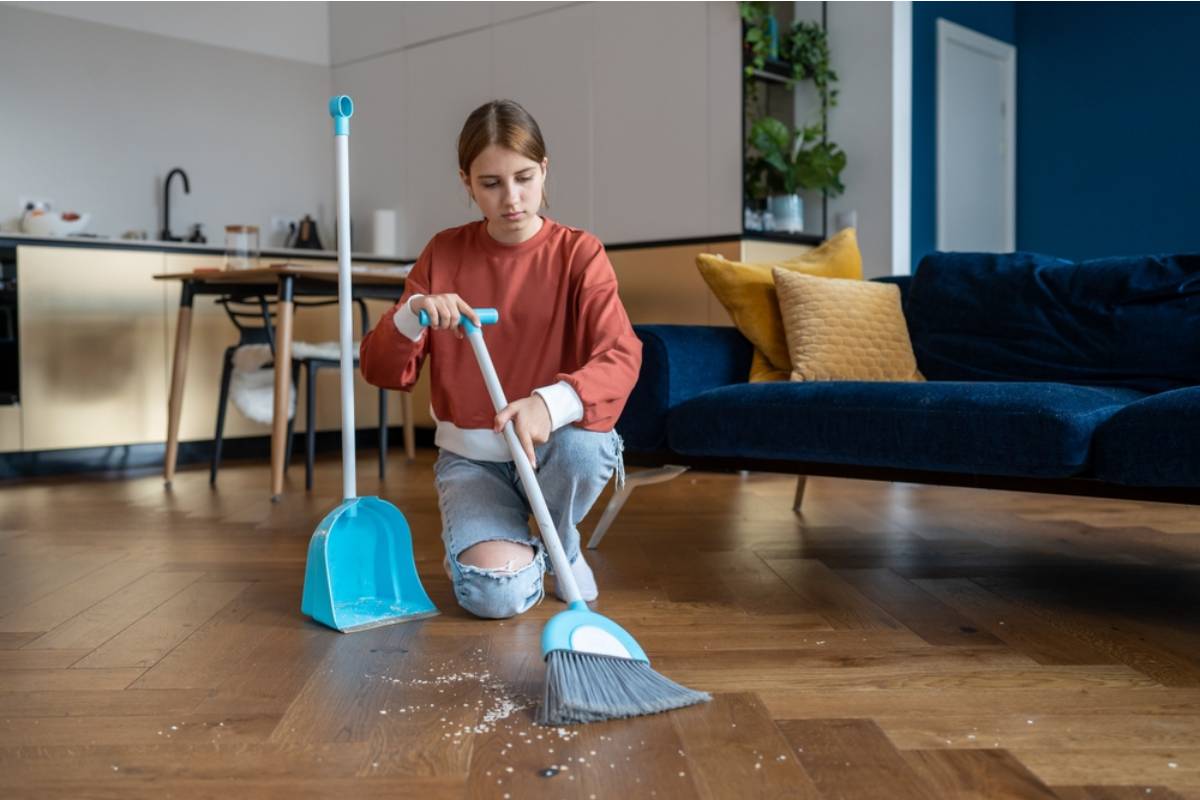
Melissa asked what chores, and Hannah finally admitted she had been helping someone else. She explained that she had been going to the house next door several afternoons a week to sweep the porch, pull weeds, carry groceries inside, wash dishes, and sometimes clean the kitchen. Melissa immediately asked which neighbor had been paying her.
Hannah hesitated before saying, “Mrs. Alvarez.” Melissa knew the woman, an older neighbor who lived with her husband and had always been friendly to Hannah. What Melissa didn’t understand was why her daughter had never mentioned going there, especially when their own house had plenty of chores that needed doing.
The School Trip Comes Up
Melissa asked what she was saving the money for, and Hannah’s expression changed completely. She reached for the money as if she wanted to put it back where it had been hidden, but Melissa gently stopped her. “I’m not mad,” she said, “but I need you to tell me the whole story.”
Hannah swallowed hard and finally said, “It’s for the school trip.” Melissa knew exactly which trip she meant because permission forms had been sitting on the kitchen counter for nearly a month. The sixth-grade class was planning an educational trip to Washington, D.C., and Hannah had never once asked to go.
“I Thought You Didn’t Want To Go”
Melissa remembered asking Hannah about the trip when the school sent home the information packet. Hannah had shrugged and said it sounded boring, so Melissa had assumed she wasn’t interested. Now Melissa stared at her daughter and asked, “You wanted to go this whole time?”
Hannah nodded but wouldn’t look up. She explained that everyone in her class had been talking about visiting the museums and seeing the monuments, but she had heard her mother discussing household expenses and decided asking for money would be selfish. “I knew we couldn’t just spend extra money on me,” she whispered.
The Part Hannah Had Kept Secret
Melissa asked why she hadn’t simply told her the truth. Hannah’s eyes filled with tears as she explained that she had overheard her mother telling her older brother that they needed to be careful with money until the next paycheck. She had decided that if she wanted to go, she needed to find a way to pay for it herself.
“I didn’t want you to say no because we couldn’t afford it,” Hannah said. And I didn’t want you to feel bad about saying no.” Melissa felt a sharp ache in her chest because she realized Hannah had been trying to protect her from a problem she had never asked her daughter to carry.
Mrs. Alvarez Opens the Door
The next afternoon, Melissa walked with Hannah to Mrs. Alvarez’s house. Before Melissa could say anything, Mrs. Alvarez opened the door and looked embarrassed, as if she had already guessed why they were there. She immediately said, “I should have called you.”
Melissa asked how long Hannah had been helping. Mrs. Alvarez explained that Hannah had approached her after noticing her struggling with a bag of groceries and had offered to help around the house. At first, Mrs. Alvarez refused to pay her, but Hannah insisted that she wanted to earn money for something important.
A Neighbor Explains What She Saw
Mrs. Alvarez told Melissa that Hannah had never asked for special treatment. She arrived with a small notebook and wrote down every chore she completed, including sweeping, dusting, taking trash bins to the curb, and organizing boxes in the garage. Mrs. Alvarez said she paid Hannah a few dollars each time because Hannah refused to accept money for anything she considered “just helping.”
Melissa glanced at Hannah, who looked mortified. Mrs. Alvarez smiled and said, “Your daughter has been very determined.” Then she added something that surprised Melissa even more: Hannah had turned down extra money several times because she wanted every dollar to be earned.
The Notebook Tells the Real Story
Back at home, Hannah reluctantly handed Melissa the notebook. The first page contained the name of the school trip, followed by a rough estimate of the amount she needed. Underneath it was a list of chores, with small amounts written beside each one.
Some entries were crossed out because Hannah had already completed them. Others had tiny notes beside them, such as “Mrs. Alvarez wasn’t feeling good today, so I made soup” and “Didn’t take payment for carrying groceries.” Melissa read those lines slowly and realized her daughter wasn’t simply trying to collect money.
Then Melissa Finds the Permission Slip
Melissa went upstairs and found the permission slip buried underneath Hannah’s school papers. It was still unsigned, and a section asking whether the student would participate had been left blank. The payment deadline was approaching quickly, which explained why Hannah had suddenly become so determined to earn money.
Melissa returned to Hannah’s room holding the form. You could have told me,” she said softly. Hannah wiped her eyes and replied, “I know, but I thought if I earned enough, then it wouldn’t be a problem.” Melissa sat beside her and told her that money was something adults were supposed to worry about, not something children should secretly solve alone.
The School Has an Unexpected Answer
The next morning, Melissa called the school and explained the situation without giving every personal detail. The school secretary told her that there was a small assistance fund for students who wanted to participate in educational trips but couldn’t comfortably afford them. Melissa had never known such a fund existed.
The principal later called Melissa and said the school had already noticed several families struggling with the trip cost. He explained that no student was supposed to feel embarrassed about needing help. When Melissa asked whether Hannah could still participate, he said, “Absolutely, if that’s what she wants.”
Hannah Doesn’t Know What to Choose
When Melissa told her, Hannah didn’t celebrate. Instead, she stared at the permission form and asked whether accepting the assistance meant she should stop working for Mrs. Alvarez. Melissa told her she could continue helping if she enjoyed it, but earning money should be a choice rather than something she felt forced to do.
Hannah thought about it before saying, “I still want to help her.” Melissa smiled and told her that was different from believing she had to pay for her own childhood experiences. Hannah finally agreed to sign the form, but she insisted on keeping the $47 she had earned.
The Money Gets a New Purpose
Melissa didn’t take Hannah’s savings away or tell her how to spend it. Instead, she suggested that Hannah choose something meaningful to save for now that the trip was no longer depending entirely on her own earnings. Hannah considered several ideas before saying she wanted to buy a new pair of soccer cleats.
Then she surprised her mother by asking whether she could use some of the money to buy groceries for Mrs. Alvarez. Melissa explained that she didn’t need to repay the neighbor for helping her, and Mrs. Alvarez certainly wasn’t expecting anything in return. Hannah nodded, but said, “I just want to do something nice for her.”
The Trip Becomes More Than a Trip
Weeks later, Hannah boarded the school bus with her classmates for the trip she had once pretended not to care about. She came home with photographs, museum brochures, and a long story about getting separated from her friends for several minutes before finding them again near an exhibit.
At dinner, she talked excitedly about everything she had seen. Melissa listened and realized that the trip had given her daughter something more important than a day away from school: it had taught her that asking for help didn’t make her a burden.
One Conversation Changes Their Routine
After that, Melissa started having more direct conversations with Hannah about money. She explained which expenses were difficult, which ones were manageable, and why adults sometimes had to make careful choices without children needing to solve those problems themselves.
Hannah also stopped hiding things she thought might cost money. When she wanted to join an after-school art program, she brought the registration form straight to her mother instead of quietly putting it away. Melissa was grateful for that small change because it meant her daughter had finally learned something she couldn’t have taught through an allowance or lecture.
The Neighbor’s Last Surprise
A few months later, Mrs. Alvarez stopped Melissa outside their houses and handed her a small envelope. Inside was a handwritten note thanking Hannah for all the help she had given during those difficult weeks. Mrs. Alvarez had also included a photograph of Hannah standing beside her after they finished planting flowers in the front yard.
Melissa looked at the photograph and laughed when she saw Hannah holding a broom like a microphone. “She really worked for that money,” Mrs. Alvarez said. Melissa nodded and replied, “She did, but I think the bigger thing she earned was learning that she doesn’t have to carry everything by herself.”
Hannah Finally Says What She Was Afraid to Say
That evening, Melissa showed Hannah the photograph and asked if she remembered why she had never told her about the trip. Hannah nodded and admitted she had been afraid her mother would look disappointed if she asked for something they couldn’t afford. “I didn’t want you to think I was ungrateful,” she said.
Melissa hugged her and told her wanting something didn’t make her ungrateful. She explained that parents sometimes have to say no, but children shouldn’t have to decide the answer before they even ask. Hannah smiled and said, “Next time I’ll ask first.”
Melissa smiled back. “That’s all I wanted you to learn.”