A Mom Found Out Her Son Had Been Practicing His Times Tables During Car Rides Because That Was the Only Quiet Time He Got to Focus

When Denise first heard her son reciting multiplication facts from the back seat, she assumed he was preparing for a quiz. Ten-year-old Caleb had never been especially interested in math, so the sudden practice surprised her. Then she realized he wasn’t doing it because someone had told him to.
He had discovered that the twenty minutes he spent alone in the car each morning were the only part of his day when nobody was talking, asking questions, playing music, or needing something from him. What Denise learned next made her rethink how little she knew about what her son was trying to manage.
The Numbers Started in the Back Seat
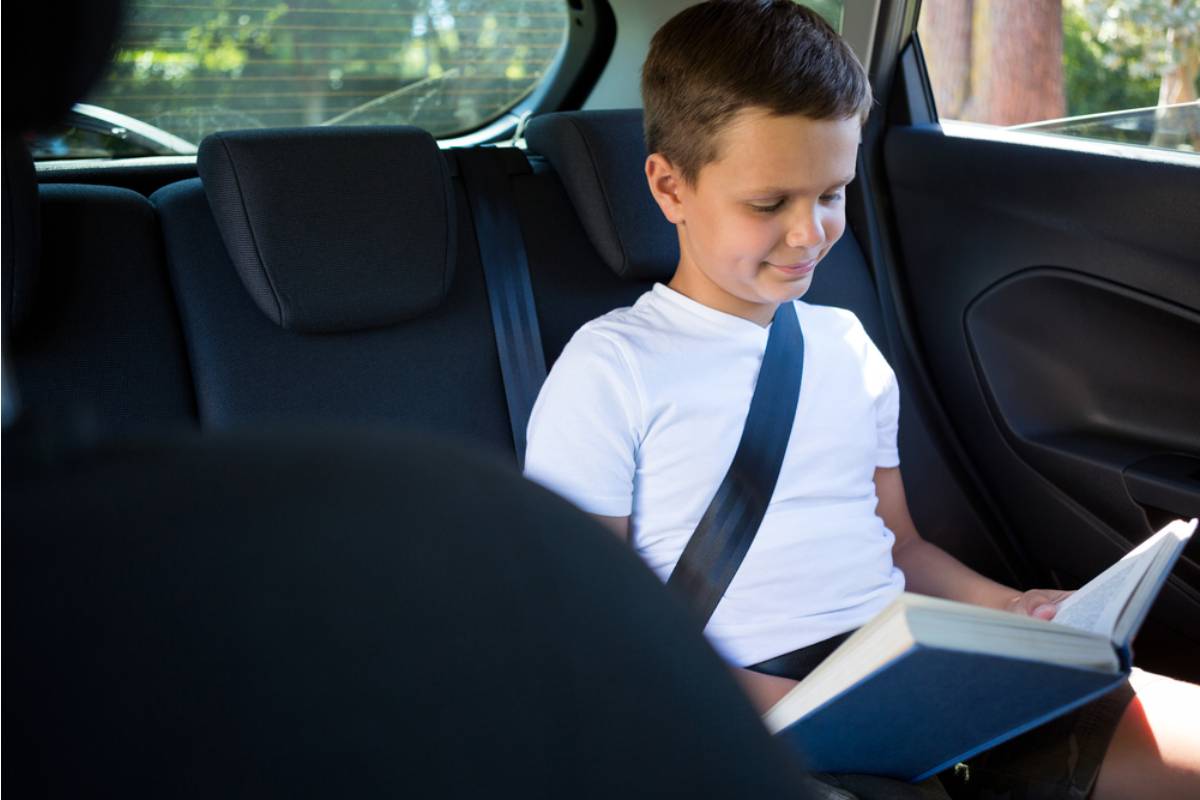
The first time Denise heard it clearly, she was driving Caleb to school.
He was sitting behind her with his backpack beside him.
“Six times seven is forty-two,” he whispered.
Denise glanced at him in the rearview mirror.
“What was that?”
Caleb looked up.
“Nothing.”
She smiled.
“You were doing math.”
“I was practicing.”
“For your quiz?”
Caleb nodded.
Denise assumed that was the whole explanation.
She had no idea he had been doing the same thing almost every morning.
He Didn’t Mention the Homework
That evening, Denise asked whether Caleb had finished his homework.
“Yeah.”
“Did you practice your multiplication?”
Caleb nodded.
“A little.”
She smiled.
“Good.”
Caleb went upstairs.
Denise returned to the kitchen.
She didn’t notice that Caleb had left his math flashcards in the car.
The next morning, he grabbed them before leaving.
He didn’t bring them into the house.
He carried them straight to the back seat.
The Car Became His Study Room
Over the next several days, Denise began noticing a pattern.
As soon as they left the driveway, Caleb started practicing.
He didn’t use the flashcards every morning.
Sometimes he simply repeated the numbers quietly.
“Eight times six.”
“Forty-eight.”
“Nine times seven.”
“Sixty-three.”
When Denise asked him why he didn’t practice at home, he shrugged.
“I do.”
She laughed.
“Not very much.”
Caleb looked out the window.
“I like practicing in the car.”
Denise didn’t question him.
At that point, she thought it was simply a strange preference.
The House Was Never Really Quiet
One Saturday morning, Denise finally noticed something she had overlooked.
Caleb had started doing homework at the kitchen table.
His younger sister, Mia, was watching cartoons nearby.
His older brother, Ryan, was playing a video game in the living room.
The dog was barking.
Denise was talking on the phone.
Caleb tried to solve a math problem.
He erased it.
Then he tried again.
Mia shouted from the couch.
“Mom, I can’t find the remote!”
Ryan yelled something from the other room.
Caleb put his pencil down.
Nobody noticed.
He waited until the noise settled.
It didn’t.
His Teacher Mentioned a Problem
A few days later, Caleb’s teacher, Mrs. Harris, emailed Denise.
She said Caleb was struggling with multiplication.
His written work was inconsistent.
Sometimes he knew the answer immediately.
Other times he appeared to forget facts he had already learned.
Denise was surprised.
“He practices every day,” she said when she spoke with the teacher.
Mrs. Harris paused.
“Every day?”
“Yes.”
“That’s interesting.”
“Why?”
“Because he seems to know some of the facts very well. Then during independent work, he loses focus.”
Denise frowned.
“Is he distracted?”
“Sometimes.”
Mrs. Harris added something else.
“He’s not disruptive. He just stares at the page for a while.”
Denise thought about the car.
The Flashcards Gave Her a Clue
That afternoon, Denise found the multiplication flashcards on the passenger seat.
She flipped through them.
Several cards had tiny pencil marks in the corner.
Some had stars.
Others had circles around the numbers.
She looked at the back.
There were handwritten notes.
“Too slow.”
“Know this.”
“Practice again.”
Denise recognized Caleb’s handwriting.
She sat quietly for a moment.
He wasn’t casually practicing.
He was tracking himself.
He was trying to get faster.
She Asked Him the Wrong Question First
When Caleb came home, Denise held up the cards.
“You’ve been practicing these a lot.”
Caleb nodded.
“Yeah.”
“Why didn’t you tell me you were having trouble?”
He shrugged.
“I wasn’t.”
“Your teacher says you’re struggling.”
Caleb looked uncomfortable.
“I know the answers.”
“Then what’s happening?”
He didn’t answer.
Denise tried again.
“Are you getting distracted?”
Caleb shook his head.
“No.”
“Then what?”
He looked toward the kitchen.
“It’s loud.”
Denise stopped.
“What?”
“It’s always loud.”
He said it quietly.
“I can’t think.”
Caleb Explained the Car Rides
Caleb finally told her why the car worked.
In the morning, Mia was usually still sleepy.
Ryan wasn’t with them.
The radio was usually off because Denise liked quiet while driving.
Nobody asked him questions.
Nobody interrupted.
Nobody walked into the room.
“I can think back there,” Caleb said.
Denise stared at him.
“You’ve been using the car to study?”
He nodded.
“It’s the only place I can finish something without stopping.”
Denise felt a lump in her throat.
She had thought the car rides were ordinary.
For Caleb, they were the calmest part of his day.
His Mother Realized What He Wasn’t Saying
Denise asked whether the noise bothered him at school too.
Caleb nodded.
“Sometimes.”
“What happens?”
“I read something and then somebody talks.”
“Then what?”
“I forget what I was doing.”
He didn’t complain.
He didn’t sound angry.
He sounded resigned.
Denise suddenly understood why his teacher saw him staring at his paper.
He wasn’t refusing to work.
He was trying to rebuild his concentration after interruptions.
Mrs. Harris Suggested an Experiment
Denise told Mrs. Harris what Caleb had said.
The teacher suggested something simple.
She gave Caleb a quiet seat during independent work.
She also allowed him to use a small study card with multiplication facts before starting assignments.
“We’ll see whether it helps,” she said.
The next week, Caleb’s work improved.
Not dramatically.
But enough to notice.
He completed more problems.
He made fewer careless mistakes.
Mrs. Harris called Denise.
“I think we’ve found something.”
Denise smiled.
“What?”
“He needs a little more quiet than we realized.”
The Family Changed the Kitchen Routine
Denise didn’t try to make the entire house silent.
That wouldn’t have been realistic.
Instead, she created one quiet period after school.
For twenty minutes, Caleb could sit at the kitchen table without television or video games nearby.
Mia was given headphones.
Ryan moved to another room.
Denise kept her phone away.
At first, Caleb looked suspicious.
“Why is everyone being quiet?”
Denise laughed.
“Because you asked for it without actually asking.”
Caleb smiled.
“I didn’t ask.”
“I know.”
He opened his math book.
The First Quiet Session Was Strange
For the first few minutes, Caleb didn’t know what to do.
He kept looking around.
Mia wasn’t talking.
The television was off.
Ryan wasn’t yelling.
Denise wasn’t asking him questions.
Finally, Caleb picked up his pencil.
He started working.
After ten minutes, he looked up.
“I finished.”
Denise smiled.
“That was fast.”
Caleb shrugged.
“It wasn’t hard.”
Denise looked at the worksheet.
There were almost no mistakes.
She didn’t celebrate too loudly.
She didn’t want to break the quiet.
Instead, she simply gave him a thumbs-up.
Caleb smiled.
The Car Rides Became Something Else
Caleb continued practicing multiplication in the car.
But now it wasn’t because he had nowhere else to focus.
Sometimes he practiced because he enjoyed seeing how quickly he could answer.
He began challenging himself.
“Mom, give me a number.”
“Seven.”
“Forty-nine.”
“Eight.”
“Sixty-four.”
Denise laughed.
“You’re getting good.”
Caleb grinned.
“I know.”
One morning, he put the flashcards away before they reached school.
“I don’t need these anymore.”
Denise glanced at him.
“Are you sure?”
“Yeah.”
Then he pulled out a book instead.
His Teacher Gave Him a Surprise
A few weeks later, Mrs. Harris handed back a multiplication quiz.
Caleb looked at the top.
He had gotten every problem correct.
He stared at the paper.
“Really?”
Mrs. Harris smiled.
“Really.”
Caleb looked around the classroom.
Then he tucked the paper carefully into his folder.
When Denise picked him up, he didn’t mention the grade immediately.
Instead, he handed her the paper.
She looked at it.
“Wow.”
Caleb smiled.
“I practiced.”
“I know.”
He laughed.
“You really do.”
He Finally Asked for Quiet
A month later, Denise was cooking dinner while Mia watched television.
Ryan was talking loudly on the phone.
Caleb walked into the kitchen.
“Mom?”
“Yeah?”
“Can I have twenty minutes?”
Denise looked at him.
“For homework?”
“Yeah.”
She smiled.
“Of course.”
Caleb went to the table.
Denise turned down the television.
Ryan moved to another room without being asked.
Nobody made a big deal out of it.
That was the point.
Caleb had finally learned that he could ask for what helped him concentrate.
He didn’t need to wait until he found a quiet corner by accident.
The Car Still Had One Special Purpose
Months later, Caleb was no longer struggling with multiplication.
He still kept a small stack of flashcards in the car.
Denise asked why.
He smiled.
“Just in case.”
“Just in case of what?”
“I don’t know.”
She laughed.
One afternoon, they were driving home when Caleb suddenly started reciting numbers again.
Denise glanced at him.
“Still practicing?”
“No.”
“What are you doing?”
“I’m seeing how many I can get before we get home.”
Denise smiled.
“That’s different.”
“Yeah.”
He looked out the window.
“I like the quiet.”
His Mother Finally Understood
Denise had spent weeks thinking she was helping Caleb with math.
But the real problem had never been multiplication alone.
He needed uninterrupted time to think.
He needed fewer distractions.
He needed an adult to notice that struggling with a task didn’t always mean a child wasn’t trying hard enough.
Sometimes the child was trying in an environment that made concentration almost impossible.
The car had accidentally become the place where Caleb could hear his own thoughts.
Once his family understood that, they didn’t need to keep him in the car to help him.
They simply brought some of that quiet into the house.
The Last Flashcard
One evening, Denise found the old flashcards on Caleb’s desk.
She picked up the one marked “9 x 7.”
There was still a tiny circle around it.
She called Caleb into the room.
“You still need this one?”
He looked at the card.
“Sixty-three.”
Denise smiled.
“Without thinking?”
“Yep.”
He took the card from her.
Then he added, “Mom?”
“Yeah?”
“Thanks for making the quiet time.”
Denise nodded.
“You’re welcome.”
Caleb walked away.
Denise looked at the flashcard again.
She realized the most important thing he had learned wasn’t that nine times seven equals sixty-three.
It was that needing quiet didn’t make him difficult, asking for help didn’t make him weak, and struggling to focus didn’t mean he wasn’t capable.
Sometimes children already know how to solve part of the problem.
They just need someone to notice what is getting in their way.