A Mom Found Out Her Son Had Been Skipping the Snack Table at Every Birthday Party Because He Didn’t Recognize Half the Ingredients and Didn’t Want to Ask

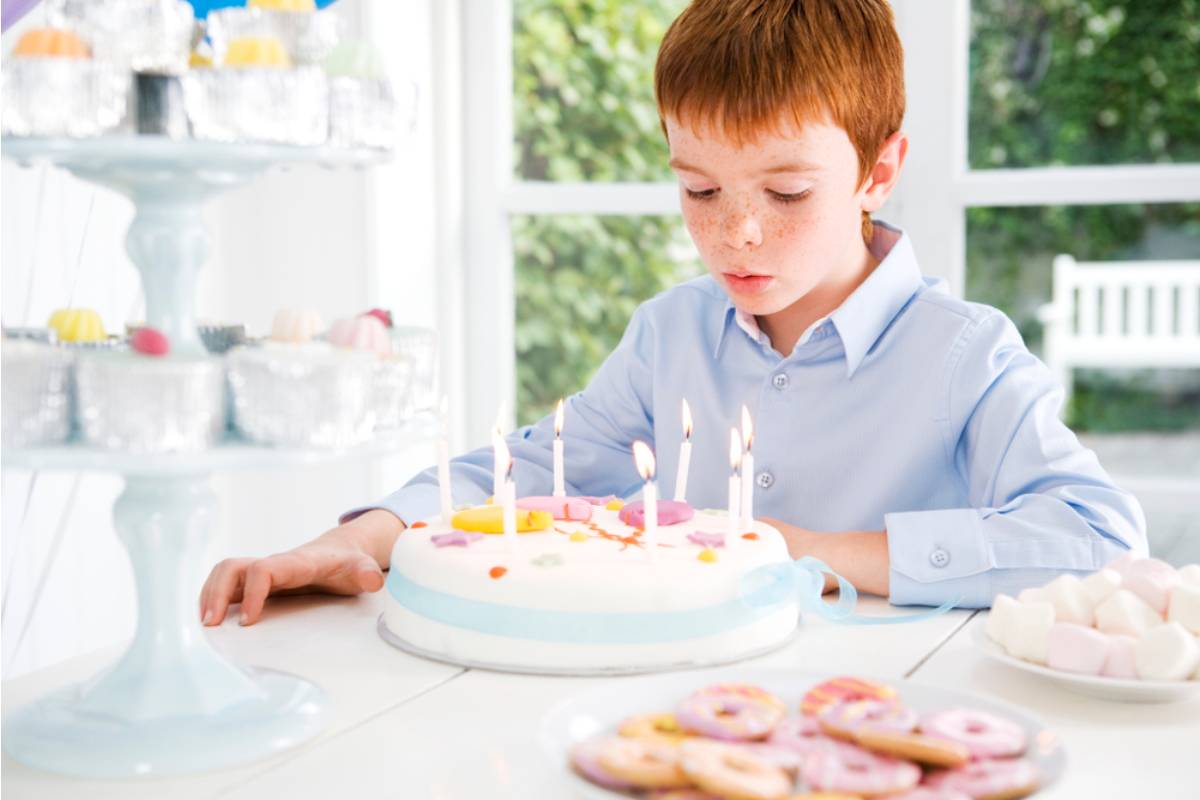
For months, Jenna Parker thought her nine-year-old son simply wasn’t interested in birthday-party snacks. He would come home from every party hungry, barely touching the cupcakes, pizza, or candy everyone else had been excited about. She finally discovered the real reason when another parent casually mentioned seeing him standing alone beside the food table, reading labels instead of eating.
The Half-Eaten Cupcake
Jenna noticed the pattern after her son Caleb came home from another birthday party and immediately asked whether there was anything to eat. She stared at him because he had just spent two hours at a party where pizza, cupcakes, fruit, and snacks had been served. “Didn’t you eat there?” she asked, and Caleb shrugged before saying he wasn’t very hungry.
Jenna didn’t push him that night, but the answer bothered her. Caleb normally loved pizza and had never turned down a cupcake at home. She began remembering how often he returned from parties with unopened juice boxes and untouched goodie-bag candy.
A Parent Makes an Innocent Comment
A few days later, Jenna ran into another mother from Caleb’s class while picking him up from school. The woman smiled and mentioned that Caleb had been “very careful” around the food at her daughter’s birthday party. Jenna laughed and said he could be picky sometimes, but the woman looked surprised.
“He wasn’t being picky,” she said. “He kept reading the packages.” Jenna’s smile disappeared as the woman explained that Caleb had stood near the snack table, picked up several items, read the ingredient labels, and then quietly put them back. “I thought maybe he wasn’t feeling well,” the woman added.
Jenna Asks the Question Again
That evening, Jenna waited until Caleb finished his homework before asking about the party food. She didn’t mention what the other mother had told her because she didn’t want him to feel like someone had been watching him.
Instead, she asked, “Do you not like the food at birthday parties?” Caleb looked down at his notebook and said, “Some of it.” Jenna asked what he meant, and he quietly answered, “I don’t know what’s in it.”
The Answer Finally Comes Out
Jenna pulled out the chair beside him. “You mean you don’t recognize the ingredients?” she asked. Caleb nodded. He explained that he could recognize some foods by looking at them, but many packaged snacks had words he couldn’t pronounce.
He was afraid one of the ingredients might be something he wasn’t supposed to eat. When Jenna asked why he hadn’t simply asked an adult, Caleb looked embarrassed and said, “Because everybody else already knows what it is.”
He Didn’t Want to Be the Weird Kid
Caleb explained that at parties, the other children usually grabbed food without thinking twice. They would tear open bags, trade candy, and pile cupcakes onto napkins while talking about games. He didn’t want to stand there asking an adult to explain every ingredient.
“So I just wait until I get home,” he said. Jenna felt a knot form in her stomach because she had assumed her son’s quietness around food was preference rather than uncertainty. He wasn’t refusing food because he disliked it. He was trying not to draw attention to something he didn’t understand.
The Goodie Bag Made Things Worse
Jenna asked whether this also explained why Caleb rarely ate anything from party favor bags. He nodded and admitted that he sometimes brought the bags home unopened.
Once, he had taken a candy bar from a goodie bag, stared at the wrapper for several minutes, and then put it in his backpack. He didn’t know what several of the ingredients meant, and he was too embarrassed to ask his friends.
Jenna Checks the Kitchen
After Caleb went upstairs, Jenna walked into the kitchen and looked through the pantry. She realized something she had never considered before: nearly everything Caleb regularly ate at home came in familiar packages, and she had always explained unfamiliar foods to him.
When they tried a new snack, she was usually there to read the label. At school parties and birthday gatherings, however, Caleb was expected to figure it out himself. Jenna suddenly understood why the problem had remained invisible for so long.
A Bigger Problem Appears
The next weekend, Caleb attended another birthday party. Jenna offered to speak privately with the host ahead of time, but Caleb immediately refused. “Please don’t tell them,” he said. “They’ll think I’m strange.”
Jenna promised she wouldn’t embarrass him. Instead, she asked whether he would feel comfortable carrying a small card with a list of ingredients he knew were safe and a few questions he could ask an adult. Caleb considered it and said he might try.
The Food Table Becomes a Test
At the party, Caleb walked toward the snack table with his friends. He picked up a small package and examined the back, just as he had done before. This time, however, he didn’t immediately put it down.
He walked over to the mother hosting the party and asked, “Can you tell me what’s in this?” The woman smiled and read the label with him. Caleb thanked her, took a small portion, and returned to his friends.
Jenna watched from across the room but didn’t interfere.
Then Caleb Finds Something He Likes
Later, Caleb discovered a bowl of fruit and asked whether he could have some. The host told him absolutely. He grabbed a few strawberries and grapes, then returned to the table where his friends were eating.
One of his classmates noticed and said, “You can just ask if you don’t know.” Caleb shrugged. “I know that now.” It was a simple exchange, but Jenna could see her son’s shoulders relax.
A Teacher Notices the Difference
The following week, Caleb’s teacher, Mrs. Foster, mentioned that he had become more comfortable asking questions during snack time at school. She said he had recently asked what was in a classroom treat instead of simply refusing it.
Jenna explained what she had learned. Mrs. Foster looked thoughtful and said, “He may have thought asking questions was more embarrassing than going without food.”
That sentence stayed with Jenna because it perfectly described what Caleb had been doing.
The Family Practices Asking
At home, Jenna and Caleb started practicing simple questions he could use without feeling awkward. Instead of trying to memorize every ingredient, he learned to say things like, “Can I check the label?” or “Could you tell me what’s in this?”
They practiced at the grocery store, where Caleb would pick unfamiliar products and ask Jenna what certain ingredients meant. Sometimes she didn’t know either, so they looked them up together. Caleb gradually learned that not knowing something wasn’t a reason to stay silent.
His Dad Realizes He Had Missed It Too
When Jenna told her husband, Ryan, what had been happening, he looked shocked. He remembered Caleb refusing a cupcake at a family party and joking that his son had suddenly become picky.
“I thought he was just being difficult,” Ryan admitted. Caleb was sitting nearby and heard him say it, which made Ryan immediately apologize.
“I should’ve asked you why,” Ryan told his son. “I made a guess instead.” Caleb smiled slightly and said, “It’s okay. I didn’t tell you.”
The Birthday Party That Changed Everything
A few weeks later, Caleb attended a classmate’s birthday party at a local recreation center. The snack table was crowded, and several children were grabbing food without checking anything.
Caleb walked over, picked up a packaged cookie, and read the label. He couldn’t recognize one ingredient, so he found the parent supervising the table and asked about it. When the parent didn’t know, Caleb simply said, “That’s okay,” and chose something else.
He didn’t look embarrassed.
Another Child Asks Him for Help
A younger child nearby watched Caleb reading the labels. “How do you know what all that stuff means?” the boy asked.
Caleb laughed. “I don’t. That’s why I ask.”
The boy seemed relieved. He picked up a snack and asked Caleb whether he knew what one ingredient meant. Caleb shook his head and said, “We should ask his mom.”
Jenna saw the exchange from a distance and realized her son had stopped seeing questions as a weakness.
The Conversation on the Way Home
On the drive home, Jenna asked Caleb how he felt about parties now. He said they were better because he no longer had to decide between eating something uncertain and sitting alone.
“I thought everybody would think I was weird,” he admitted. “But nobody really cared.”
Jenna told him that most people were too busy having fun to judge him for asking a reasonable question. Caleb looked out the window and said, “I wish I’d known that before.”
Jenna Changes One Small Thing
After that, Jenna began asking party hosts a simple question whenever Caleb received an invitation. She didn’t demand special food or make the situation complicated. She simply asked whether there would be packaged snacks with ingredient labels or whether someone could help Caleb identify unfamiliar foods.
Most parents were completely understanding. A few even told Jenna they had children who were hesitant to ask similar questions for completely different reasons.
The Lesson Caleb Taught His Mother
Months later, Jenna found herself standing at another birthday party while Caleb ate a cupcake at the snack table. He had checked the package first, asked one question, and then joined his friends without hesitation.
She realized she had spent months trying to interpret his behavior from the outside. The quietness, the untouched food, the unopened candy, and the sudden hunger after parties had all looked like ordinary childhood pickiness.
But Caleb had never needed someone to make his decisions for him. He needed permission to say, “I don’t know what’s in this.”
The Question He No Longer Fears
Before leaving the party, Caleb came over to Jenna and asked whether they could stop for ice cream on the way home. She smiled and asked why he wanted some after eating cake.
“Because I checked what was in the cake,” he said, grinning. “Now I know I can ask.”
Jenna laughed and told him they could stop if he wanted. As they walked toward the car, she watched Caleb race ahead with his friends and thought about how easily a child can hide a problem when he believes asking for help is more embarrassing than going without.
She knew she couldn’t protect him from every uncomfortable situation. But she could make sure he understood one thing: not knowing what something means is never a good reason to be afraid to ask.