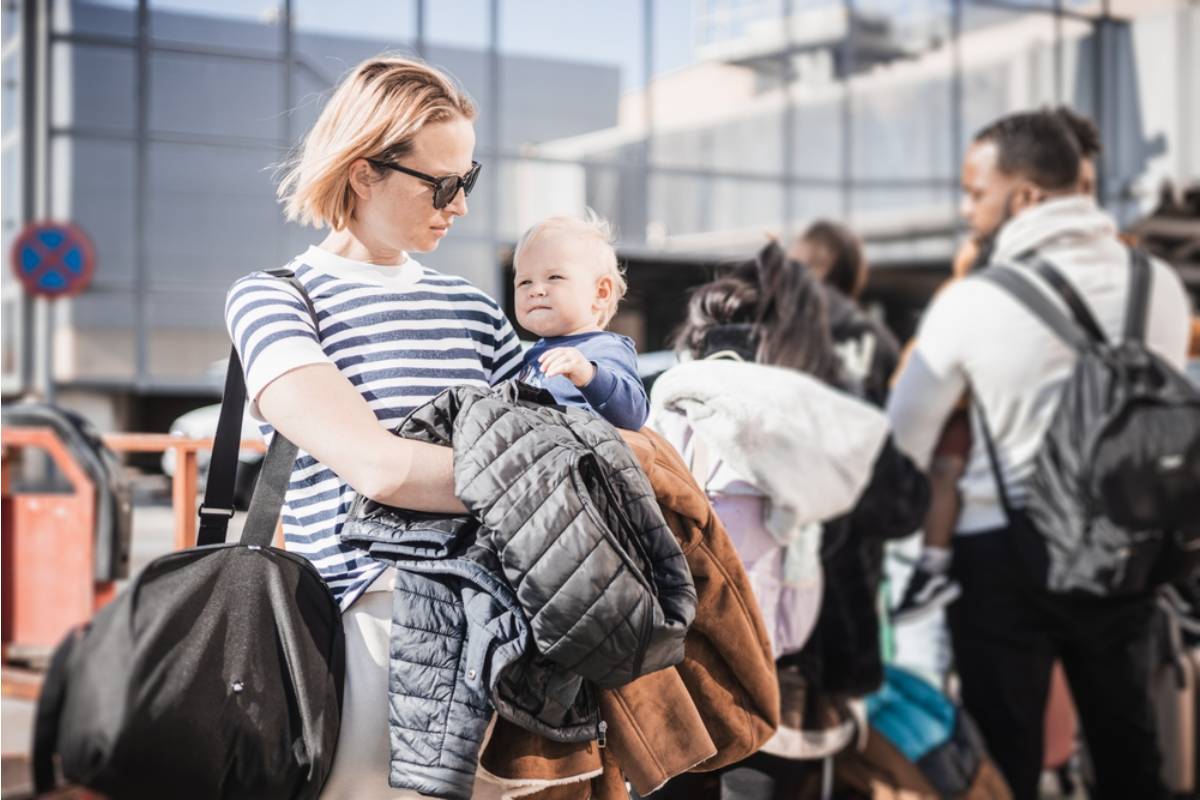
A Mom Says Her Family Vacation With a Toddler and Infant Felt Like Parenting on Hard Mode, and Her Partner Still Wants a 24-Hour Trip Next Year

A mom who recently traveled with her toddler and infant expected the family vacation to be tiring, but she did not expect it to feel quite this exhausting. Instead of relaxing mornings and happy family outings, she found herself running on almost no sleep while trying to keep two little children comfortable in a completely unfamiliar place. By the time she looked around at the chaos, she was already wondering why they had decided to do this in the first place.
The family had barely made it through a two-hour drive to their destination before the cracks started showing. Their routines were gone, naps were unpredictable, and bedtime had become a battle that seemed to reset every few hours. The mom described the trip as less of a vacation and more like parenting with extra bags, extra diapers, and considerably less sleep.
Two Kids Meant Two Completely Different Problems
Traveling with one young child can already turn simple plans into complicated logistics, but this family had two little ones to manage. The toddler needed attention, entertainment, meals, and a familiar routine, while the infant brought an entirely different list of demands. Every part of the day required planning around two sets of needs.
Then there were the diapers, which seemed to multiply the workload. The parents were constantly switching between feeding, changing, soothing, carrying, and trying to convince one child to sleep while the other was suddenly wide awake. What might have been a relaxing afternoon for another family became another shift in childcare.
Sleep Quickly Became the Biggest Problem
The mom’s biggest complaint was not even the sightseeing or the travel itself. She said she had not slept for more than two hours consecutively, which meant every night felt like a test of endurance rather than rest. Once exhaustion set in, even ordinary parenting tasks became much harder.
The unfamiliar sleeping environment made things worse because neither child seemed willing to follow the routine they had at home. A baby waking repeatedly can already destroy a night’s sleep, but having a toddler out of their normal rhythm created another layer of unpredictability. By morning, the family was awake again before anyone had really recovered.
Her Partner Was Already Thinking About Next Year
Just when the mom was questioning the entire idea of family travel, her partner seemed to be looking in the opposite direction. He apparently believed things would improve enough for them to take an international trip the following year to visit family. That trip would involve three layovers and travel days lasting more than 24 hours.
To the exhausted mom, that plan sounded less like a vacation and more like an extreme endurance challenge. She could barely believe they had survived the two-hour drive to their current destination without everything falling apart. The thought of keeping two children fed, rested, changed, and calm through airports and multiple flights seemed almost impossible from where she was standing.
A Person Shared His Story About the Reality of Family Trips
A person shared his story and offered a perspective that seemed to capture exactly what the mom was experiencing. He remembered a quote he had found after his own first attempt at traveling with a baby and a toddler. The quote described a vacation with children as family life continuing under more difficult conditions.
That description stuck with him for years because it explained something many parents discover the hard way. Changing locations does not suddenly remove the responsibilities of parenting, and sometimes it adds an entirely new collection of problems. According to him, things eventually became much better once the children reached school age.
Other Parents Said School Age Changed Everything
A response from a person agreed that vacations became easier once the children were in school. However, that person also pointed out that traveling gets more complicated once school schedules become part of the equation. Suddenly, parents have to think about vacation timing, missed classes, and the limited windows available for longer trips.
Still, that seemed like a much more manageable problem than changing diapers in the middle of the night. A calendar conflict might require planning, but it does not usually wake the entire family at 2 a.m. The general feeling was that the difficulties do not disappear completely, but they become far more predictable.
Some Parents Said Age Four or Five Was the Turning Point
Another person shared that vacations started getting easier around the ages of four or five. At that point, children can often understand explanations, follow basic expectations, and tolerate longer stretches of travel without completely falling apart. Parents can also use screens or other distractions when desperation finally arrives.
The biggest difference, though, is that older children begin to understand what is happening. Instead of being dragged from one unfamiliar place to another while protesting, they can actually recognize that the family is traveling somewhere fun. That little bit of awareness can change the entire mood of a trip.
One Parent Found Toilet Training Made Travel Easier
A parent described having a four-year-old who was unusually easy to travel with. The child had already become a decent traveler around 18 months, but things improved even more after toilet training was finished. Suddenly, one of the most constant travel hassles disappeared.
That detail highlighted how quickly small developmental milestones can transform family travel. Fewer diapers mean fewer supplies, fewer emergency stops, and fewer worries about finding the right place at exactly the wrong time. It may sound like a small victory, but exhausted parents know those small victories can feel enormous.
Another Family Discovered That the Destination Mattered
A person shared that one of the biggest lessons was choosing destinations that were genuinely family-friendly. Their family had a wonderful experience in Italy because the people around them did not seem bothered by their young child being present. Restaurant workers and other people were willing to help keep the child entertained rather than treating her behavior as a major inconvenience.
That made a huge emotional difference for the parents. Instead of constantly worrying that their toddler was disturbing everyone, they could focus on enjoying the trip while still keeping a close eye on her. The destination itself had not changed their parenting responsibilities, but it had changed how stressful those responsibilities felt.
Some Parents Chose to Keep Trips Short When the Kids Were Tiny
Another person explained that their family deliberately avoided major international travel when the children were very young. They stuck mostly to shorter road trips that were easier to manage and less punishing if something went wrong. That approach allowed the children to gain some travel experience without forcing everyone into an exhausting long-distance journey.
The idea seemed especially reasonable for parents who were already struggling with sleep and routines. There was no rule saying every family had to attempt enormous trips while their children were still babies. Sometimes a three-hour drive to a comfortable destination can create better memories than a complicated journey across several countries.
One Dad Said Traveling Improved Around Five
A dad of four said traveling internationally finally started feeling more relaxing when his older children were around five and three. He had traveled a lot with his family, so he had seen firsthand how different each stage could feel. Even with two young children, that age combination seemed to mark a noticeable improvement.
The difference was not that the kids suddenly became perfectly behaved travelers. Rather, they became more capable of handling the experience, which removed some of the constant pressure from their parents. A little independence, better communication, and longer attention spans can make a surprisingly big difference.
Another Parent Did Not Feel the Big Change Until Eight
A parent shared a different timeline and said that around eight was when travel became significantly easier. Before that age, trips still felt like parenting in a different location, complete with frequent breaks and plenty of limitations. Once the children were older, the family could go through an entire day without needing to stop for every little thing.
That did not mean older children came without challenges. Tweens could become anxious about plans, while teenagers sometimes preferred traveling with friends instead of family. Still, the problems had shifted from basic survival tasks to more complicated social and emotional issues, which felt like a major upgrade to many parents.
The Family’s Biggest Question Was Still Hanging Over Them
After hearing all these experiences, the mom’s original problem had not completely disappeared. She was still staring down the possibility of a 24-plus-hour international trip with multiple layovers while raising a toddler and infant. The responses gave her plenty of reasons to believe things might improve, but they also suggested that next year might still be too soon.
One person even suggested waiting longer or having one parent travel alone rather than forcing the entire family into an exhausting journey. That response carried an important reminder: there is no prize for making a difficult trip happen before a family is ready. A vacation is supposed to create memories, not leave everyone desperate for another vacation from the vacation.
The Surprise Was That the Kids Were Not the Only Problem
One of the more revealing responses suggested that vacations with children often become easier when the adults themselves adjust to the reality of traveling as parents. The location changes, the activities change, and the expectations may need to change too, but the parenting does not magically disappear. In many cases, the hardest part is expecting a family vacation to feel like the trips people took before having children.
Another person summed up the idea in a much more blunt way by saying that with young children, it is less of a vacation and more of a trip. That distinction might sound cynical, but it also explained why some parents eventually started enjoying family travel more. Once the expectation of complete relaxation disappeared, every peaceful meal, successful outing, and uninterrupted night started feeling like an unexpected bonus.
The Mom May Have Already Learned the Most Important Lesson
The most reassuring part of the responses was that nearly everyone seemed to agree on one thing: it does get easier. The timing is different for every family, with some parents noticing changes around four or five, others around six or seven, and some closer to eight. The children’s personalities, the destination, and the type of trip can all make a huge difference.
For the exhausted mom, that may have been the real answer she needed. She did not necessarily need to swear off travel or commit to the enormous international trip her partner was already imagining. She simply needed to understand that this particular vacation was not proof that family travel would always feel this impossible.
The Next Trip Could Be Completely Different
By the time the family returns home, the memories of sleepless nights and endless diaper changes may still be fresh. Yet the children will also be a little older, a little more capable, and hopefully a little easier to travel with. The next trip might still be messy, but it may not feel like the same kind of chaos.
And that was perhaps the twist hiding inside the entire discussion. The question was not really whether vacations with children ever become easy, because many parents said they eventually do. The bigger question was whether this family needed to stop measuring success by how much travel they could survive and start measuring it by how much fun they could actually have together.