A Teacher Says a Student Asked Her What Happens to Kids Whose Parents Never Come to Anything, Like Does the School Have a Plan for That

Teachers hear hundreds of questions every week, but every so often one arrives so quietly that it lingers long after the school day ends. Mrs. Carter thought she was helping her fifth graders prepare for family night when one student’s hand slowly went up. His question was not about homework or the event itself. It was about children who quietly watched every celebration pass without anyone coming for them.
A Classroom Discussion Took an Unexpected Turn
Mrs. Carter spent the morning explaining the upcoming family reading night.
Students eagerly talked about who might attend with them.
Some planned to bring grandparents.
Others hoped older siblings would come after work.
The classroom buzzed with excitement until Noah quietly raised his hand.
His expression was thoughtful rather than nervous.
One Question Silenced the Room
Mrs. Carter smiled and called on him.
Noah hesitated before speaking.
What happens to kids whose parents never come to anything?
The room became completely silent.
Before anyone answered, Noah added another question.
“Does the school have a plan for that?”
Several classmates slowly turned toward him.
Nobody laughed.
The Teacher Chose Her Words Carefully
Mrs. Carter realized this was not a question she wanted to answer too quickly.
She gently replied that every family’s situation was different.
Some parents worked evenings.
Others cared for relatives or faced transportation challenges.
She explained that a parent’s absence never meant a child mattered less.
Even as she spoke, she wondered why Noah had asked in the first place.
A Pattern Suddenly Became Clear
After class, Mrs. Carter quietly reviewed the school year’s events in her mind.
Open house.
Science fair.
Veterans program.
Winter concert.
Math night.
She realized Noah had attended every single one.
He had also attended every one alone.
Until that moment, she had never connected those memories.
Noah Stayed Behind After School
As students packed their backpacks, Noah lingered near his desk.
Mrs. Carter asked if everything was okay.
He nodded.
“I was just wondering.”
Then he looked at the floor.
Sometimes I think maybe schools have a backup plan for kids like me.
Mrs. Carter felt her heart sink.
A Child Explained His Own Question
Noah calmly described what family events felt like.
Teachers smiled and welcomed everyone.
Parents took pictures.
Families sat together laughing before performances.
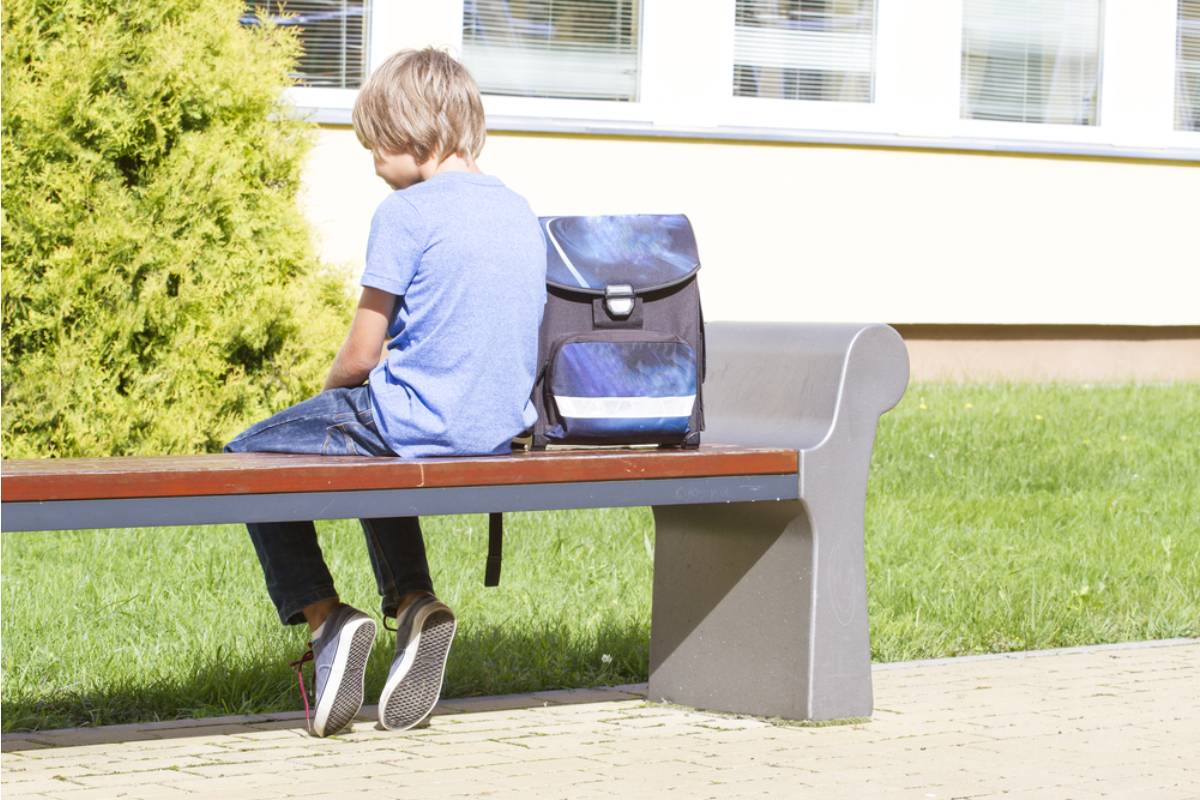
Meanwhile, Noah usually found a seat by himself.
He never blamed his parents.
He simply wondered whether schools noticed children sitting alone.
The Office Helped Fill in the Story
The following morning Mrs. Carter spoke privately with the school counselor.
Together they reviewed Noah’s file.
His parents both worked rotating shifts at different hospitals.
Because of unpredictable schedules, they rarely managed to attend daytime or evening events.
There had never been neglect.
Only constant scheduling conflicts.
Still, the emotional impact on Noah had gone unnoticed.
A Phone Call Changed Everything
Mrs. Carter called Noah’s mother after school.
She expected a brief conversation.
Instead, Noah’s mother became emotional almost immediately.
She admitted she and Noah’s father often traded work shifts just to keep household bills paid.
Missing school events broke their hearts.
“We thought he understood.”
Mrs. Carter gently explained that children often understand circumstances while still feeling disappointed.
The silence on the phone said everything.
The Counselor Had a Different Idea
Rather than focusing only on attendance, the counselor suggested asking families how they preferred to stay connected.
Some could join virtual meetings.
Others could record encouraging video messages.
Parents working unusual hours might write letters for teachers to read before performances.
The goal was not replacing presence.
It was reminding children they were still being supported.
Staff members quickly embraced the idea.
An Unexpected Video Appeared
The following week the school hosted a student recognition assembly.
Before certificates were handed out, Mrs. Carter received a message from the office.
Noah’s parents had recorded a short video during a break at work.
With permission, it played privately for Noah before the ceremony.
His mother smiled into the camera.
We’re proud of you every single day.”
His father added, “Even when we’re wearing hospital badges instead of sitting in the audience.”
Noah watched the screen without saying a word.
Other Families Quietly Benefited Too
The new communication idea spread throughout the school.
Military parents stationed far from home sent recorded congratulations.
Truck drivers recorded bedtime stories that teachers played during reading week.
Parents recovering from surgery wrote handwritten notes that accompanied classroom awards.
Teachers realized many children carried invisible disappointments that could sometimes be softened through small acts of connection.
The effort required very little but meant everything to those families.
Family Reading Night Looked Different
When reading night finally arrived, Noah walked into the library expecting another evening alone.
Mrs. Carter greeted him warmly.
Just before the program started, the principal wheeled a large screen to the front of the room.
Several parents who could not attend had joined through live video calls.
Among them were Noah’s mother and father sitting together during a hospital break.
They waved enthusiastically.
Noah’s face immediately lit up.
A Student Found His Own Answer
Later that evening Noah approached Mrs. Carter.
“I think I know the answer now.”
She smiled.
“To what?”
“My question.”
He explained that maybe schools could not make every parent appear in person.
But they could help children remember they were not forgotten.
Mrs. Carter realized he had answered the question better than any adult could.
The Question That Stayed With Every Teacher
Months later Mrs. Carter spoke during a staff meeting about the conversation she would never forget.
She encouraged teachers to notice not only the families filling the auditorium, but also the children quietly looking toward empty seats.
Noah’s question had never been asking for pity.
He had simply wanted to know whether someone had thought about children whose circumstances looked different from everyone else’s.
The school could not solve every scheduling conflict, but it could make sure no child felt invisible because of one. Mrs. Carter carried that lesson into every event that followed, always remembering that belonging is created through attention, compassion, and small moments of inclusion. Sometimes the most important school plan is simply making certain every child knows that even when a chair is empty, they never have to feel alone.