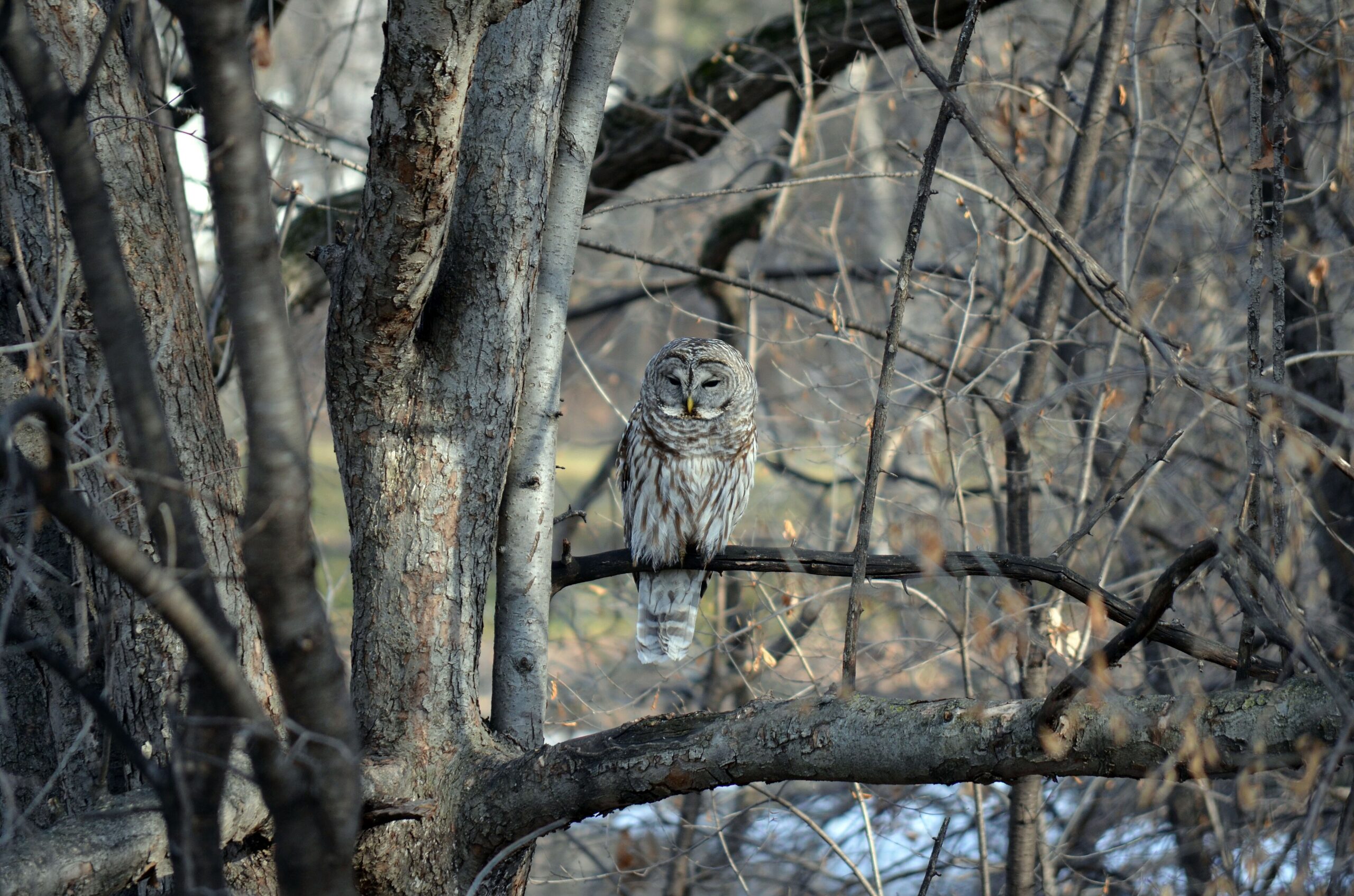
A Barred Owl Swooped Out of a Tree and Hit 9-Year-Old Easton Schawb in the Head Twice While He Was Blowing Leaves

Easton Schawb, a 9-year-old in Washington state, was doing a fall chore, clearing leaves with a leaf blower in his family’s yard, when an owl landed on a branch nearby. At first, he thought it was cool. It kept turning its head, watching him.
Then it came at him. The owl struck Easton in the back of the head, flew back into the tree, and later hit him a second time, KING 5 reporter Drew Mikkelsen reported in a story distributed through CNN Newsource. State wildlife officials identified the bird as a barred owl.
A Mom’s Scream and a Second Strike
Easton’s mother, Liz Schawb, was outside with him. She saw the owl open its wings and stretch out its talons. She screamed as loudly as she could and wrapped her arms around her son, she told the station.
After the first strike, the two went inside to tell Easton’s father. When they came back out, the owl was still there. It hit Easton again, then flew back up into the same tree.
The report did not describe any injuries. The family had not seen the owl again since Wednesday, and the leaves were still waiting in the yard. Easton planned to finish the job.
He also had advice for other kids: if an owl spreads its wings or stares, cover the head and neck and run.
Why a Barred Owl Might Swoop
The Washington Department of Fish and Wildlife says owl attacks are generally rare, but that owls can become territorial and swoop at people who seem to be disturbing a nest or territory. Barred owls are the most common culprits, according to the agency, though great horned owls do it too.
Timing matters. WDFW says the risk is highest in spring, during mating and nesting, and in fall, when shorter days trigger more territorial behavior. Owls are also more likely to swoop at night, in the early morning and in the late evening. They may hoot over and over before an attack as a warning.
The department’s advice lines up closely with Easton’s. Anyone who hears repeated hooting should stay alert, cover their head and move along quickly. If an owl swoops, WDFW recommends waving the arms to scare it off, protecting the head and face, and leaving the area as soon as possible. People can report encounters to WDFW, and the agency may post warning signs in places where owls keep acting aggressively.
A Big Owl That Moved West
Barred owls, listed by WDFW under their scientific name, Strix varia, also go by nicknames such as hoot owl and eight-hooter owl. They are not small. The National Audubon Society puts them at 17 to 20 inches long with a wingspan of more than 3 feet, about the size of a crow, and notes that females are larger than males.
They were not always common in Washington. The Cornell Lab of Ornithology says the barred owl was originally a bird of the eastern United States and spread through the Pacific Northwest and into California during the 20th century. It is known for a loud, barking hoot that the lab says can sound like a large dog from a distance.
Audubon says barred owls hunt by day or night, most often at dawn and dusk, watching from a perch before dropping onto prey such as mice, squirrels and rabbits. The Cornell Lab notes that they are territorial and may fly in to investigate when a person imitates their call.
Back to the Leaves
WDFW said attacks like this one are usually tied to owls reacting to a disturbance in their territory, and that they are more likely in the fall, the same season that sends families outside with rakes and leaf blowers.
For the Schawbs, the scare has turned into a family story with a lesson attached. The owl is gone for now, the leaves are still there, and Easton knows exactly what to do if a pair of wings opens above him again.
Get stories like this by email. Sign up for The Parent Diaries Letter.
This article was produced with AI assistance and edited for accuracy against the sources linked above.
Image: U.S. Fish and Wildlife Service – Midwest Region – Public domain/Wikimedia Commons