Dad Says He Yelled at His Son and His Friends for Breaking the No-YouTube Rule, Then Realized They Were Watching the Show He Loved as a Kid

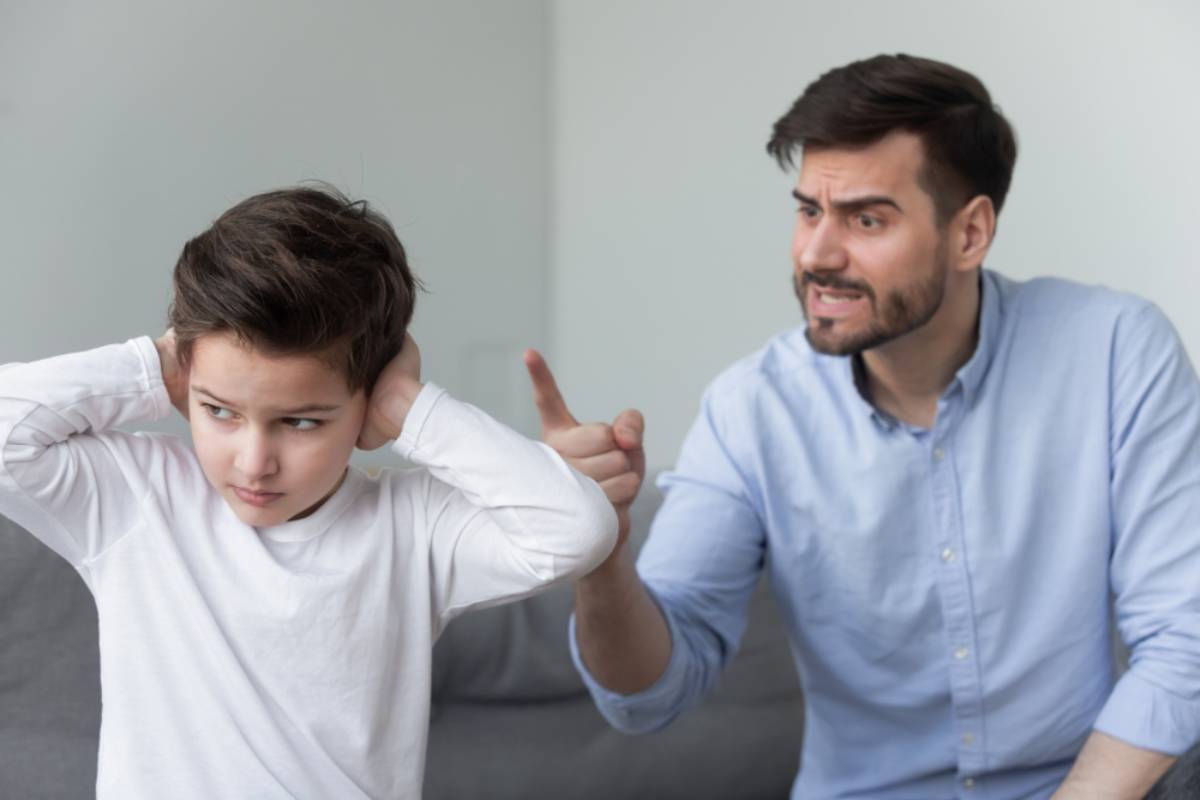
A father shared his story after walking in on his child and several friends watching something he believed was exactly what he had warned them against. His children know that YouTube is not allowed in the house unless they first ask for permission, so seeing a screen full of what looked like short-form videos instantly put him on alert. He did not stop to investigate before raising his voice.
The father admitted that he yelled at his son and the other children because he thought they had ignored a rule they all understood. From his perspective, it looked like another case of kids finding a way around a restriction the adults had put in place. He was already frustrated with the battle over online content, so the situation felt like one more headache.
He Thought They Had Found Another Way to Watch Brainrot Videos
The father explained that he had become increasingly tired of what he considered low-quality online content. He described the kind of algorithm-driven videos he was trying to keep away from his children as repetitive, attention-grabbing material that seemed designed to keep them watching. His concern had become strong enough that he no longer wanted to make exceptions without knowing exactly what the kids were watching.
That was especially difficult when his children’s friends came over. According to the father, some of those friends had very few restrictions on their own devices at home and would sometimes bring that freedom with them. He had already seen the children stumble onto videos containing jokes and references that were far too mature for them, even though the kids did not always understand what they were hearing.
The Rule Had Actually Come From an Earlier Bad Experience
The father’s YouTube restriction was not completely random. He said his children were allowed to use the platform to look up specific things with his permission, such as sports highlights or video game walkthroughs. What he wanted to prevent was the endless stream of recommended content that could take them from one harmless video to something inappropriate without much warning.
One earlier incident had made him especially cautious. The children had watched baseball bloopers, only for the narration to include sexual jokes that went completely over their heads. After experiences like that, the father decided that giving the children unrestricted access was simply not worth the risk when their friends were around.
Then He Discovered What They Were Actually Watching
The entire confrontation changed when the father finally realized the children were not watching short-form videos at all. They were watching America’s Funniest Home Videos, a television program built around people sending in funny home recordings. The show was not the algorithmic content he thought he had caught them watching.
The discovery left the father stunned because the program had a much more personal connection to him than he initially remembered. It was one of the few happy memories he had from watching television with his own family about 35 years earlier. He had walked into the room ready to shut down the screen and instead found himself staring at a piece of his own childhood.
The Dad Suddenly Realized He Had Not Even Recognized the Show
What bothered him most was how quickly he had made the assumption. He said that after watching the children for roughly 30 seconds, he still could not tell the difference between the show they were enjoying and the type of online content he had spent so much time complaining about. That realization clearly unsettled him.
The father joked that parenting had become exhausting because of all the little distinctions parents are expected to understand. He had created a firm rule because he wanted to protect his children, yet he had trouble explaining exactly where the acceptable line was. The situation forced him to confront how blurry that line could become.
His Kids Wanted Him to Explain Where the Difference Was
The children apparently had a simple question after the confrontation. They wanted their father to explain why this show was different from the content he usually banned. The father admitted that he did not have an especially satisfying answer ready.
He jokingly wondered whether the show’s longtime host from his childhood had somehow fooled an entire generation of parents into thinking this type of entertainment was respectable. Beneath the humor, though, there was a genuine parenting problem. He had established a rule that sounded straightforward, but explaining the reasoning behind it suddenly became much harder.
Other Parents Pointed Out That YouTube Itself Was Not the Whole Problem
Some people responded by pointing out that YouTube contains far more than the type of content the father was trying to avoid. There are educational videos, science programs, tutorials, documentaries, entertainment channels, and countless other forms of content on the platform. From that perspective, treating the entire service as one category made the rule difficult to defend.
Another person suggested that parents should focus on teaching children how to recognize worthwhile content rather than assuming everything on one platform is equally bad. The father pushed back slightly, explaining that he had already had that conversation with his kids many times. His concern was that whenever the more addictive content was available, that was usually what the children wanted to watch.
The Friends Made the Situation Much More Complicated
The father said the problem became harder when his children’s friends were involved. He did not want to spend every minute supervising a group of 10-year-olds to make sure nobody clicked on something inappropriate. At the same time, he did not feel comfortable allowing other children to bring devices into his home and then bypass the rules his own children were expected to follow.
There was also the reality that the visiting children sometimes had their own tablets with them. The father explained that he had seen them watch material containing adult jokes that they did not understand, which made the situation even more uncomfortable. His strict rule had developed partly because he was trying to manage a group of children rather than simply monitor one screen.
Then the Criticism Shifted From the Videos to His Reaction
Several people were less concerned about the father’s media rule than they were about the way he handled the discovery. They pointed out that yelling at a child in front of friends can turn an ordinary mistake into a deeply embarrassing moment. Even if the rule itself was reasonable, they argued that the reaction could have been handled differently.
One person summed up the alternative in a simple way by suggesting that he ask questions before making assumptions. The idea was that there was no immediate danger requiring an explosive response, so the father had time to find out what the children were actually watching. The fact that he had been wrong only made that advice more relevant.
One Person Reminded Him That Parents Teach by Making Mistakes Too
A person offered a more constructive way to look at the situation. Instead of treating the incident as proof that he had failed as a parent, the father could use it as a chance to apologize and show the children what taking responsibility looks like. Correcting a mistake, rather than pretending it never happened, could become part of the lesson.
That suggestion seemed especially fitting because the children had actually done exactly what they were supposed to do from their perspective. They had been watching a television program rather than secretly searching for forbidden short videos. The father had misunderstood what was happening, which meant his next move mattered almost as much as the original mistake.
The Show From His Childhood Made the Whole Incident Even More Ironic
The strangest part of the story was the connection between the father’s frustration and his own memories. He had once watched the same program with his family and remembered it as one of the few positive parts of that period of his life. Yet decades later, he was standing in a room ready to ban it from his own children.
That irony was not lost on the people responding to his story. One person pointed out that he had essentially tried to protect his kids from questionable algorithmic content only to yell at them while they were enjoying something remarkably harmless. The contrast turned what might have been an ordinary parenting mistake into a much more revealing moment.
Some Parents Suggested a More Controlled Version of YouTube
Other families described ways they had tried to reduce the risks without eliminating online video completely. One person said they used a child-focused setup where only approved or previously selected content could be played. That approach gave children some independence while keeping the selection of videos under tighter control.
Another person explained that the main difference between traditional television programs and algorithm-driven short videos is curation. A television show has already gone through a selection process, while recommendation systems can rapidly serve up unrelated material based on what keeps someone watching. That distinction helped explain why the father instinctively felt that the two experiences were different, even though he had trouble putting that feeling into words.
The Real Problem May Have Been the Algorithm, Not the Screen
As the discussion continued, another important distinction emerged. Watching a funny television program for a while is not necessarily the same experience as endlessly scrolling through short videos chosen by an algorithm. The concern is not simply that one format is on a screen and another is not, but that some platforms are designed to make the next piece of content appear almost effortlessly.
That difference mattered to the father’s original concern. He was trying to prevent his children from falling into an endless stream of content he considered unhelpful or inappropriate. The problem was that his rule had become so broad that it accidentally captured perfectly acceptable entertainment along with the material he actually wanted to avoid.
The Dad Was Left Facing a Rule That Needed More Nuance
By the end of his story, the father seemed to recognize that his blanket rule had created a problem of its own. He wanted his children to understand why certain content was restricted, but he was struggling to define a rule that separated curated entertainment from algorithmic chaos. The experience showed him that parenting sometimes requires explaining distinctions that are much easier to feel than to describe.
He also had to confront something more personal. His frustration with modern online content had collided with a memory from his own childhood, and for a moment he had treated the two as completely opposite things. Instead, they had turned out to be surprisingly connected.
The Kids Accidentally Turned a Screen-Time Fight Into a Parenting Lesson
What started as a father catching his children doing something they were not supposed to do ended with him realizing they had not broken the rule at all. They were watching a show that had once given him some of his own happiest family memories, and they were doing it without the internet rabbit hole he was trying to avoid. The biggest surprise was not what was on the screen, but how quickly he had assumed the worst.
The incident left him with a different kind of parenting challenge. Now he had to figure out how to keep sensible boundaries without turning every screen into a potential confrontation, especially when other children were involved. In the end, the funniest part may have been that the show he once trusted had survived decades of changing technology, only to become the thing he nearly banned from his own house.