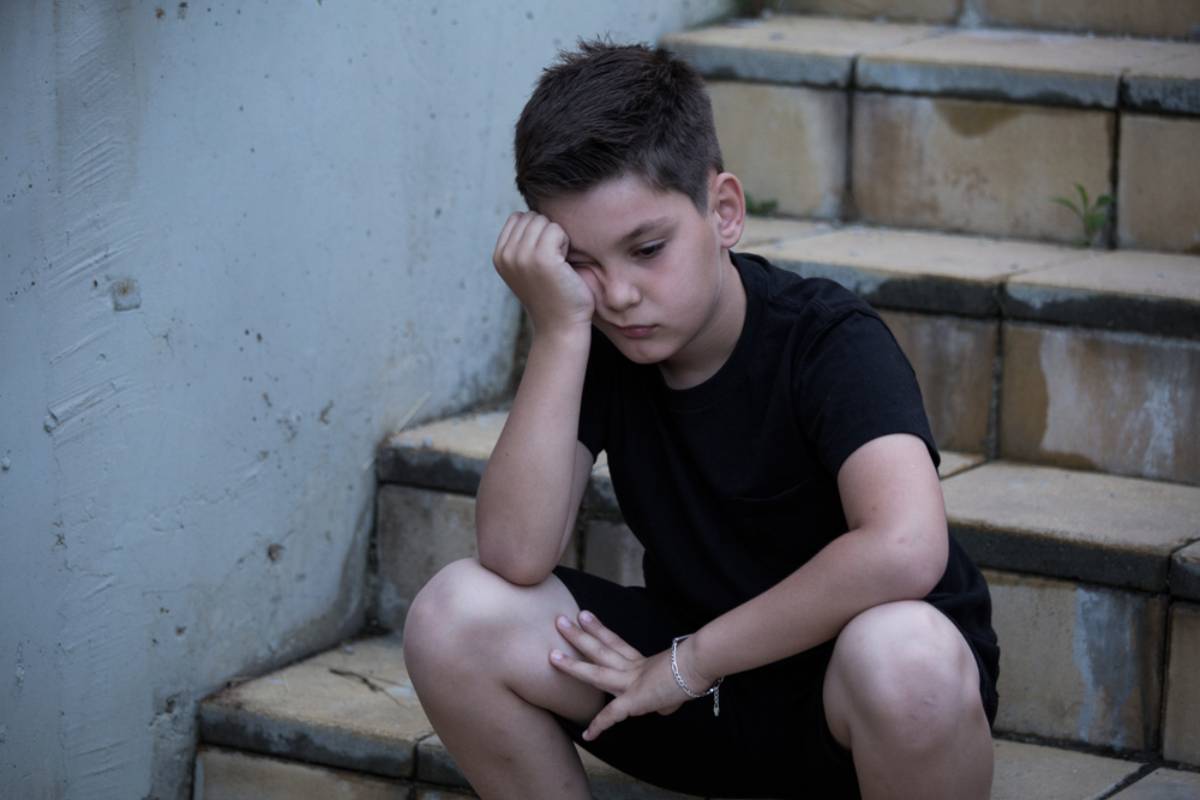
Dad Says His 16-Year-Old Son Came Running Downstairs in Tears After Learning His Friend Had Died, and He Had No Idea How to Help Him

A father said an ordinary evening at home suddenly became something none of his children were prepared for. His 16-year-old son had been upstairs watching television when he learned that one of his close friends had died unexpectedly. There was little information available, which somehow made the shock feel even more confusing. Within moments, the teenager came rushing downstairs in tears.
The father had barely begun to understand what was happening before he received the same devastating news himself. He could hear his son crying behind his bedroom door, and there was no obvious way to make the situation better. For a parent who was used to solving problems, this was the kind of moment that offered no easy solution. All he could do was decide how much to step in.
He Heard His Son Crying Behind the Door
The father said he resisted the urge to immediately open the door and start asking questions. Instead, he told his son through the closed door that he was nearby and would be there if he was needed. Then he quietly left a small tray of food, water, and tissues outside the room. It was a simple gesture, but it gave the teenager something tangible while everything else felt unreal.
The boy stayed behind the closed door and cried for hours. His father described watching it unfold as one of the hardest experiences he had faced as a parent, even compared with an earlier period when he had to tell his children that he had cancer. There was a particular helplessness in seeing your child hurt so deeply and knowing that the pain could not be taken away. For once, doing nothing felt more appropriate than trying to fix everything.
His Younger Brother Learned What Had Happened
Later, the younger son came downstairs and asked why his brother was so upset. The father explained that the older boy’s close friend had died, and the younger child’s reaction immediately showed how much the news had landed. He curled up beside his dad, wrapped his arms around him, and became unusually quiet. The father said that silence was striking because his 11-year-old was normally anything but quiet.
The younger child stayed close for more than an hour without saying much at all. It became clear that both brothers were encountering a kind of grief they had never experienced before, even though they were processing it differently. One child needed privacy and tears, while the other seemed to need physical comfort and quiet company. Their father began to realize that there might not be one correct way for a family to respond.
The Father Wanted to Do Something
The father’s first instinct was still to act, even though he knew there was nothing he could actually change. He felt almost powerless watching his children face such intense emotions, and part of him wanted to distract them or make the situation feel less overwhelming. Yet he also recognized that grief was not a problem that could be solved with the right speech or the perfect activity. Sometimes the urge to do something can come from a parent’s own discomfort.
Looking back, he felt relieved that he had not forced his way into the room or demanded that his son talk. The teenager had been allowed to cry, think, and react without being rushed toward some expected version of grief. His father trusted that both boys would find their own ways through those first difficult hours. That decision became one of the most important parts of the evening.
The Next Morning Brought More Questions
By the following morning, the older boy seemed somewhat calmer, but the situation was far from settled. He began asking questions about whether there would be a memorial and what would happen next. The problem was that his father did not know the answers either. Every question seemed to lead directly into another unknown.
That uncertainty was especially difficult because teenagers often expect the adults around them to understand what comes next. Here, there was no clear schedule, explanation, or comforting plan to offer. His father could only be honest about what he knew and what remained unclear. The family was learning that grief often begins with questions that have no immediate answers.
His Friend Was Remembered as a Quiet Presence
The father also found himself thinking about the boy his son had lost. He remembered him as a sweet, gentle child who did not always rush into the center of a crowd. At middle-school birthday parties and sleepovers, he was often the boy sitting near the edge, watching everything rather than demanding attention. Even without being the loudest person in the room, he had left an impression on those around him.
That memory seemed important because it gave the loss a face beyond the shocking announcement. The father was not simply thinking about someone who had died, but about a specific young person with a quiet personality and a place in his son’s life. The image of that boy observing a crowd made the news feel even more real. It also explained why the teenager’s reaction had been so immediate and overwhelming.
Grief Arrived Earlier Than the Father Expected
The father said he had not personally experienced a loss that felt like this until much later in adulthood. Because of that, seeing a teenager face such a heavy emotional blow was particularly difficult for him. There was no way to protect his son from the reality of what had happened without also denying him the chance to experience and understand his own feelings. Parenthood suddenly became less about shielding a child and more about standing beside them.
He knew teenagers could have complicated reactions to death, and he did not expect his son to handle everything in a neat or predictable way. A person shared in response that children can sometimes move between sadness, anger, confusion, and even moments of happiness without those shifts meaning they cared any less. That reminder gave the father another reason not to expect a single emotional script. The goal was not to make grief look orderly, but to let it be honest.
One Response Suggested Letting School Help
A response from a person suggested that school might become an important source of comfort because the teenager would be surrounded by classmates who were likely grieving too. Teachers might discuss the death, counselors could be available, and friends might offer a kind of understanding that adults could not fully recreate at home. At the same time, the response pointed out that the teenager might discover that being around others was either comforting or overwhelming. If he needed to leave early, that need could also be part of the process.
Another response from a person described losing a father at age 12 and experiencing grief in a way that did not match what adults expected. The person explained that a child might carry sadness quietly for years and only later feel ready to revisit belongings, memories, or difficult emotions. That story reinforced how unpredictable grief can be, especially during adolescence. The father’s job, as the response suggested, was less about directing the process and more about staying available throughout it.
Another Parent Encouraged Professional Support
A response from a person told the father that giving his son space had been a thoughtful choice. The person also suggested that once the initial shock had faded, the teenager could consider speaking with someone who specializes in grief. Even a small amount of support could give him somewhere safe to talk if difficult feelings returned later. The suggestion did not mean something was wrong with the boy, only that grief could become complicated over time.
The response also reflected on how shocking a sudden death could feel at 16, when young people may not have spent much time thinking about mortality. Another person shared a story about losing a friend in high school and described how classmates later gathered each year to tell funny stories and remember him. Instead of every memory being focused on tragedy, those gatherings allowed the friendship itself to remain part of the story. That idea offered the father a different way to think about remembering someone who had died.
A Small Assumption Created an Awkward Moment
There was also an unexpected little twist in the conversation when one person responded using the wrong parental title for the original storyteller. The father calmly clarified that he was the dad, not the mom, and said the mistake was fine. The person who had made the assumption immediately apologized and acknowledged it. In the middle of such a serious discussion, the tiny exchange provided a brief reminder that people responding from a distance could only know what had been shared.
The moment also showed how the conversation had grown into something larger than one family’s experience. People were sharing memories from childhood, teenage years, and adulthood, each bringing their own encounters with loss into the discussion. Some remembered support from schools, some remembered awkward attempts by parents to help, and others remembered small family rituals. The common thread was that grief rarely arrives in a perfectly organized form.
Some Memories Can Become Unexpectedly Comforting
One response from a person shared a particularly unusual memory from losing a best friend as a teenager. After hearing the devastating news, the person’s father apparently took them shopping for a hair dryer, a choice that seemed bizarre at the time. Years later, as an adult, the person came to see that strange errand as an endearing example of a parent trying to cope with an impossible situation. The story suggested that even imperfect attempts to help can become treasured memories.
Other responses emphasized simple activities such as getting out of the house, taking walks, sitting quietly together, or going somewhere familiar without forcing a serious conversation. The idea was to create room for both distraction and emotion. A teenager might want to talk one minute and stare out a window the next, and both reactions could be perfectly understandable. Sometimes companionship can matter even when nobody says anything particularly profound.
The Family Had to Accept That There Was No Perfect Script
The father seemed to understand that his children would not necessarily grieve in the same way, and they might not even grieve in the same way from one day to the next. His older son could seem fine in the morning and break down later, while his younger son might become unusually quiet or seek extra closeness. Neither reaction would automatically tell the whole story. Their father had to leave room for grief to change shape.
That may have been the most difficult lesson of the entire experience. Parents are often expected to have answers, but this was a situation where the most honest answer was sometimes simply that he did not know. There was no way to predict the memorial, the school experience, or how the boys would feel in the weeks ahead. He could only keep reminding them that they did not have to handle those feelings alone.
Remembering the Friend May Become Part of Healing
Several people pointed toward the importance of remembrance, especially if the family eventually had a memorial or another gathering. A response from a person suggested creating a small ritual at home if attending a service was not possible, such as planting flowers or displaying a photograph. The idea was to give children a physical way to express love when words might not come easily. For a teenager, that small act could become a meaningful marker of what the friendship meant.
The father had already begun preserving his own memories of the boy, remembering his quiet presence and gentle personality. In time, those memories might become more important than the painful details surrounding the death. The friend would no longer be known only as the teenager who was suddenly gone, but as the kid who watched birthday parties from the edge of the crowd and quietly became memorable. Remembering someone can slowly turn grief into a story that includes both loss and affection.
His Son’s Questions Were Only the Beginning
The older teenager’s questions about a memorial showed that he was already trying to understand what would happen next. He was not simply mourning his friend, but trying to figure out how the world was supposed to continue after something so permanent had happened. At 16, that realization can make everyday routines feel strangely different. School, television, dinner, and ordinary conversations suddenly exist alongside something much heavier.
His father could not explain away that contradiction, so he chose to stay close without taking control. The teenager might need information one moment, privacy the next, and company after that. His younger brother would have his own reactions, and the family would likely continue discovering them as time passed. What began as one horrible evening had become a long process none of them had planned for.
The Hardest Part Was Knowing He Could Not Protect Them
The father said protecting children is one of the deepest instincts of parenting, which made this experience especially painful. He could protect them from many practical dangers, but he could not protect them from every loss life would eventually bring. Watching his teenage son discover that truth was difficult because it also meant accepting his own limits as a parent. The closed bedroom door became a symbol of that uncomfortable reality.
Still, his presence mattered even when he was not inside the room. Food, water, tissues, a quiet reassurance, a hug for his younger son, and an open invitation to talk were small things, but they gave the children something solid to hold onto. The father did not erase their grief, and nobody could have done that. What he did instead was make sure neither child had to face the new and frightening feeling of loss without knowing that someone was close by.
A Family Learned to Stay Present Through Grief
By the end of the story, there was no neat resolution, and that was exactly what made the experience feel real. A teenager had lost a close friend, a younger brother had been shaken by the same news, and their father had learned that support sometimes means resisting the urge to take over. The family still had unanswered questions, difficult days ahead, and memories they would have to carry. Yet they also had the beginning of a way forward.
The story ultimately became less about finding the perfect thing to say and more about staying present while the children discovered their own ways of grieving. One child cried behind a door, another wrapped his arms around his father, and their parent quietly remained nearby through both moments. A response from a person put it simply by encouraging the father to keep supporting his son and allow room for whatever feelings came next. In a situation where almost nothing could be fixed, being there turned out to be the one thing that could still be done.