Dad Says His Two Year Old Started Talking So Much That He Could Barely Finish a Chore, and Then Other Parents Told Him What He Was Really Hearing

A person shared his story about life with his two year old son, who had recently discovered one of the most powerful tools a toddler can possess: talking. The child had only started speaking a few months earlier, but once the words arrived, they seemed to arrive without an off switch. What began as an exciting milestone quickly turned into a nonstop stream of observations, questions, and excited attempts to get Dad’s attention.
At first, the constant chatter was something the family found adorable. Hearing a toddler put words together can feel like watching a new part of their personality come to life. But after weeks of being called every few seconds, the novelty was beginning to collide with exhaustion, especially because the family also had a three month old baby at home.
Dad Became the Most Important Person in the Room
The toddler seemed determined to make sure his father noticed absolutely everything happening around him. He might spot a motorcycle and immediately call out for Dad to look, only to notice another child moments later and announce that discovery too. Before Dad had even processed one observation, another “Dad” was already on the way.
Sometimes the child repeated his father’s name over and over until he finally received a response. When that still did not work, the toddler would gently take Dad’s face and turn it toward him so there could be no misunderstanding about where his attention belonged. The behavior was frustrating, but it also showed just how badly the little boy wanted to share his world with the person he trusted most.
Even Simple Chores Became Difficult
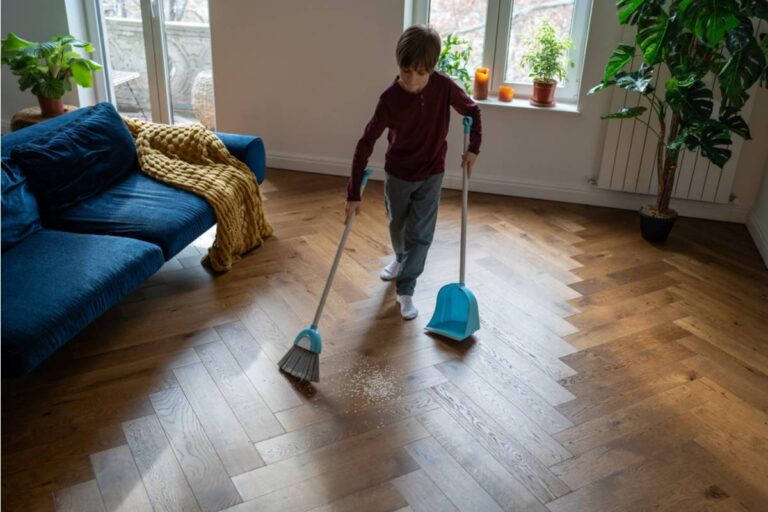
The constant interruptions were becoming especially difficult whenever Dad tried to work around the house. Tasks that once took only a few minutes could now become a series of stops and starts because there was always another announcement waiting around the corner. A simple household chore suddenly came with a running commentary from a very enthusiastic two year old.
The problem was not that the child was saying anything particularly complicated. In fact, many of his observations were wonderfully ordinary, such as pointing out fans, motorcycles, toys, or other children. The sheer frequency was what wore Dad down, because there was barely enough silence to finish one thought before another burst of toddler commentary arrived.
The Cute Phase Started Feeling Less Cute
A person shared that the nonstop talking had reached the point where it was difficult to watch something, listen to something, or concentrate on work without being interrupted. The family understood that their son wanted attention and interaction, but understanding the reason did not make the constant noise any easier to handle. Eventually, Dad admitted that what had once been cute was starting to feel absurd.
He also recognized that telling the toddler to stop was not solving anything. The two year old did not understand that his parents were asking him to stop calling for them every few seconds, rather than asking him to stop communicating altogether. That left the adults caught between wanting to encourage their child’s development and desperately wanting a few moments of quiet.
Then Dad Revealed the Missing Piece
The situation made more sense when Dad explained that the family also had a three month old baby. Suddenly, the endless chatter was happening in a household already dealing with newborn schedules, broken sleep, and the demands of caring for two very young children. Dad acknowledged that his tiredness was probably making the toddler’s behavior feel much more intense than it might under normal circumstances.
A response from a person pointed out that sleep deprivation can make practically everything seem more irritating. Another response suggested that the family’s current situation was less about having an unusually difficult toddler and more about trying to survive two demanding stages of childhood at the same time. The conversation began shifting from “How do we make him stop?” toward “How do we handle this without losing our patience?”
One Person Had an Unexpected Solution
One response from a person offered a surprisingly playful idea: instead of fighting the toddler’s constant talking, Dad could simply treat him like an overly chatty adult friend. The suggestion was to respond in different languages, ask follow-up questions, and generally lean into the absurdity of the conversations. The advice sounded funny, but it also gave Dad a completely different way to look at what was happening.
The idea caught on quickly because another person said toddlers could act remarkably similar to drunk friends who were determined to share every thought they had. Instead of becoming irritated by every random statement, parents could play along and turn the chatter into a running joke. Suddenly, the endless “Dad, look!” moments had the potential to become entertaining instead of purely exhausting.
The Toddler Could Become Part of a Conversation
Another response from a person suggested asking the child questions about whatever he was pointing at. If he noticed a fan, Dad could ask what kind of fan it was, how many fans he could see, or what the fan was doing. The goal was not simply to answer the child, but to help him understand what a back-and-forth conversation actually looked like.
Someone else explained that toddlers often begin by making observations because they are discovering the world and want to share those discoveries. Parents can help transform those observations into actual conversations by giving the child something to build on. Instead of simply hearing “blue truck,” for example, Dad could acknowledge the truck and invite the toddler to explain what he noticed about it.
Another Parent Tried the Same Trick With Success
A response from a person described doing something similar with a child who talked constantly. Rather than ignoring the chatter, the parent would calmly repeat what the child had said, then add a little information or ask what the child meant. This approach seemed to satisfy the child’s need to be acknowledged without requiring the parent to launch into a huge conversation every single time.
That parent also gave examples of responding to questions literally, even when the toddler’s thoughts jumped from one subject to another. A question about the television could become a brief explanation about the difference between a show and a movie, while a complaint about not being able to see could turn into a simple observation about the child’s hands covering his eyes. For that parent, turning the chatter into a game made the constant talking far more enjoyable.
Then Came the Baby Strategy
The most practical suggestion for the exhausted parents involved the three month old sibling. Several people suggested redirecting some of the toddler’s endless commentary toward the baby, where he could become an enthusiastic big brother instead of relying on Dad as his only audience. He could explain his toys, describe his cars, or even pretend to read a book to his baby sibling.
The strategy offered something more than a distraction. It could give the toddler a sense that he had an important job while also giving the adults a short break from being the center of every conversation. One response from a person said the same idea had worked in their family, where older children eventually learned to tell their younger sibling about everything happening around them.
Other Parents Remembered the Same Stage
A response from a person admitted that the talking stage had once driven them crazy too, but later became something they deeply missed. Their child had eventually grown more independent and wanted to spend more time with friends, making those endless toddler conversations a temporary part of childhood. Looking back, the parent wished there had been a way to appreciate the chaos more while it was happening.
Another response came from someone who had a child who was rapidly growing out of that stage. They remembered being able to hear their toddler chatter for hours and said that even though phone calls could be difficult, they tried to schedule them during naps whenever possible. The comments introduced an uncomfortable truth for Dad: the stage might be exhausting now, but it was also fleeting.
Not Every Response Told Dad to Simply Put Up With It
There was another important side to the conversation, and it was not simply “enjoy every second.” Some responses acknowledged that constant talking can be genuinely overstimulating, particularly for parents who are already exhausted. One person suggested telling a toddler that their ears were tired and needed a little rest, while another suggested explaining that the parent was about to work or exercise and could not talk during that activity.
The point was that setting boundaries does not necessarily mean rejecting the child. A response from a person explained that young children still need to learn that other people have limits, and parents sometimes need space to regulate themselves before frustration turns into shouting. The challenge is finding a way to communicate that need without making the toddler feel as though simply speaking is the problem.
One Simple Change Helped Some Parents
A response from a person described using a very small acknowledgment whenever a child repeatedly tried to get attention. Something as simple as recognizing the child’s observation could prevent the child from escalating just to make sure they had been heard. After the acknowledgment, the parent could explain that they were busy and ask the child to remember the story for later.
That approach also created a middle ground between constantly engaging and completely ignoring the child. A toddler might still repeat the same phrase several times, but a brief acknowledgment could reassure them that Dad had heard it. From there, the parent could redirect them toward a toy, another activity, or the baby while continuing with whatever needed to be done.
One Response Changed the Way Dad Could See the Chatter
Perhaps the most emotional responses came from people who said they would love to hear their own children speak more. One person shared that their oldest child was completely nonverbal and said they would do almost anything to experience that level of constant communication. Another person simply encouraged Dad to enjoy it because the stage would eventually disappear.
Those responses did not erase the reality of Dad’s exhaustion. Instead, they added another layer to the story, reminding him that the same behavior that can overwhelm one parent can represent a long-awaited milestone for another family. The toddler was not trying to make the household miserable, he was discovering language and using it to connect with the people who meant the most to him.
Dad Explained What He Actually Meant
As some responses became more critical, Dad returned to clarify his original situation. He said he had only been looking for advice and admitted that describing the experience as a mental breakdown had been too strong. What he really meant was that constant interruptions were frustrating, especially when he was already struggling to concentrate while caring for a newborn.
He also made it clear that he loved both of his children and did not consider them a burden. The clarification shifted attention back toward what was actually happening inside the home: two exhausted parents were trying to balance the needs of a three month old baby with a two year old who had suddenly discovered that every thought in his head could now become an announcement. It was less a story about a parent rejecting normal toddler behavior and more a story about a family trying to find its rhythm again.
The Real Trick May Be Learning What the Toddler Is Asking For
Another response from a person argued that the child was repeatedly calling for Dad because Dad was his world. From that perspective, the constant “Dad” was not just noise, it was an invitation to connect. The toddler was seeing something interesting and immediately turning toward the person he wanted to share it with.
That did not mean Dad had to answer every sentence with unlimited attention. It meant the family could experiment with brief acknowledgments, clear boundaries, questions, redirection, and activities that helped the toddler share his enthusiasm elsewhere. The trick was not necessarily getting the boy to talk less, but helping him learn when, how, and with whom to talk.
The Endless Chatter May Become the Part He Misses Most
By the end of the discussion, the situation looked very different from the opening frustration. The little boy was still a nonstop talker, and the parents were still tired, but the behavior had been placed in a bigger picture filled with language development, connection, sibling relationships, and the strange exhaustion of raising a toddler and newborn at the same time. What felt like an endless stream of interruptions could also be one of those childhood stages that disappears before a parent realizes it has gone.
For now, Dad has a collection of ideas to try, from pretending his toddler is a hilariously chatty friend to giving him important big brother duties with the baby. He can also acknowledge what his son says, explain when he needs quiet, and create small pockets of rest when the household becomes too loud. The twist is that the thing driving him crazy may someday become one of the family memories he would give almost anything to hear again.