A School Librarian Says Halloween Became the Biggest Source of Drama in Her Community After Parents Demanded a Party for Everyone

A school librarian recently shared a story about how Halloween celebrations turned into an unexpectedly heated issue in her school community. Her district does not have a specific policy telling schools whether they can or cannot celebrate holidays, so each school leadership team gets to decide what works for its students. That flexibility sounds simple until a large group of families has very different ideas about what Halloween should look like at school.
The librarian explained that her school serves many immigrant families, including children whose religious traditions do not allow them to celebrate Halloween. She has heard students say that Halloween is the devil’s birthday, while other children spend weeks looking forward to costumes, games, candy, and classroom parties. What sounds like a simple holiday activity can therefore become a complicated balancing act for the adults responsible for hundreds of young children.
The School Had More Than One Group to Consider
The biggest challenge was not simply deciding whether Halloween should happen. The school also had to consider what would happen to children who could not participate in the celebration. When a small number of students opt out of an activity, teachers can usually find a manageable alternative, but the situation becomes much harder when roughly one-third or one-quarter of the student population is sitting out.
That changes the entire structure of the day, especially in elementary school. Young children cannot simply be sent somewhere else with a worksheet and expected to entertain themselves while everyone else has a party. The school has to create an alternative that is safe, enjoyable, supervised, and staffed properly, which can require almost as much planning as the original event.
Some Schools Chose a Completely Different Approach
Because of those complications, some schools in the district decided to move away from Halloween entirely and hold fall-themed celebrations instead. Other schools chose not to have any holiday celebration at all, seemingly deciding that avoiding the conflict was easier than trying to satisfy every group. On paper, those solutions may appear practical, but they have created a new source of frustration among families who love Halloween.
Parents who celebrate the holiday became furious when their children could not wear costumes to school or attend a Halloween party there. Some genuinely felt that their children were missing out on a major part of childhood because the school changed its traditions. The librarian, however, believed those parents were overlooking how much work goes into creating a second event for students who cannot participate in the first.
Parents Wanted the School to Do the Work
The disagreement became especially frustrating because many of the unhappy parents seemed to want the school to solve the problem for them. The librarian pointed out that her own neighborhood already hosts a Halloween celebration organized by residents, and it works well because families who want the experience help create it. When she suggested that the complaining parents could do something similar, the response was essentially that organizing a neighborhood party sounded like too much effort.
That observation led her to a much bigger complaint about modern communities. Everyone seemed to want the benefits of having a village around their children, but very few people wanted to take on the work of actually being part of that village. In her view, the school was being asked to become the organizer, planner, supervisor, and problem-solver for a celebration that families could also create on their own.
Elementary School Made Everything More Complicated
The librarian later clarified that the issue looks very different in elementary school than it might in middle or high school. Older students can often choose not to participate and find another activity without needing constant adult supervision. Younger children, however, need a carefully planned alternative, and that can lead to awkward situations where students end up separating themselves into groups based on what they believe.
She described it as a kind of self-segregation that adults have to manage even when nobody intended for the event to become divisive. A classroom party that should feel cheerful can suddenly involve multiple schedules, different activities, separate supervision, and children wondering why their classmates are doing something they cannot. The larger the group opting out, the more difficult it becomes to make the day feel unified.
One School Found a Surprisingly Fun Solution
A response from a person pointed out that one school found a clever way around the problem by turning Halloween week into a book celebration. Instead of asking children to dress as Halloween characters, the school held a book character parade where students could come dressed as figures from stories. Families were invited to watch, and the event became something of a community gathering.
That idea quickly stood out because it solved several problems at once. Children still got to dress up, parents still got to see the costumes, and the school could connect the celebration directly to reading. The librarian’s original frustration suddenly had an example of how creativity might work better than simply choosing between a Halloween party and no party.
Teachers Were Finding Their Own Clever Loopholes
Another person described how teachers at their school built Halloween-related activities into the curriculum without officially making them Halloween activities. Third graders disguised pumpkins so they could blend into the stories they were studying, while kindergarten students explored pumpkins, examined the seeds, and learned what plants need to grow. Every grade had a special activity that felt festive without creating a direct conflict over the holiday itself.
The approach was almost funny in its creativity because everyone understood what was happening. Teachers had found a way to preserve the excitement and mystery of the season while keeping the activities connected to education. One response from a person simply called the strategy an elegant solution, and it was easy to see why.
Book Character Day Became the Favorite Compromise
Several people said their schools had already adopted book character days as a middle ground. Children could dress as characters from books, which meant many were still able to wear costumes without the school explicitly presenting the event as a Halloween celebration. The parties could then be labeled as fall parties, making them easier to position as school-wide activities.
The idea seemed to work especially well with younger children. Some schools even organized book character parades around the building, with families invited to watch their children walk by in costume. Instead of feeling like Halloween had been taken away, the event gave students something new to look forward to.
Some Parents Still Thought Halloween Should Stay
Not everyone believed Halloween needed to be replaced or renamed. A response from a person argued that nonreligious celebrations can play an important role in school morale because unusual events make school feel less repetitive. Halloween, Valentine’s Day, field days, and similar activities can give children memories that have little to do with grades but a lot to do with enjoying school.
That person suggested a simpler model in which costumes could be optional rather than mandatory, while the main celebration could happen outside regular school hours. A parent organization could take responsibility for the event, allowing families who wanted a traditional Halloween experience to participate without requiring teachers to redesign the school day. It was a suggestion that shifted the burden away from the classroom and back toward the community.
Religious Concerns Made the Debate Even More Sensitive
Another person pointed out that many school holidays can unintentionally make some children feel excluded. Religious holidays can be uncomfortable for children who follow different beliefs, while family-centered holidays can be difficult for students dealing with complicated home situations. Even Valentine’s Day can create problems when children are expected to participate in activities centered around romance or relationships.
Because of that, Halloween was described as unusual because it can be celebrated in so many different ways. One family might enjoy a simple harvest event, another might prefer costumes and candy, and another might like spooky decorations and scary stories. The flexibility makes it possible for people to participate at whatever level feels comfortable to them.
Some Teachers Believed Schools Should Educate Instead of Avoiding the Topic
A different response from a person argued that schools could use Halloween as a teaching opportunity rather than simply removing it whenever families object. The person believed schools could explain the history, traditions, and cultural development surrounding Halloween instead of allowing rumors to define the holiday. Their point was that education should help children understand why people have different customs rather than making controversial subjects disappear.
The response also suggested that banning the celebration could create resentment between groups that already feel misunderstood. Families who celebrate Halloween may feel that their traditions are being punished, while families who do not celebrate it may feel that their beliefs are being ignored. Rather than solving the disagreement, the decision to cancel the event could make the divide more visible.
One School Discovered an Odd Pattern After Canceling Halloween
Then came one of the stranger observations in the discussion. A teacher said their school had canceled Halloween celebrations for several years because some students believed the holiday was connected to evil. Yet when Halloween returned, the children whose families objected still did not attend school that day.
That meant the school had removed something that many children enjoyed without actually changing the attendance pattern of the students who had concerns. The discovery made the whole situation seem almost circular. A policy designed to make everyone comfortable had ended up taking something away from one group without persuading the other group to participate.
Even Halloween Costumes Could Create Their Own Problems
Another teacher pointed out that costumes are not always as simple as parents imagine. Some children arrive wearing outfits that are difficult to eat in, move around in, or even use the bathroom while wearing. One teacher remembered children coming to school in costumes with attached hand coverings that quickly became covered in food and mucus during the day.
There were also costumes so large or awkward that they simply were not designed to be worn through a full school day. That added another layer to the debate because even a school that allows costumes still has to decide what is practical and appropriate for classrooms. Suddenly, the issue was no longer just religion or inclusion but also whether a seven-year-old can survive lunch while wearing an enormous costume.
The Community Had Already Seen What Happens When Halloween Disappears
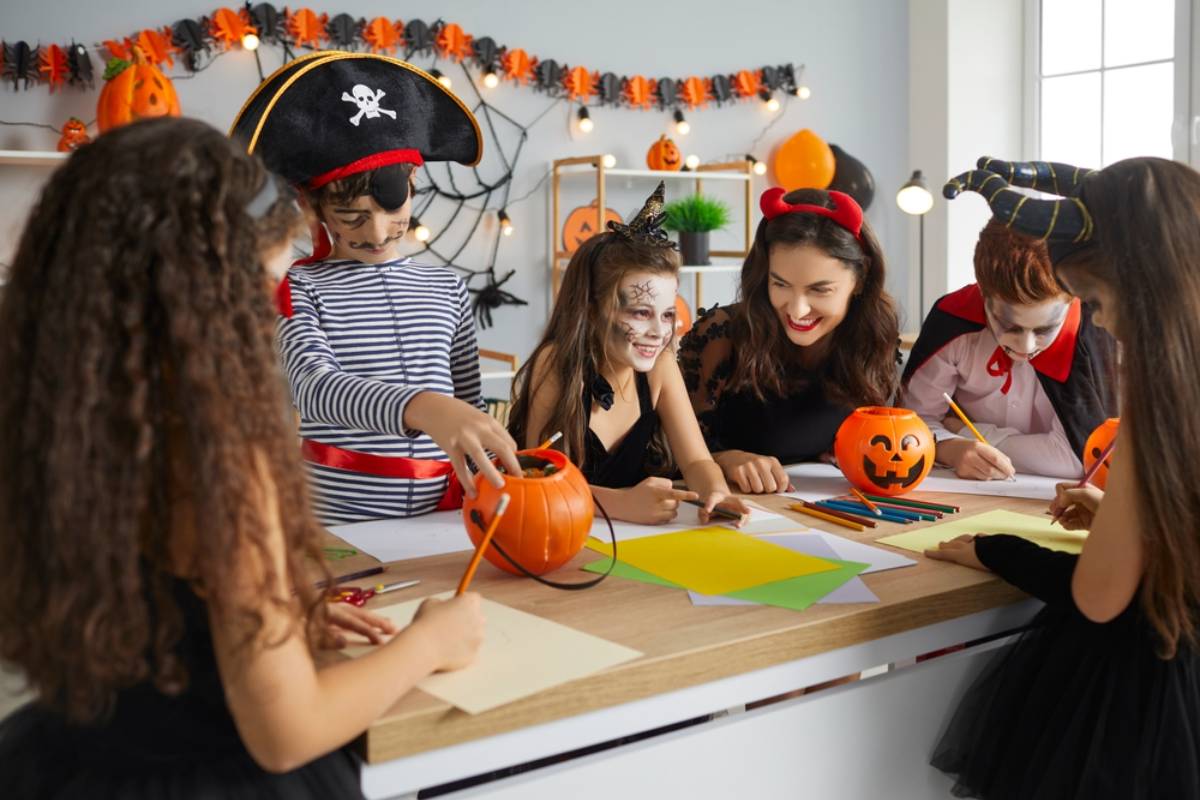
One person explained that their school actually celebrates Halloween openly, calling it a non-denominational part of the broader culture. Children wear costumes, listen to themed songs, enjoy simple snacks, and take part in age-appropriate activities such as decorating pumpkins. Students who do not want to participate can choose an alternative activity instead.
According to that person, removing Halloween had caused more conflict than keeping it had. The moment the celebration was threatened, families began arguing about who was responsible and why the change was happening. What was supposed to be a simple school tradition suddenly became a symbol of a much larger community disagreement.
The Twist Was That Nobody Really Wanted Less Fun
By the end of the discussion, one theme had become surprisingly clear. Most of the adults were not actually arguing about whether children deserved to have fun, but about who should carry the responsibility for making that fun possible. Teachers were worried about logistics, parents were worried about traditions, and families with religious objections were worried about their children being asked to participate in something they believed they should avoid.
The librarian’s original frustration therefore had a twist that went beyond Halloween itself. Everyone seemed to have a different answer for what inclusion looked like, but nearly everyone wanted the school to handle the difficult part. The most successful ideas were the ones that added something new instead of simply taking something away, whether that meant a book character parade, a fall celebration, a curriculum activity, or a community event.
The Real Lesson May Have Nothing to Do With Halloween
What started as a debate over costumes and school parties ultimately exposed a much bigger challenge for diverse communities. Schools are often expected to create traditions that feel welcoming to everyone, even when different families have completely different ideas about what should be celebrated. That can turn a simple afternoon of costumes and snacks into a surprisingly complicated question about identity, belief, responsibility, and belonging.
For the librarian, the biggest frustration was not that Halloween had become controversial. It was that so many people wanted a perfect solution without wanting to help build one. And perhaps that is why the most interesting answers were not the ones demanding that everyone get exactly what they wanted, but the ones finding a creative way to make sure children still had something exciting to look forward to.