First Grader Austin Drew the Same Butterfly Six Times After His Classmates Gave Him Kind, Specific Advice, and the Last Drawing Still Stuns Teachers

A first grader named Austin was asked to draw a western tiger swallowtail butterfly. His first try looked like a typical first-grade drawing: big round wings, beady eyes and none of the details that make the species recognizable. Six drafts later, his butterfly looked like a scientific illustration.
The difference came from his classmates. Instead of praising the first sketch, teacher Ron Berger asked the class to help Austin see what was missing, Upworthy reported this week in a look back at the lesson. Berger, a longtime public school teacher who later became a leader at the nonprofit EL Education, has been sharing Austin’s story with audiences since around 2012.
The four rules for giving feedback
Berger did not let the first graders say whatever came to mind. He gave them clear rules, according to Upworthy. They could comment only on the drawing, never on Austin himself. They had to be as specific as possible. They had to suggest a way to make the work better. And they had to be kind.
The first round of comments was simple. Classmates told Austin the wings should be pointier and less round. Another suggestion was to add the “tails,” the long extensions at the bottom of each hind wing that give swallowtails their name.
Austin took the notes and drew again. Then the class looked at the new draft and gave more feedback, and he drew it again. The process repeated over several days until he had made six versions.
What the real butterfly looks like
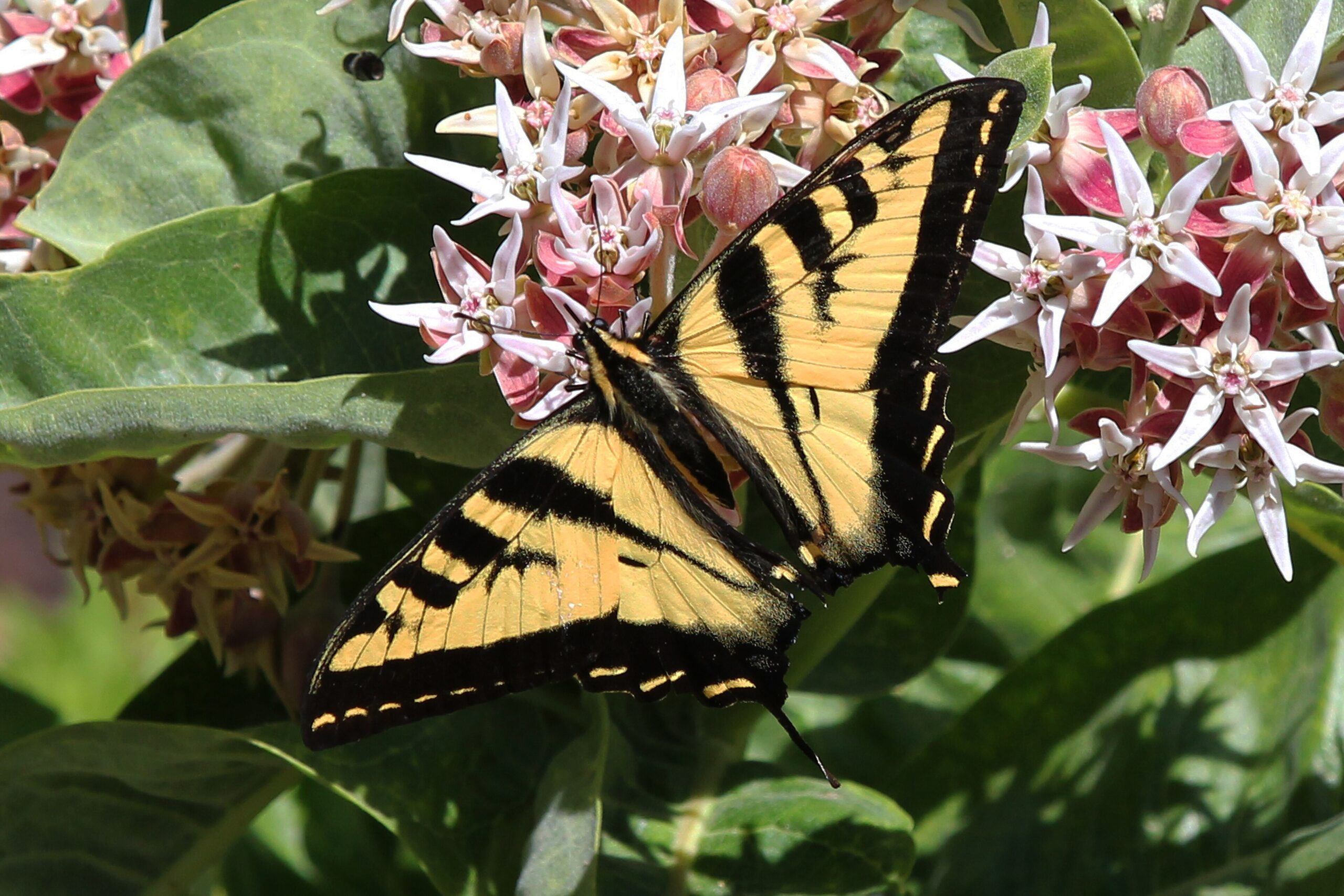
The western tiger swallowtail is a big, bright butterfly found across western North America, from British Columbia south to Baja California and east into Colorado and New Mexico, according to Wikipedia’s species entry. Its wings span about 3 to 4 inches.
Its wings are yellow with bold black stripes, with blue and orange spots near the tails. Those are exactly the kinds of details a first draft leaves out, and the kinds of details the class kept pointing Austin toward.
“Disbelief and delight”
When Berger shows audiences the first draft and the sixth side by side, people gasp. EL Education describes the response as “disbelief and delight,” Upworthy reported.
The organization tells the story in a video called “Austin’s Butterfly: Models, Critique, and Descriptive Feedback,” posted on its YouTube channel in 2016. In it, Berger explains how first graders at ANSER Charter School in Boise, Idaho, helped Austin revise his scientific illustration through several drafts into high-quality work. Boise, the state capital, is Idaho’s largest city, with about 235,700 residents in 2020, according to its Wikipedia profile.
The point of the lesson is not that Austin was a gifted artist. It is that a young child, given specific and kind feedback, can do far more than adults expect from a first attempt.
Why kind, specific feedback works
Teachers and researchers have studied the same idea for years under the name peer feedback, where one student gives notes on another student’s work before it is graded. Studies summarized in Wikipedia’s overview of peer feedback link it to better work over multiple rounds, lower anxiety, more motivation and stronger critical thinking. Students who learn from peers’ common mistakes also become more aware of their own.
The research also points to the catch. Peer feedback can be vague, unhelpful or hard to trust, and students often need training to give useful comments. That is where Berger’s rules come in: by limiting comments to the work and requiring them to be specific, helpful and kind, he turned a room of first graders into a team of editors.
An idea families can borrow
Berger’s four rules are simple enough to borrow at home. A child’s drawing, a school report or a Lego build can go through a second and third draft with the same kind of notes: talk about the work, not the kid, be specific, and offer one clear idea to try next.
Austin’s six butterflies have been shown to audiences for more than a decade now. The story keeps circulating because it shows how much a first grader can do when the people around him point him toward the details.
Get stories like this by email. Sign up for The Parent Diaries Letter.
This article was produced with AI assistance and edited for accuracy against the sources linked above.
Image: Judy Gallagher – CC BY 2.0/Wikimedia Commons