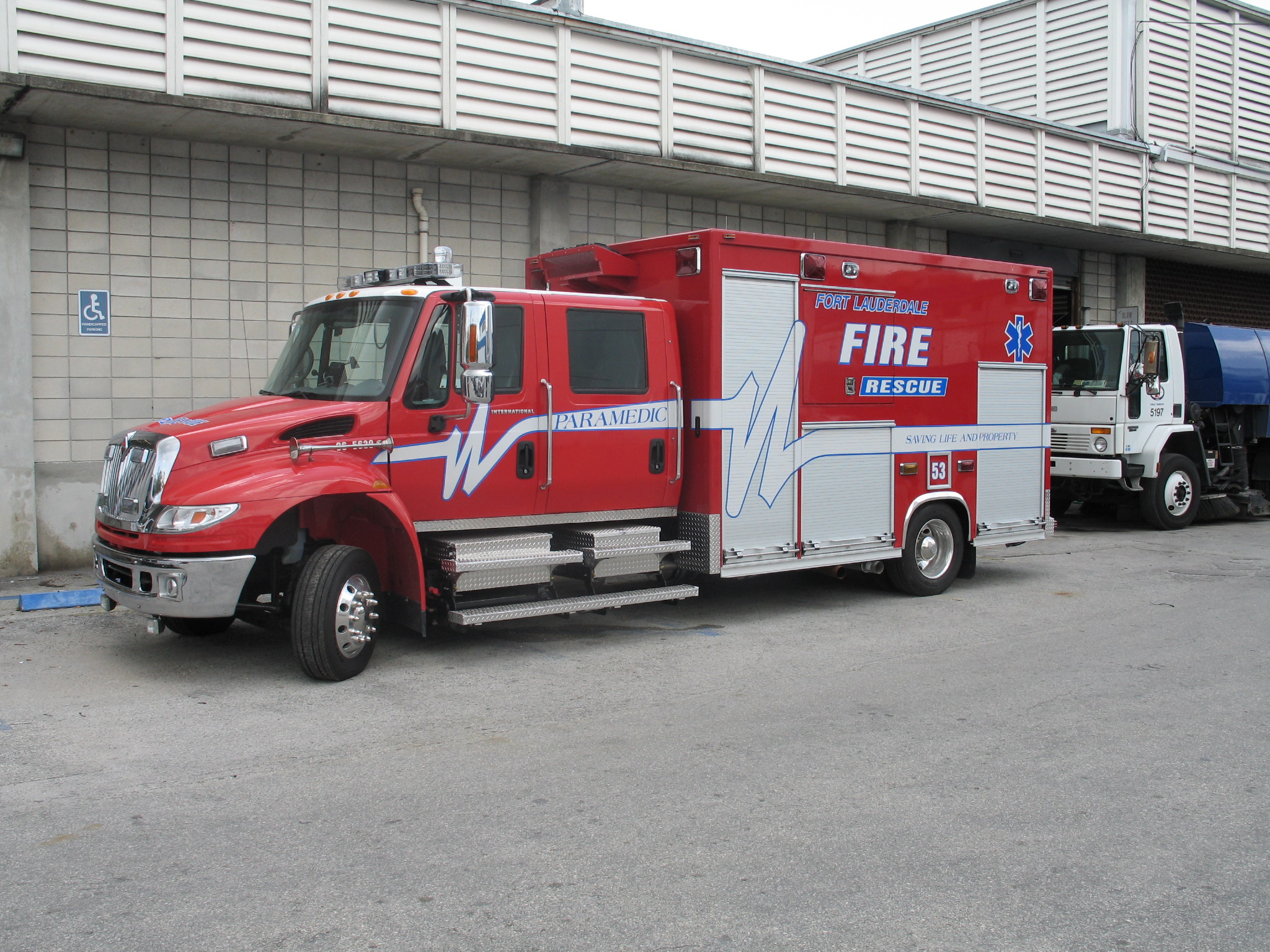
A Florida Girl Born in the Back of a Martin County Rescue Truck in 2020 Found Photos From That Morning and Asked Her Mom to Take Her to Meet the Crew

A stack of family photos sent a six-year-old Florida girl looking for the people in them. Charlotte, who was born in the back of a Martin County Fire Rescue truck on April 6, 2020, recently came across pictures from that morning and started asking her mother, Kristina, about the firefighters who helped bring her into the world, CBS12 News reported.
Her questions ended at Station 21. Mother and daughter went back to the firehouse, where crew members who were on that call met the girl they had last seen as a newborn.
Photos From an April Morning
According to CBS12, the reunion started with Charlotte herself. She found the photos taken the day she was born, and the pictures prompted her to ask who the firefighters were and what had happened.
Kristina brought her to Station 21 to find out. Martin County Fire Rescue later shared two images on social media: one from the day of the birth, and one of Charlotte sitting with the firefighters.
The station did not release the names of the crew members who delivered her, and CBS12’s report does not identify them. The department’s post described the visit as an example of how a single emergency call can turn into a lasting connection between first responders and the families they serve.
CBS12’s headline described the visit as five years later. Charlotte was born in April 2020, which made her six when she and her mother visited the station this fall, as the body of the CBS12 story notes.
A Birth During Florida’s First Pandemic Weeks
Charlotte arrived at an unusual moment for any family expecting a baby. Five days before her birth, Gov. Ron DeSantis issued Executive Order 20-91, Florida’s statewide “Safer at Home” order, which took effect at 12:01 a.m. on April 3, 2020, according to Escambia County’s announcement of the order.
CBS12 did not report why Charlotte was born in the rescue truck, and nothing in its report ties the timing of her birth to the pandemic. The order simply marks the world she was born into: a state where most residents had just been told to stay home except for essential needs.
What is clear is that her first minutes were spent with a fire rescue crew rather than in a delivery room. Martin County Fire Rescue runs 11 stations, each staffed around the clock by at least five firefighter-paramedics with a rescue unit and an engine, according to the county. The agency covers about 160,000 residents across 528 square miles, and the county says call volume has climbed 63% since 2009.
When a Baby Will Not Wait
Births in the back of an ambulance or a family car usually happen because labor moves faster than anyone planned. Cleveland Clinic defines precipitous labor as a birth that happens within three hours of regular contractions starting, though some providers use a five-hour cutoff.
The clinic lists several factors that can raise the chance of a rapid labor, including having given birth before, a previous fast labor, a smaller-than-average baby and high blood pressure. It calls rapid labor uncommon and notes that delivering outside a clean setting, such as in a car, is one of its complications.
Cleveland Clinic suggests packing a hospital bag and a few emergency supplies, such as towels, blankets and hand sanitizer, several weeks before a due date, and talking with a provider about any risk of a fast delivery.
UT Southwestern Medical Center’s pregnancy blog gives the first instruction for a labor that is moving too fast to reach the hospital: call 911 as soon as possible. Its guidance tells the mother to lie down or sit propped up rather than stand or squat, to dry the baby and place it on her chest to stay warm, and to get medical care as soon as possible after the birth.
Back at Station 21
Families do not always learn who answered their emergency calls. Charlotte’s visit gave the crew a chance to see how the baby they delivered in 2020 had grown, and gave her a face and a place to go with the pictures she found.
The photo Martin County Fire Rescue posted shows Charlotte seated among the firefighters at the station, according to CBS12.
Parent Diaries has followed other families whose babies arrived in ways nobody planned, including baby Quinn Hackett, born at 25 weeks, and a Colombian mother who delivered four identical boys in Medellín.
For Charlotte, the story of her birth now comes with faces, a firehouse and a second set of photos to go with the first.
Get stories like this by email. Sign up for The Parent Diaries Letter.
This article was produced with AI assistance and edited for accuracy against the sources linked above.
Image: Wankach – Public domain/Wikimedia Commons