
Starlyn Cafferata Transferred Her Last IVF Embryo Hoping for One More Baby, Then the Doctor Paused the Ultrasound and Came Back to Count Again

Two heartbeats in one sac. Then a second sac, and a third baby. Then the doctor paused the ultrasound, went back and found a fourth. Starlyn Cafferata, an Austin pediatric emergency nurse who had transferred her last IVF embryo hoping for one more child, was carrying quadruplets, Newsweek reported on Oct. 10.
Lennon, Francesca, Stella and Enzo are now 5. Their arrival came from an unlikely combination: the IVF embryo, two embryos conceived naturally in the same cycle, and one embryo that split into identical twins.
One Last Embryo
Starlyn, now 42, and her husband, Bill, a 43-year-old realtor, already had one daughter, Zoë, who was conceived through IVF and is now 8, according to Newsweek. The couple had one IVF embryo left and transferred it for a chance at a second child.
What they did not know was that Starlyn had also ovulated two eggs on her own during that cycle, and both were fertilized. The IVF embryo and both naturally conceived embryos implanted. One of those embryos later divided, producing identical twins and bringing the total to four.
The Scan That Kept Counting
The discovery happened during a hospital visit, not a routine appointment. Starlyn had cramping, spotting and was feeling generally unwell, so the couple went to the hospital, Newsweek reported. COVID-19 restrictions were limiting visitors at the time, but Bill was allowed in because of the concerns about the pregnancy.
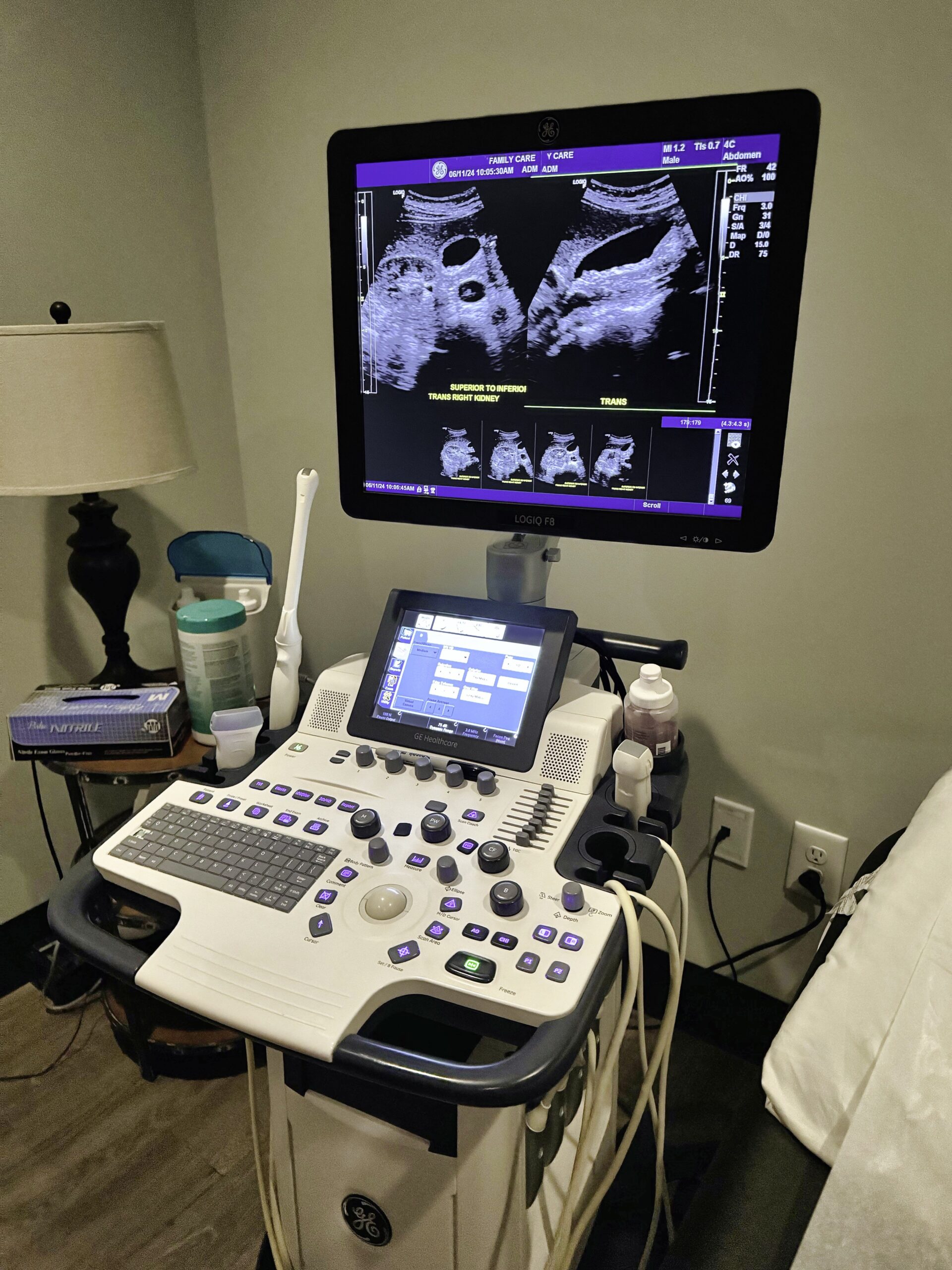
On the ultrasound, the doctor first found two heartbeats sharing one sac. A second gestational sac showed a third baby. The doctor then paused the scan and returned to check what looked like a fourth heartbeat, and a follow-up scan confirmed quadruplets.
A Pregnancy That Grew Fast
Starlyn’s body changed quickly. By 17 weeks, Starlyn was measuring like someone 41 weeks pregnant, according to Newsweek, and she was put on bed rest. She described the pregnancy as physically exhausting.
She delivered at 31 weeks: identical twin girls, another girl and a boy. Preterm birth, meaning birth before 37 weeks, is the most common complication of a multiple pregnancy, and nearly all triplets and higher-order multiples are born early, according to the March of Dimes. The group says most are delivered by cesarean and that many parents expecting multiples go on bed rest later in pregnancy.
How Rare Four Really Is
Quadruplets are among the rarest births in the country. In 2024, the United States recorded 144 quadruplet and higher-order births, compared with 2,444 triplet births and 109,195 twin births, according to the Centers for Disease Control and Prevention’s FastStats.
Higher-order multiples have also become far less common. The rate of triplet and higher-order births fell 62% from 1998 to 2023, from 193.5 to 73.8 per 100,000 births, according to a National Center for Health Statistics data brief. Among mothers 40 and older, the rate dropped 67%.
Single embryo transfer, which is what the Cafferatas did, is one way to lower the chance of multiples, and the March of Dimes suggests asking a provider about it. Even so, a single transfer can still lead to more than one baby. A study of 937,848 single embryo transfer cycles in Japan’s national fertility registry found that 1.6% of the resulting pregnancies were multiples, according to the European Society of Human Reproduction and Embryology, which published the research in its journal Human Reproduction.
That study linked embryo splitting to lab factors such as frozen-thawed embryos and blastocyst culture, though its authors noted it could not prove those steps cause splitting.
Four Siblings at 5
Five years later, Starlyn describes the four siblings as “built-in best friends,” Newsweek reported. Zoë, the couple’s first child through IVF, now has four younger siblings who all share a birthday.
Get stories like this by email. Sign up for The Parent Diaries Letter.
This article was produced with AI assistance and edited for accuracy against the sources linked above.
Image: Harrison Keely – CC BY 4.0/Wikimedia Commons


