Marissa Ross, a Nurse and Mom of Three, Delivered Her Daughter Remi Herself on the Side of a British Columbia Highway

Marissa Ross knows hospitals. She is a registered nurse at 100 Mile District General Hospital in British Columbia. But when her fourth baby decided to arrive on Oct. 20, Ross was not in a hospital at all. She was on Highway 5, just south of Little Fort, and she caught her daughter herself.
Ross told the 100 Mile Free Press, in a story published Nov. 9, that she caught the baby herself while paramedics tossed her a towel. The baby, a girl named Remi, joined three big brothers: Raiden, Rippyn and Ryatt.
A drive that ran out of road
Ross and her husband were driving from their home in Bridge Lake toward Kamloops when the baby came, according to the newspaper. Her in-laws looked after the couple’s other children.
Paramedics met the family on the road and brought Ross into the ambulance. One of the paramedics was still in training.
“Everybody was so supportive,” she told the paper.
Ambulance care across the province is provided by BC Emergency Health Services, which oversees the BC Ambulance Service and covers regions including the Interior, where Bridge Lake and Little Fort are located. Its services include ground ambulances, dispatch, first responders, community paramedicine, critical care and infant transport, across five health regions: Fraser, Interior, Island, Northern and Vancouver Coastal. Its website marks 50 years of the service caring for patients in the province.
Why she was heading to Kamloops
Ross works at 100 Mile District General Hospital, but she told the 100 Mile Free Press that the community does not have prenatal, labor, delivery or postpartum care.
The hospital’s listing from Interior Health names antepartum, intrapartum and postpartum care among its maternity-related services, along with maternal fetal medicine, the Healthy From The Start program, the BC Early Hearing Program and maternity visiting hours. The listing does not say whether babies are delivered there.
Across the province, planning for where and how babies are born is coordinated by Perinatal Services BC, which describes itself as the central source for evidence-based perinatal information in British Columbia. Its work includes the Perinatal Data Registry and newborn screening.
When labor moves fast
Labor usually starts between 37 and 42 weeks, according to the National Library of Medicine’s MedlinePlus. Signs include contractions that come closer together, fluid leaking or bleeding, a low, dull backache and cramps, and MedlinePlus advises calling a health care provider at any sign of labor, even before the due date.
Labor happens in three stages. The first, when contractions open the cervix, can last hours or days. In the second, pushing begins and the baby is born. In the third, the placenta is delivered and the cord is cut. Most births are vaginal, and a Cesarean section may be needed if complications come up, MedlinePlus says. It also encourages parents to talk through pain relief options with their provider before the due date.
For Ross, the birth itself happened on the side of a highway, before the family reached Kamloops.
Four kids, one roadside story
Remi is now the youngest of four, and the only girl in a house with three older brothers. Ross has been open about how much the help from paramedics meant to her.
Roadside and car births have a way of becoming family legends. A father in Northern Ireland ran to police in the rain at 3:30 a.m. as his partner gave birth in their car, and the officers have since met that baby twice.
For a nurse who spends her working days caring for others, Ross ended up being the first person to hold her own daughter, on the side of the road, with a towel tossed in by paramedics.
Get stories like this by email. Sign up for The Parent Diaries Letter.
This article was produced with AI assistance and edited for accuracy against the sources linked above.
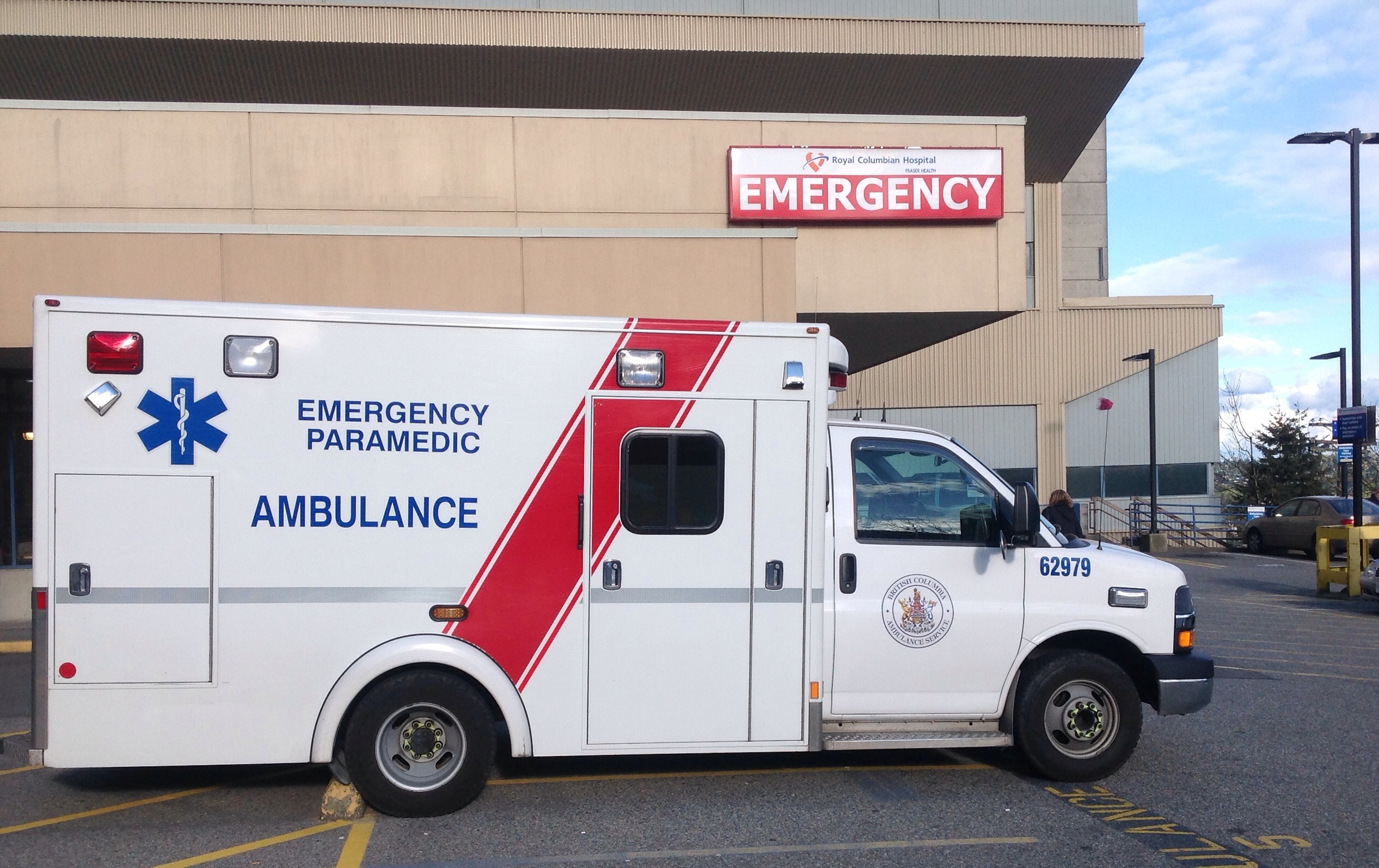
Image: “BC Ambulance at RCH” by Canuckle, CC BY-SA 3.0, via Wikimedia Commons