A Mom Says Her Son Was Placed in a Sixth-Grade Class Without Any of His Friends, and She’s Worried His Last Year of Elementary School Will Be Lonely

A person shared his story about a sixth-grade boy who was supposed to begin the final year of elementary school with plenty of familiar faces around him. Instead, when the family attended school supply drop-off, he walked from table to table reading the names and realized something that instantly changed his mood: none of his close friends had been assigned to his class. What seemed like an ordinary scheduling decision suddenly felt enormous to a child who had already lost several friendships outside school.
The timing made the situation even harder because the boy had already experienced a summer filled with changes. A cousin who had once been his closest playmate had moved away, one of his neighborhood friends had relocated, and another child was no longer allowed to play with him after a disagreement between the parents.
Now his school friends would still be around, but their schedules might prevent them from spending much time together during the school day. His mother couldn’t help wondering whether she should step in before the first day and ask the school to move him.
The Class List Changed Everything
The boy had been looking forward to the new school year until he started reading the names attached to the classroom desks. He had apparently expected to see at least one familiar friend waiting for him, only to discover that every close friendship seemed to have landed somewhere else. It wasn’t simply that he would have a different teacher or a different seat, because those were normal parts of growing up. The problem was that the room suddenly felt like a place where he would have to start over.
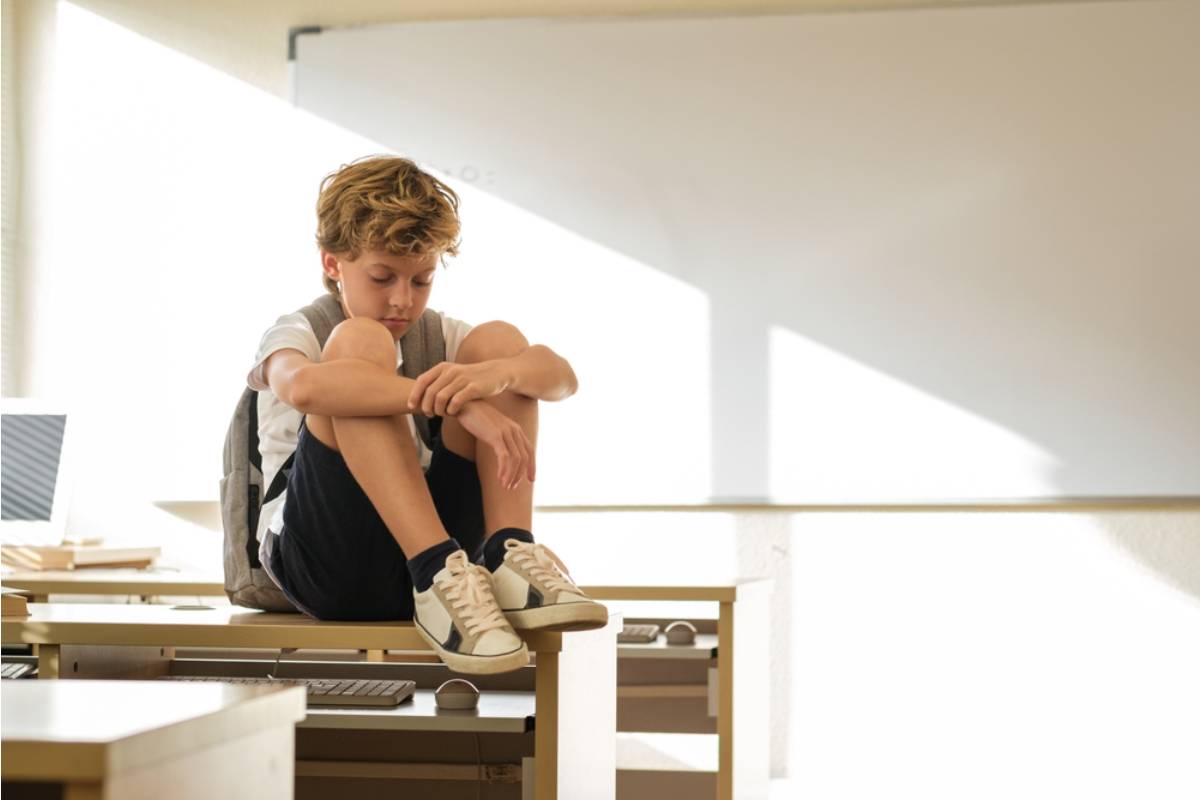
His mother noticed the change immediately when they went home. The boy looked withdrawn while they cleaned his bedroom, and at one point he crawled under his bed to retrieve something and then simply stayed there for a long time. He still helped with the cleanup, but his energy was noticeably different from usual. To his mother, it looked less like ordinary disappointment and more like a child already mourning the school year he thought he was going to have.
His Friends Were Still There, Just Somewhere Else
There was an important detail hidden inside the family’s concern. The boy didn’t actually have no friends at school, despite what the title initially suggested. He had friends in his grade, but they had been separated into different classes and might not share lunch or recess at the same time.
That distinction became central to many of the responses from people who heard the story. Several pointed out that having no friends in a classroom is very different from having no friends at all. The boy still knew children at school and could potentially spend time with them outside the classroom. The real challenge was figuring out how to preserve those friendships while giving him a chance to build new ones.
The Summer Had Already Taken Away Several Friends
The school situation might have felt much smaller if the boy had spent the summer surrounded by neighborhood friends. Instead, his social world had already shrunk considerably. A cousin who lived nearby and had once been his best playmate moved away, while another close friend moved during the spring.
There was also a more complicated friendship that disappeared after another child’s mother decided the boy was a bad influence. According to the story, the other child had learned a bad word, and his mother believed the boy had taught it to him. The boy denied doing it and said another neighborhood child was responsible, and his mother believed him for several reasons. Regardless of who was responsible, the result was the same: another person disappeared from his everyday social circle.
The Neighborhood Became Quiet
The boy had once spent his days outside, riding his bike or scooter and playing with other children until it became dark. That routine had apparently faded almost completely during the summer. Without someone to ride with or play alongside, he stopped wanting to go outside and increasingly stayed indoors.
That made the school change feel more serious because school was no longer simply one place where he might lose access to friends. His neighborhood had already stopped providing the easy, spontaneous friendships he once enjoyed. There were no longer children his age regularly knocking on the door or waiting outside. The family was watching several small changes pile up into one much bigger problem.
Then the School Schedule Delivered Another Blow
The boy later looked at his schedule and realized that even recess might not solve the problem. Students ate lunch in their individual classrooms, and different groups did not necessarily have lunch and recess at the same time. That meant his friends could be only a few hallways away and still be unavailable when he wanted to see them.
The school’s new rules made the situation even more complicated. According to the mother, the school did not have a cafeteria, and students had only about 45 minutes of combined lunch and recess each day. A new principal had also restricted where children could play, meaning that even being outside at the same time did not guarantee that friends could actually interact. Suddenly, “just see your friends at recess” wasn’t as simple as it sounded.
His Mother Started Wondering About a Class Change
With all of this happening at once, the mother wondered whether asking the school to move her son would be unreasonable. She wasn’t asking because he disliked his teacher or because there was a conflict with another student. She simply wanted him to have at least one familiar face in the room during what was already going to be a major transition.
Some responses strongly supported making the request. One person argued that a child entering sixth grade shouldn’t have to walk into a classroom without a single friend, especially if the child isn’t naturally skilled at forming new friendships. Another person shared a personal experience in which advocating for a class change eventually resulted in the school correcting a scheduling mistake. For those people, protecting the boy’s emotional well-being was more important than letting him struggle simply because the schedule had already been created.
Other People Thought Moving Him Would Make Things Harder
But a much larger group saw the situation differently. They believed the boy’s current class could actually become an opportunity rather than a disaster. He would eventually face situations like this repeatedly, including the following year when he moved to a new school with different classmates, routines, teachers, and expectations.
Several responses emphasized that adults cannot remove every difficult situation from a child’s path. They felt that sixth grade was an appropriate time for him to practice walking into an unfamiliar social environment and discovering that he could handle it. If he learned that he was capable of approaching new people and building friendships, that confidence could follow him into middle school and beyond.
One Response Remembered a Similar Sixth-Grade Surprise
A response from a person described an experience from sixth grade that sounded almost like the opposite of what the mother feared. That person had been moved into a new building during the school year through a lottery and initially felt devastated because the move separated them from their closest friends. The first attempts to make new friends didn’t go particularly well, which made the situation feel even worse.
Then something unexpected happened. The person eventually found a new group of friends and became extremely close with them, remaining friends for decades afterward. The story offered a reminder that children cannot always predict which relationships will matter most. Sometimes the friend a child is convinced he cannot live without is replaced by someone he hasn’t even met yet.
The Boy’s Mother Had Her Own Bad Memory
The mother wasn’t worrying about loneliness in the abstract. She shared that she had once experienced something similar at school herself. She remembered spending an entire year without making a new friend after being separated from the people she knew, and the experience was painful enough that she still remembered teachers noticing her sitting alone at lunch.
That personal history made her son’s situation especially difficult to watch. She knew how different it felt when adults told a lonely child simply to smile or assume everything would work itself out. Her fear wasn’t necessarily that her son would fail at school academically. She was afraid he would spend months feeling invisible while everyone around him assumed he was doing fine.
The Boy Was Already Trying Activities
People repeatedly suggested extracurricular activities as a possible solution. Sports teams, clubs, performing arts, robotics, and community programs were all mentioned as places where children can naturally meet others who share their interests. The idea was to create additional social circles so the boy wouldn’t depend entirely on his classroom for friendship.
There was just one problem: the boy’s situation didn’t fit the easy version of that advice. His school didn’t offer extracurricular activities, and he wasn’t interested in competitive sports. He was already involved in karate and swimming, but neither activity had produced close friendships. His main interest was soccer, although he preferred playing casually rather than joining a competitive team.
Even Karate Had Become a Reminder
One detail made the mother’s concern particularly heartbreaking. During karate, students regularly needed partners, and she noticed that her son sometimes struggled to find someone to work with. Instead of simply shrugging it off, the boy eventually asked his mother whether he was ugly and specifically told her not to lie to him.
She reassured him that she did not think he was ugly at all, but she couldn’t explain why he was having such a difficult time socially. He was also unusually tall for his karate class, despite not being the oldest child there, and she wondered whether that might somehow affect how other children perceived him. The question showed that his loneliness was beginning to affect how he viewed himself, not just how he viewed school.
Then His Cousin Suddenly Came Back
The most revealing moment in the story happened when the boy’s cousin stopped by for a short visit. The cousin was the child who had moved away and could now only see him occasionally, sometimes with several months between visits. Yet the instant the cousin arrived, the boy’s entire expression changed.
He became excited and immediately went outside to play soccer with him. The contrast was striking because this was the same child who had recently been lying under his bed during a room cleanup and worrying about school. For his mother, that moment was proof that her son wasn’t uninterested in friendship or incapable of connecting with people. He clearly wanted companionship, but the people he felt most comfortable with were increasingly far away.
Maybe the Real Problem Wasn’t the Classroom
A response from a person pointed out that the boy’s history actually suggested he was capable of making friends. He had previously formed close relationships with neighborhood children, maintained friendships at school, and developed a particularly strong bond with his cousin. The problem seemed to be that several of those relationships had disappeared or become harder to maintain at almost exactly the same time.
That changed the question from “Can he make friends?” to “How can he get more opportunities to make them?” One response suggested helping him arrange weekend activities with his existing friends so those relationships wouldn’t disappear simply because the children weren’t in the same classroom. Another suggested inviting classmates over one at a time, where the social pressure might be much lower than trying to connect in a busy classroom.
The First Day Could Change the Entire Story
Several people believed the family should wait before asking for a class transfer. They pointed out that the first days of school can be awkward for almost everyone, including children who already know several classmates. A child who feels completely unfamiliar with his classroom on Friday might discover by Wednesday that he has been sitting next to someone funny, helpful, or unexpectedly interesting.
One person suggested asking the boy after the first day who he sat near rather than asking immediately who his new best friend was. That small distinction could make the process less intimidating. Instead of treating friendship as something that had to happen instantly, the family could look for tiny points of connection and let those develop naturally.
His Old Friends Still Matter
At the same time, nobody said the boy should simply forget his old friends. Several responses recommended scheduling sleepovers, movie trips, weekend visits, or other activities so those relationships remained part of his life. The fact that children aren’t assigned to the same classroom doesn’t mean friendships have to end.
Keeping those friendships active could also remove some of the pressure from the new class. If the boy knows he has people waiting for him outside school, he may feel less desperate to find a new best friend immediately. That emotional breathing room could make it easier for him to approach unfamiliar classmates without feeling as though everything depends on the outcome.
The New Class Might Contain One Unexpected Friend
The mother noted that her son already knew most of the children assigned to his class because he had spent years around them. Only one student appeared to be genuinely new to him. That made her skeptical of the suggestion that he would suddenly walk into the room and discover an entire group of new friends waiting for him.
Still, familiarity doesn’t always mean friendship. A child can know someone’s name for six years without ever really talking to them, and circumstances can change quickly when two children suddenly sit near each other every day. The student he barely noticed before could end up becoming the person he talks to most by the end of the year.
Sixth Grade Was Already Going to Be a Transition
The timing made the situation particularly important because this was the boy’s final year before another major school change. The following year would bring a different building, bus, schedule, classes, teachers, and the unfamiliar experience of navigating a locker. If the family moved him now simply to keep him beside his current friends, he might still face the exact same social challenge a year later.
That was why many responses described the current situation as practice for something inevitable. The goal wasn’t to leave him alone or tell him to figure everything out without support. It was to give him encouragement, help him maintain his existing friendships, and let him discover that an uncomfortable beginning doesn’t necessarily predict the ending.
His Mother Didn’t Have to Choose Between Helping and Rescuing
One of the more balanced suggestions was to support the boy without immediately fixing the schedule. His mother could talk with his teacher about the fact that he was worried about social isolation without demanding that someone solve the problem for him. She could also help him practice simple ways to approach classmates, start conversations, invite someone over, or join an activity without making the entire process feel like a major assignment.
That approach would give the boy room to participate in his own solution. If the first few weeks showed that he was genuinely isolated, deeply unhappy, or struggling to function at school, the family could revisit the class-change question with more information. A request made after observing the situation might also carry more weight than one based entirely on what everyone feared before school had even started.
The Responses Agreed on One Thing
Although people disagreed sharply about whether the class should be changed, they largely agreed that the boy’s feelings deserved to be taken seriously. Being told that “everyone makes new friends” doesn’t magically make loneliness disappear, especially for a child who has already watched several important friendships fade. At the same time, feeling sad before school starts doesn’t necessarily mean the year will actually be lonely.
The most hopeful part of the story was the boy’s reaction when his cousin arrived. His face lit up, he ran outside, and he immediately wanted to play soccer. That moment suggested that the child hadn’t lost his ability to connect with people. He simply needed more chances to find people with whom that same spark could happen.
The Real Twist Was That Nothing Had Happened Yet
In the end, the family was standing at the beginning of a story rather than the end of one. The boy had not yet spent a lonely month in his classroom, and he had not yet discovered whether the students around him would welcome him. His mother was understandably reacting to everything that had happened before school even began, including the moves, lost neighborhood friendships, restricted recess, and long stretches of summer without a playmate.
A response from a person captured the hopeful side of the situation by pointing out that the boy had already proven he could make friends. His old friendships might continue outside school, while new relationships could develop slowly inside the classroom. The sixth-grade schedule that initially looked like another thing being taken away from him might eventually become the reason he met someone he never expected to know. For now, the biggest twist is that the school year hasn’t actually happened yet, and the lonely classroom the family fears could turn out to be the place where his next important friendship begins.