A Mom Says Strangers Keep Calling Her Daughter “Tiny,” and It’s Bringing Back Feelings She Never Wants Her Little Girl to Carry

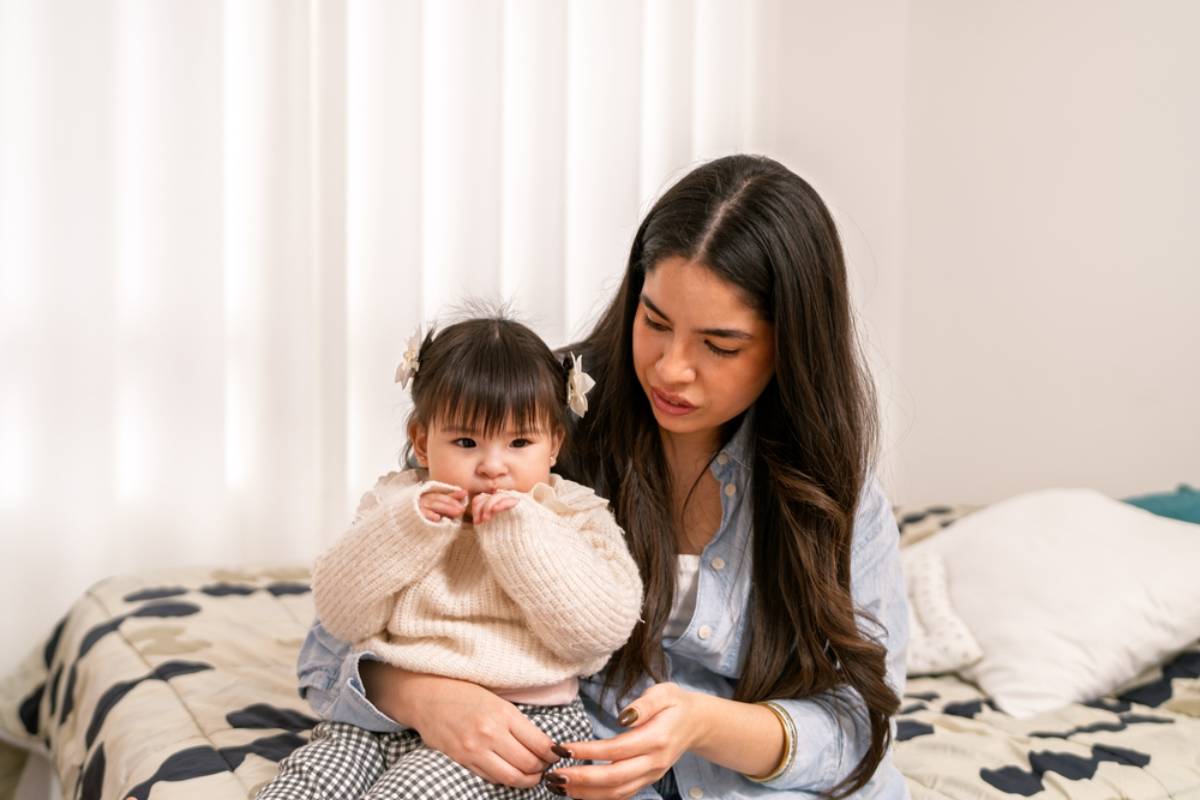
A mother shared her story after realizing how often strangers comment on her 3-and-a-half-year-old daughter’s size. The little girl is naturally small, which is not particularly surprising given that both of her parents are also small in stature and weight. Still, hearing people repeatedly describe her as “tiny” has become difficult for the mother to brush aside because of her own childhood.
When she was young, the mother was also very short and skinny, and she remembered being extremely shy because of it. She was bullied over her appearance, especially as she got older and reached puberty. Those experiences eventually left her with a lot of painful feelings about her body, making an innocent comment about her daughter feel much heavier than it might seem.
Her Daughter Is Still Only Three and a Half
The mother’s biggest concern is not really what strangers mean when they make the comments. She knows that most people probably see a small child and simply notice that she is smaller than expected. The problem is that her daughter is now old enough to understand a surprising amount of what adults say around her.
At 3 and a half, the child may not yet be analyzing height and weight the way an older child would. But her mother worries that hearing the same description again and again could eventually make her wonder whether being small means something is wrong with her. That possibility is exactly what the mother wants to prevent before the idea ever becomes a source of insecurity.
A Pediatrician Had Already Put Her Mind at Ease
The mother had actually raised her daughter’s weight with the pediatrician because of how often other people commented on her size. The doctor pointed out that both parents are small themselves, making her daughter’s build less surprising. He also explained that some babies much younger than her are placed on diets because they are overweight, offering a different perspective on how varied children’s bodies can be.
That conversation helped remind the mother that being small is not automatically a medical problem. Still, reassurance from a doctor did not erase the emotional reaction she had developed after years of hearing similar comments about herself. She understood the facts, but she was still trying to figure out how to handle the comments without allowing her own history to become part of her daughter’s story.
Then a Family Vacation Changed Something
The strange part happened while the family was on vacation in another state. During their time away from home, not a single person commented on the daughter’s size. Instead of simply enjoying the break, the mother noticed the silence almost immediately.
That absence made her realize just how accustomed she had become to waiting for someone to mention how small her daughter was. Once the comments stopped, she could suddenly see how much attention she had been paying to them. The quiet vacation ended up bringing all those old memories rushing back.
She Started Wondering What to Say Back
The mother’s question was straightforward on the surface: What should she say when strangers mention her daughter’s size? She wanted something that would shut down any awkwardness without turning the moment into a serious conversation. More importantly, she did not want her response to accidentally signal to her daughter that being small was embarrassing or concerning.
She imagined a future moment when her daughter might hear someone call her “tiny” and then turn around and ask why. That thought bothered the mother because she wanted her child to grow up seeing herself as perfectly ordinary, not as someone who needed an explanation for her body. She was looking for a way to protect that confidence without making the subject seem forbidden.
One Parent Suggested Treating It Like a Family Trait
A response from a person suggested keeping the answer simple by connecting the daughter’s size to her mother’s. The person explained that she was also very short and had always responded to comments by saying her daughter simply got it from her. The idea was to turn the observation into something completely ordinary rather than something that needed defending.
The same person described getting the opposite reaction with her sons because they were tall like their father. When strangers commented about their height, she gave the same kind of answer and moved on. Her point was that people will comment on almost anything noticeable about children, so there may never be a perfect response.
Another Parent Said Their Whole Family Was Small
A father of four offered a similar perspective from his own family. He explained that his wife and children were all short, and the family had simply accepted that as part of who they were. Their older children were often the smallest players on their sports teams, while their youngest had only recently grown into newborn-sized clothes.
His response centered on the idea that there was nothing shameful about being small. From his perspective, it was simply a physical characteristic that some families happened to share. Treating it casually, rather than as a problem requiring an explanation, could help children see it the same way.
Some People Believed the Comments Were Impossible to Avoid
Another response from a person pointed out that children themselves often notice who is the shortest or tallest in their class. From that perspective, parents may have limited control over whether their children ever hear observations about their size. The more important question could be how a child learns to understand those differences.
The mother seemed to recognize that she could not control every stranger, classmate, teacher, or family member who might say something about her daughter. What she could control was the emotional meaning attached to those comments at home. That distinction became especially important as she tried to separate ordinary observations from the painful memories she carried from childhood.
One Response Warned Her Not to Pass Her Baggage Down
A particularly blunt response from a person focused on the mother’s own emotional reaction. The person argued that a 3-and-a-half-year-old was unlikely to think about her size in such complicated terms unless adults made it seem like something was wrong. In that view, a parent reacting with visible alarm could unintentionally teach a child that a harmless physical difference is actually a problem.
The comment was difficult, but the mother appreciated the point. She acknowledged that avoiding this exact situation was already one of her biggest concerns. She did not want her daughter to inherit a fear that had originally belonged to her.
Someone Else Had a Much Simpler Answer
Another response from a person offered an almost playful solution: simply respond as though the comment were a compliment. The person suggested answering with something along the lines of being happy that the child was cute and small. For parents who are already comfortable with their own height and build, that kind of confidence can make the exchange feel completely harmless.
The mother was also reminded that she did not have to make every comment into a meaningful conversation. A smile, a cheerful response, or even changing the subject could allow the moment to pass without giving it emotional weight. Sometimes the easiest way to make something ordinary is to treat it as ordinary.
Humor Could Turn an Awkward Moment Into Nothing
One playful suggestion from a person was to describe the little girl as “travel size,” turning her petite frame into a joke rather than a criticism. The person explained that she had grown up small herself and never remembered viewing it as a serious problem. In her experience, people often make observations about physical differences without intending anything negative.
That suggestion also came with an important caveat. A lighthearted response might work beautifully for one child but not another, especially if the child eventually attends a school environment where differences are mocked. Still, the underlying idea was to show the child that her size did not automatically carry a negative meaning.
Another Mother Pointed Out the Advantages of Being Small
A different response came from someone who described being tall and said she could easily think of advantages to being smaller. She mentioned practical things such as fitting more comfortably into airplane seats and school desks. She also pointed out that different body types can come with different strengths, whether in sports or everyday situations.
Her message offered the mother another way to think about the comments. Instead of treating smallness as something that required reassurance, she could let her daughter grow up understanding that bodies simply come in different shapes and sizes. A casual comment about being small did not have to become the beginning of a conversation about what was supposedly lacking.
One Parent Believed Differences Should Be Discussed Openly
Another response from a person shared a different philosophy entirely. The person said that growing up small never felt like a secret because differences were openly acknowledged in the family. Rather than pretending unusual traits did not exist, the family treated them as normal parts of being human.
That person described teaching a child to be curious about differences instead of embarrassed by them. The goal, she suggested, was to make a child familiar enough with what made them different that teasing at school would not feel like a shocking revelation. Her perspective gave the mother another possible path forward: not hiding the difference, but refusing to make it shameful.
The Mother Admitted She Might Be Overthinking It
As more perspectives came in, the mother seemed to realize that her biggest struggle was not her daughter’s size itself. It was the history attached to that word for her. She had spent years being bullied for looking different, so hearing the same kind of description directed toward her daughter naturally made her protective instincts flare up.
She also openly admitted that she might be overthinking the situation. At the same time, she remained determined not to project her own body trauma onto her child. Her goal was becoming clearer: she wanted to be prepared without making the subject bigger than it needed to be.
A Childhood Story Made the Fear Even More Complicated
One response from a person included a story about being repeatedly teased as a child because of her appearance. She remembered people joking about her hair color and even suggesting she must have been someone else’s child. At the time, she said, she largely shrugged it off and did not see herself as damaged by those comments.
The memory became more complicated later when a sibling told her that she had been adopted and asked her to keep it secret. The adoption claim turned out not to be true, but the secret stayed with her throughout much of childhood. Her story illustrated how children can absorb unexpected things from the adults around them, sometimes in ways no one initially realizes.
The Message She Wanted Her Daughter to Hear Was Simple
By the end of the discussion, the mother had a much clearer idea of what mattered most. Her daughter did not need to be protected from every mention of her size, because being small was not inherently a problem. What she needed was a parent who treated her body as normal, loved, and worthy of confidence.
The mother had already said something important without realizing how powerful it was: her daughter was perfect. The challenge now was making sure her actions matched that belief whenever someone pointed out the child’s size. Instead of passing along fear from her own childhood, she could give her daughter something different, the freedom to hear “tiny” and simply understand it as one small detail about who she was.