A Pregnant Mom Says Her Husband Is Certain He Could Never Leave Their Baby in a Hot Car, Until One Terrifying Mistake Made Her Question His Confidence

A pregnant mom recently found herself thinking about one of the most frightening things a parent could imagine after seeing another news story about a baby being left in a hot car. She brought the subject up with her husband, expecting that they would agree it was a possibility worth taking seriously. Instead, he confidently told her that he could never accidentally leave their baby behind.
That answer immediately bothered her because she knew her husband well. She described him as loving, caring, and devoted to his family, but also someone who could slip into autopilot and overlook things when they weren’t directly in front of him. For her, that made his certainty feel less reassuring and more dangerous.
The Cake That Disappeared From His Memory
She gave him a simple example from everyday life. She had recently baked a cake, placed it inside a box, and left it somewhere in the house, but her husband completely forgot about it because he couldn’t see it. It wasn’t that he didn’t care about the cake or wasn’t paying attention in general.
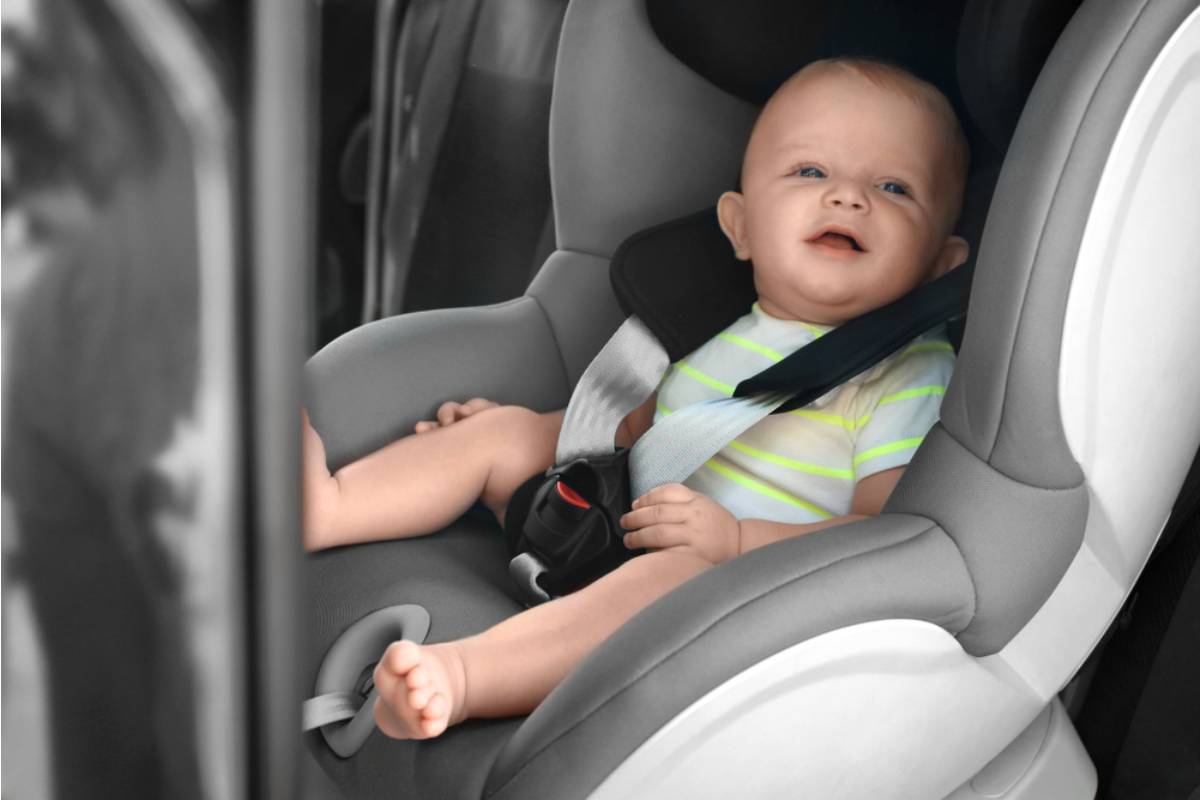
It was simply the way his brain sometimes worked when something disappeared from his immediate view. That detail stuck with her because a baby in a rear-facing car seat could also be physically out of sight. The difference, of course, was that forgetting a cake was harmless while forgetting a baby could be catastrophic.
The Cat Litter Incident
There was another example that made her uneasy. She had repeatedly asked her husband not to leave the cat litter scoop on the bathroom counter because of the potential health risks during pregnancy. He remembered almost every time, but occasionally his routine took over and he left it there anyway.
Those mistakes were rare, but they were exactly what concerned her. She wasn’t accusing him of being careless or irresponsible. She was wondering whether a person who occasionally operated on autopilot could honestly guarantee that exhaustion, stress, and a disrupted routine would never affect them.
He Believed the Stakes Would Change Everything
Her husband had a straightforward argument. He said he would never leave the baby in the car because the stakes would be so high. To him, knowing that a baby was sitting behind him would make forgetting impossible.
The mom wasn’t convinced that human attention worked quite that neatly. She understood that he loved the child they were expecting and would never intentionally put the baby in danger. What frightened her was the possibility that a terrible mistake could happen precisely because nobody intended for it to happen.
A Response From a Person Suggests a Different Approach
A response from a person offered a calmer way to approach the disagreement. Instead of trying to make her husband admit that he could forget the baby, the person suggested saying that while it was unlikely, the consequences were so serious that they should create safeguards anyway.
That suggestion changed the focus from proving who was right to preventing something neither parent wanted. The goal wasn’t to convince him that he was secretly irresponsible. It was to build a routine strong enough to catch a mistake before it became a tragedy.
The School Bus Comparison
Another response from a person brought up school bus drivers. They are trained to deliberately check the vehicle after every route to make sure no child remains behind, even when they believe everyone has already gotten off.
The point was simple but powerful. Professionals don’t rely entirely on confidence or memory when the consequences of forgetting someone are severe. They build a physical checking routine instead. For the mom, that sounded much more reliable than simply promising that a loving parent would never make a mistake.
The Car’s Safety Reminder Wasn’t Enough
Several people pointed out that some newer vehicles have reminders telling drivers to check the back seat. At first, that sounded like exactly the kind of backup the couple needed.
Then someone explained the problem. If the warning appears so frequently that it becomes part of the normal startup routine, drivers can eventually dismiss it without really processing it. One person even gave the phenomenon a name: alarm fatigue, when repeated warnings become so familiar that the brain stops treating them as urgent.
The Mom Realizes Technology Has Limits
The mom checked their own situation and discovered that their car didn’t have the feature anyway. That meant they couldn’t simply depend on a dashboard reminder to solve the disagreement.
A response from a person suggested that aftermarket sensors could provide another layer of protection. But the broader lesson was that technology worked best as a backup rather than a substitute for a deliberate habit. The safest system, the responses suggested, was one that didn’t depend on remembering to remember.
The Shoe Trick Enters the Conversation
One of the most widely suggested ideas was the famous shoe trick. The idea was simple: when driving with the baby, the parent removes one shoe and leaves it in the back seat near the car seat. When they arrive at their destination, they would have to open the rear door to retrieve it.
The mom’s problem was that her husband didn’t think such precautions were necessary. That made the suggestion almost useless unless he first accepted the possibility of an accident. A response from a person pointed out that this was exactly the issue: the real problem wasn’t finding a safety trick, but getting the person most worried about the situation to take the risk seriously.
A Bag in the Back Seat Might Work Better
Another response from a person suggested a less unusual routine. Parents could deliberately place something they need in the back seat, such as a work bag, purse, wallet, or laptop.
That way, arriving at the destination would automatically require opening the rear door. The trick wasn’t based on panic or fear. It was based on turning the safety check into part of the normal routine, just like checking that you had your keys before walking away from the house.
The Terrifying Phrase Parents Never Expect
One response from a person made a haunting observation. Every parent to whom this tragedy has happened likely believed beforehand that they would never do such a thing. The confidence itself can become dangerous because it encourages people to imagine that the terrible mistake belongs to someone fundamentally different from them.
Another person explained that people often protect themselves psychologically by imagining that anyone who made such a mistake must have been unusually careless or neglectful. That belief makes the tragedy easier to distance from. Unfortunately, it can also prevent people from recognizing how exhaustion, routine changes, distraction, and stress can combine into one horrifying chain of events.
Then the Mom Reveals What Happened to Her
The discussion took an unexpected turn when the mom explained why this particular danger frightened her so much. About a year earlier, her husband had accidentally locked her inside their car while he went to run an errand. He had also left his phone inside the vehicle, leaving her with no way to contact him.
The car became extremely hot, and she eventually suffered a panic attack because she was claustrophobic. Her husband hadn’t intended to hurt her, and the incident wasn’t about neglect. But suddenly her fear about the baby made much more sense: she had already experienced firsthand what could happen when an ordinary moment went badly wrong.
The Car Had a Deadlock
The situation became even stranger when people asked how she couldn’t simply unlock the car from the inside. She explained that her vehicle could be deadlocked when locked from outside with the key fob, preventing the doors from being opened normally from inside.
Several responses from people were shocked that such a feature existed. What had initially sounded like a minor disagreement about baby safety now had a very personal history behind it. The mom wasn’t merely imagining an abstract disaster from a news story; she had experienced being trapped inside a hot vehicle because of a simple mistake.
She Didn’t Even Realize the Connection
One of the most revealing moments came when someone asked whether she had told her husband that this previous incident was the reason she was so fixated on the hot-car scenario. She admitted that she hadn’t.
In fact, she hadn’t even realized the connection herself until someone pointed it out. The conversation suddenly shifted from “Will my husband forget our baby?” to “Why does this particular possibility frighten me so intensely?” That realization gave the entire argument a completely different shape.
Anxiety Enters the Story
The mom also acknowledged that she was already receiving treatment for anxiety. Some responses suggested that her fear might be amplifying the danger in her mind, especially because she was pregnant and thinking constantly about protecting her future child.
But other responses didn’t dismiss the safety concern entirely. Instead, they suggested separating two things: acknowledging that accidental forgetting is possible while also refusing to let the fear dominate every moment of parenthood. The challenge was finding a reasonable safety plan without allowing anxiety to become the family’s permanent alarm system.
Her Husband Wasn’t the Villain
Throughout the discussion, an important detail remained clear. The mom repeatedly described her husband as a wonderful, caring, family-oriented man.
She wasn’t claiming that he would intentionally neglect their baby. She was worried about something much more uncomfortable: good parents can still make mistakes, especially when they’re exhausted, distracted, stressed, or suddenly pushed outside their normal routine. The disagreement wasn’t really about whether he loved the baby enough; it was about whether love alone could defeat human error.
The Real Problem Was Overconfidence
A response from a person summed up the concern in a way that seemed to capture what the mom had been trying to explain all along. If someone believes an accident is impossible, they may never bother creating safeguards against it.
The mom wasn’t asking her husband to live in constant terror. She wanted him to accept that “I would never” isn’t actually a safety system. A routine, a reminder, a physical check, or another backup could protect them precisely because neither parent could guarantee what exhaustion might do to their memory.
The Conversation Finally Changes Direction
By the end, the mom realized she needed to explain the incident involving the car rather than simply repeating her fears. She planned to tell her husband that being trapped in the hot vehicle had affected her more deeply than she had understood.
That conversation could accomplish something the original argument couldn’t. Instead of demanding that he admit he might forget the baby, she could explain why the subject triggered such a powerful reaction in her. Her husband might then understand that beneath all the safety suggestions was a pregnant woman trying to make sure their frightening past experience never became connected to their child.
The Twist Wasn’t About the Baby
The biggest twist in the story was that the mom initially thought the disagreement was about her husband’s confidence. She believed his “I could never do that” attitude was the main danger and worried that it would stop him from taking precautions.
But as the conversation unfolded, she discovered something about herself too. Her fear wasn’t coming only from a tragic news story or the possibility of future sleep deprivation; it was connected to the terrifying day when she had already been trapped inside a hot car.
A Safety Plan Becomes the Real Goal
The couple didn’t actually need to decide which of them was right. They needed a system that assumed both of them were human.
Whether that meant checking the back seat every single time, putting something important beside the car seat, using a reliable reminder, or creating another routine they both agreed to follow, the goal was the same. The baby wouldn’t be protected because Mom or Dad was incapable of making mistakes; the baby would be protected because their parents had decided not to rely on perfection.
What Started as an Argument Became a Warning
What began as a tense conversation during pregnancy ended up revealing something neither parent had fully considered. The husband was trying to express confidence that he would be a good father, while the mom was trying to make sure they never underestimated how unpredictable exhaustion and routine changes could be.
And perhaps that was the most important lesson of all. The answer wasn’t to decide whether a loving parent could “never” make an unimaginable mistake. It was to recognize that loving parents can prepare for unlikely dangers precisely because they love their children enough to know that being careful is better than being certain.