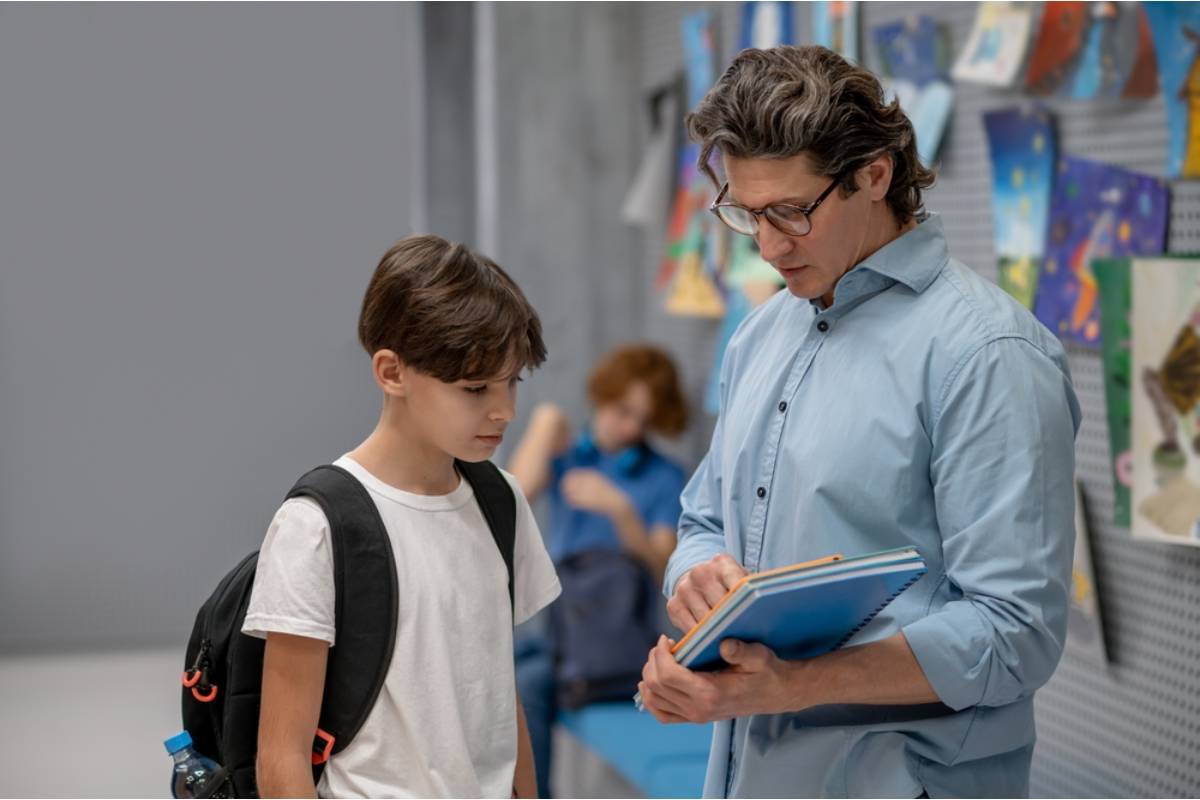
A Teacher Says a Student Asked Her Why Some Kids Get Extensions on Everything and Others Just Get Told to Try Harder

One unexpected question at the end of class turned an ordinary school day into something much bigger. It was not asked with anger or disrespect, but with genuine confusion. The teacher realized there was no quick answer because the student had noticed something many adults struggled to explain. That conversation eventually reached administrators, parents, and students who all saw fairness in very different ways.
The Question Came After Everyone Else Left
Mrs. Carter had just finished collecting assignments when she noticed Noah lingering near his desk. Most students had already rushed into the hallway, but he stayed behind holding his backpack with both hands. He looked hesitant, as though he had rehearsed what he wanted to say.
Finally he asked, “Can I ask something without getting in trouble?”
Mrs. Carter smiled and nodded.
Noah took a deep breath before asking why some students always received extra time on assignments while others were simply told to work harder.
A Simple Question Had No Simple Answer
Mrs. Carter paused longer than Noah expected.
She could have given a quick explanation about school policies, but she sensed he deserved a thoughtful answer. Instead, she asked him why he had been thinking about it.
Noah admitted he had noticed classmates turning in work days after everyone else without losing points. Meanwhile, when he once forgot an assignment after helping care for his younger brother, he was told deadlines mattered.
He was not complaining.
He genuinely wanted to understand.
The Conversation Stayed on Her Mind
After Noah left, Mrs. Carter sat alone in her classroom.
She replayed the conversation several times while organizing papers. She knew some students received accommodations because of documented learning disabilities, medical needs, or other approved circumstances. Those accommodations were private for good reason.
Still, she understood why the differences appeared confusing to classmates who could not see the full picture.
Another Student Shared Similar Feelings
The following day, a student named Ava quietly approached Mrs. Carter during lunch.
Without knowing about Noah’s question, she admitted something similar had been bothering her.
It feels like everyone keeps saying school is fair,” Ava said. “But sometimes it doesn’t look fair.”
Mrs. Carter realized two thoughtful students had independently reached the same concern within twenty four hours.
That felt important.
The Faculty Meeting Became Unexpectedly Personal
Later that week, Mrs. Carter brought the issue to a faculty meeting.
She carefully avoided mentioning student names but described the questions she had received. Several teachers immediately nodded because they had experienced similar conversations.
One teacher admitted students often assumed accommodations were rewards.
Another pointed out that many children confused equal treatment with equitable support.
The discussion quickly became one of the longest agenda items.
A Counselor Offered a Different Perspective
School counselor Mr. Jenkins listened quietly before speaking.
He explained that students often noticed outcomes without seeing the reasons behind them. Privacy laws protected sensitive information, which meant teachers could never publicly explain why one student received certain accommodations.
“From another student’s perspective,” he said, “silence can sometimes look like favoritism.”
That single observation changed the direction of the conversation.
Parents Added Their Own Experiences
The principal later invited parent representatives to discuss communication about school expectations.
One father shared that his daughter believed extensions were handed out randomly.
A mother whose son had documented learning challenges explained how difficult it had been for her child to ask for accommodations in the first place. She worried people assumed he received easier treatment when, in reality, he worked incredibly hard just to keep pace.
Both parents realized they wanted the same thing.
Understanding.
A Classroom Discussion Was Carefully Planned
Rather than discussing specific students, teachers designed a lesson about fairness using everyday examples.
Mrs. Carter asked students whether it was unfair for someone wearing glasses to sit closer to the board.
Nearly every hand went up to say no.
Then she asked whether giving everyone identical glasses would be fair.
Students laughed because the idea made no sense.
The lesson slowly began making connections without exposing anyone’s private circumstances.
Noah Was Still Thinking About It
After class, Noah approached Mrs. Carter again.
“I think I understand some of it now,” he said.
“But what about kids who have problems at home that nobody knows about?”
The question surprised her.
She asked why he mentioned that.
Noah admitted he had occasionally stayed awake late helping his grandmother after his parents worked overnight shifts.
Hidden Stories Started Coming Forward
Mrs. Carter gently encouraged Noah to speak with the school counselor.
During that meeting, staff learned he had quietly balanced family responsibilities for months without asking for help. He had assumed asking for extra support would make him appear lazy.
The counselor thanked him for being honest.
Together they discussed resources the school could provide without lowering academic expectations.
For the first time, Noah realized support existed for students like him too.
Teachers Examined Their Own Habits
Inspired by the conversations, several teachers reviewed how they responded to students requesting extensions.
They noticed some requests received quick assumptions while others prompted more thoughtful conversations.
Nobody intentionally treated students unfairly.
Still, they recognized that busy schedules sometimes led to rushed decisions.
The staff agreed every student deserved to be heard before receiving an answer.
A New System Reduced Confusion
The school introduced a simple process allowing students to privately explain circumstances affecting assignments.
Teachers reviewed each situation individually instead of relying on brief hallway conversations.
The policy did not guarantee extra time.
It guaranteed every student an opportunity to explain.
That small change immediately reduced frustration because expectations became much clearer.
One Honest Conversation Changed a Friendship
Weeks later, Noah partnered with a classmate named Liam for a science project.
Liam quietly revealed he had accommodations because of a medical condition that often caused severe fatigue. He admitted he hated when classmates assumed he received special treatment.
Noah confessed he had misunderstood the situation for months.
Both boys laughed at how many incorrect assumptions they had made about each other.
By the end of the project, they had become close friends.
The Teacher Found the Answer She Could Not Give Before
Near the end of the semester, Noah stopped by Mrs. Carter’s classroom one last time.
He reminded her about the question he had asked weeks earlier.
She smiled and admitted she had not known how to answer it then.
Now she told him something she had learned alongside her students.
“Fairness doesn’t always mean everyone gets the same thing. It means everyone gets a real chance to succeed without having to reveal every private struggle to the whole room.”
Noah nodded thoughtfully.
“I think that makes more sense than just saying to try harder.”
Mrs. Carter watched him leave the classroom feeling grateful that one respectful question had encouraged an entire school community to think more carefully about empathy, privacy, and the difference between treating people identically and treating them with understanding. Sometimes the most meaningful lessons never appear in a textbook, yet they stay with students and teachers long after grades are forgotten.