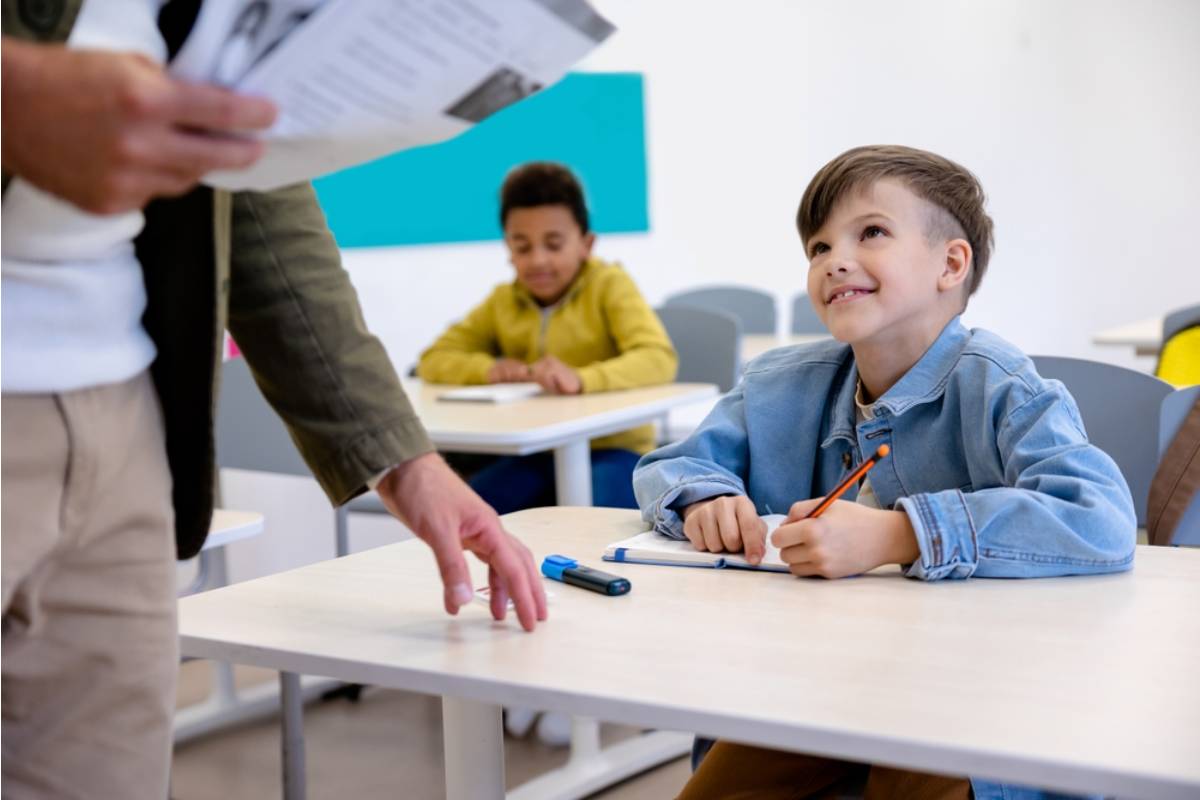
A Teacher Says a Student Handed Her a List of “Things That Made Today a Good Day” and Every Single One Happened at School, Not Home

Mrs. Harper expected another homework assignment when Noah quietly placed a folded sheet of notebook paper on her desk before leaving class. Instead, she found a handwritten list with the title, “Things That Made Today a Good Day.” Every item described a small moment that had happened inside the school building. None of them mentioned home, family, or anything after the final bell. At first it seemed like a sweet classroom exercise until she realized what was missing.
The Assignment Was Never Meant to Be Personal
Earlier that week, Mrs. Harper had challenged her fifth grade class to write down five things that made them smile before bedtime. She explained that noticing small positive moments could help students build gratitude without worrying about perfect answers.
Most children eagerly talked about pets, family dinners, favorite video games, or riding bikes with neighbors.
Noah smiled politely but stayed unusually quiet throughout the discussion.
Mrs. Harper assumed he simply preferred keeping personal thoughts private.
She never expected his paper to raise so many questions.
Every Line Pointed to the Same Place
After the students left, Mrs. Harper unfolded Noah’s paper.
The list was simple.
“My friend saved me a seat.”
“The librarian remembered my favorite series.”
“I got picked to erase the whiteboard.”
“The cafeteria lady gave me an extra apple.”
“My teacher said she liked my paragraph.”
Mrs. Harper read it twice.
Every happy moment happened between the first bell and dismissal.
One Missing Detail Refused to Leave Her Mind
Teachers often noticed patterns that seemed invisible to everyone else.
Mrs. Harper realized Noah had never written about weekends, birthday parties, vacations, or family traditions in any classroom assignment.
When students shared stories after long weekends, Noah usually smiled and listened instead of joining the conversation.
His writing was always thoughtful.
It simply stopped once the school day ended.
The list suddenly made those earlier moments feel connected.
Small Clues Started Coming Together
The next morning Mrs. Harper paid closer attention.
Noah arrived almost forty minutes before classes officially started.
He sat quietly in the hallway reading while waiting for the building to open.
At dismissal, he packed his backpack more slowly than everyone else.
When the final announcement came, he was often one of the last students walking toward the buses.
Mrs. Harper wondered if school had become more than a place to learn.
Perhaps it had become the place where he felt safest.
The Cafeteria Manager Shared an Observation
During lunch duty, Mrs. Harper casually asked the cafeteria manager whether she knew Noah well.
The woman immediately smiled.
“He always says thank you,” she replied.
Then her expression softened.
“I’ve noticed he never rushes to leave after eating. He just sits quietly until someone reminds him lunch is over.”
She also mentioned Noah never complained about the menu.
Even on days other students grumbled, he finished every meal.
That conversation added another piece to a puzzle nobody had been trying to solve.
The School Librarian Remembered Something Similar
Later that afternoon, Mrs. Harper stopped by the library.
Mrs. Ellis immediately recognized Noah’s name.
He checks out books every chance he gets,” she said.
“He also asks whether the library stays open during school breaks.”
Mrs. Harper looked surprised.
Mrs. Ellis admitted Noah seemed disappointed every time she explained holiday closures.
Most students celebrated breaks.
Noah always asked how long the building would stay closed.
A Writing Journal Revealed More
While grading journals that evening, Mrs. Harper noticed another pattern.
One prompt had asked students to describe their favorite place.
Many wrote about bedrooms, parks, grandparents’ houses, or sports fields.
Noah had written three pages about Room 14.
He described the reading corner, classroom plants, colorful bulletin boards, and the sound of classmates laughing during group projects.
He ended with one sentence that stayed with Mrs. Harper.
“It feels calm here.”
A Gentle Conversation Opened the Door
The next afternoon Mrs. Harper asked Noah if he would help organize classroom supplies after dismissal.
As they stacked notebooks together, she thanked him for the thoughtful list he had written.
Noah smiled.
“I didn’t know if it was okay that all my answers were about school.”
Mrs. Harper assured him there were no wrong answers.
Then she gently asked if home had been difficult lately.
Noah hesitated before quietly saying, “It’s just different.”
The Meaning Behind “Different”
Mrs. Harper did not interrupt.
Noah slowly explained that his parents had separated several months earlier.
He spent weekdays with his mother and weekends with his father.
Both loved him deeply, but both worked long hours and often seemed exhausted.
When he arrived home, each parent usually had phone calls, paperwork, or household responsibilities waiting.
Nobody was angry.
Nobody was unkind.
It simply felt like everyone was too busy to notice the little things.
The School Counselor Learned the Rest
Mrs. Harper referred the conversation to the school counselor, Mrs. Grant, who met privately with Noah.
She discovered he deliberately stayed positive because he worried adding stress would make life harder for both parents.
He never complained about feeling lonely.
Instead, he focused on enjoying the parts of each day he could control.
His list had not been written to make anyone feel guilty.
It was simply an honest reflection of where he felt connected.
Mrs. Grant realized his quiet optimism had hidden how much support he still needed.
Two Parents Heard the Same Story
Mrs. Grant invited Noah’s mother and father to separate meetings.
Neither parent realized Noah viewed school as the brightest part of every day.
His mother became emotional after hearing about the gratitude list.
His father admitted he often assumed Noah wanted time alone because he rarely asked for attention.
Both parents had been trying so hard to rebuild stable homes that they overlooked how much their son missed ordinary conversations.
The meetings were difficult but respectful.
Everyone agreed Noah deserved more than rushed evenings.
Tiny Changes Made the Biggest Difference
Neither parent could suddenly create extra hours in the day.
Instead, they committed to protecting small moments.
His mother stopped checking work emails during dinner.
His father began taking evening walks with Noah whenever they were together.
They also started reading one chapter of a book together before bed instead of immediately turning on the television.
None of those changes required expensive plans or major life adjustments.
They simply created space where Noah no longer had to compete with everything else.
The Next Assignment Looked Different
Several weeks later, Mrs. Harper repeated the same classroom activity.
Students once again listed things that made the day special.
When she reached Noah’s paper, she smiled before reading the first line.
“My dad asked me about my science project.”
“My mom and I made pancakes.”
“My little cousin called to tell me a joke.”
The rest of the list still included kind moments from school.
For the first time, however, the final bell no longer marked the end of the happiest part of his day.
One Folded Piece of Paper Changed More Than Anyone Expected
At the end of the school year, Mrs. Harper kept Noah’s original list inside a folder she used for teaching reminders.
Whenever she looked at it, she remembered how easy it is to celebrate a child’s cheerful attitude without noticing what that attitude quietly leaves unsaid.
Noah had never asked for help.
He had never complained or acted out in class.
Instead, he expressed himself through a simple assignment that almost looked ordinary. Because one teacher paid attention to what was missing instead of only what was written, a family began rebuilding the everyday connections that had slowly disappeared. Noah still loved school, but it was no longer the only place where small moments made him feel seen, appreciated, and happy.