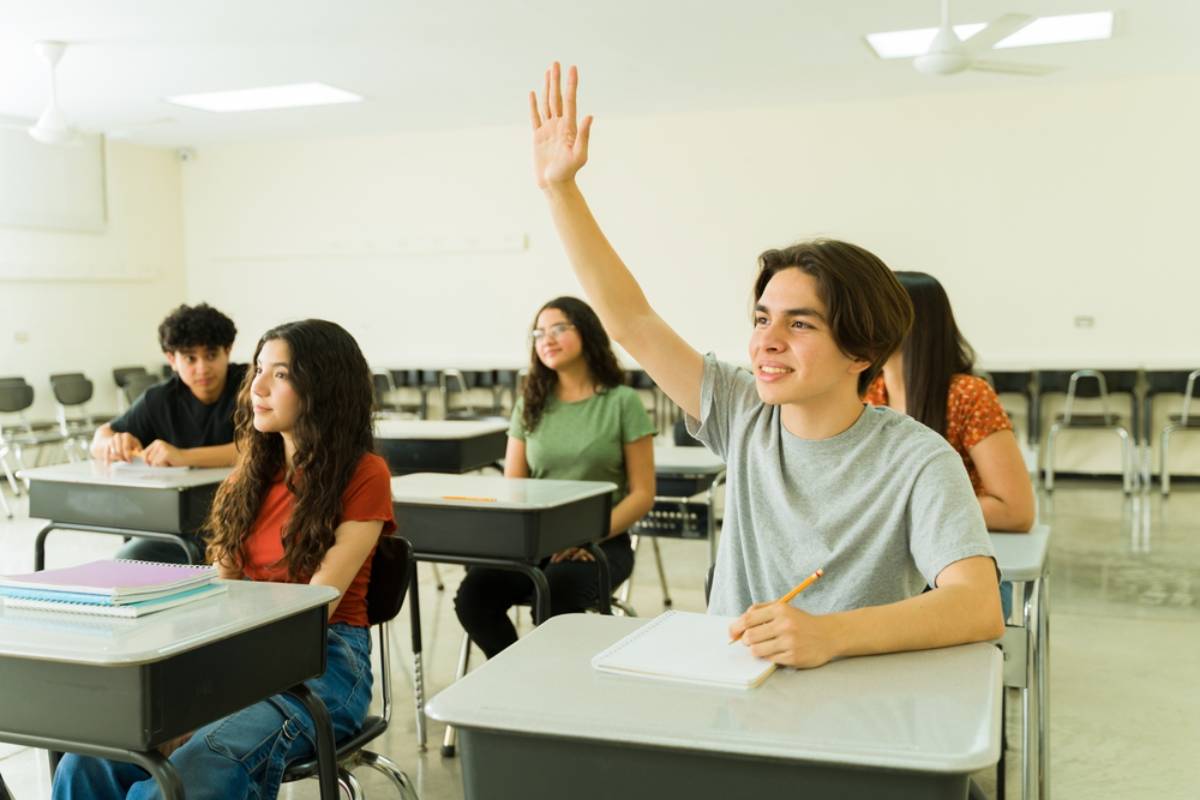
A Teacher Says Her Student Shouts “DONE!” Seconds After Every Activity Starts, Until One Classmate Reveals How She’s Finishing So Fast

A person shared his story about a student who had developed an impressive little routine in class. The second an activity was assigned, she would confidently announce, “DONE!” and immediately transform the classroom into her personal social hour. She would wander around, talk to classmates, and generally act as though the bell had already rung.
At first, the teacher assumed the student was simply racing through the work. Every time she was asked to settle down, she would point proudly to her textbook as proof that everything had supposedly been completed. It was annoying, but there was one detail the teacher couldn’t quite explain: the girl always seemed to finish impossibly fast.
Her Routine Was Almost Too Predictable
The pattern happened so often that the teacher could practically predict the entire performance before it began. Activity assigned, “DONE!” shouted, chair abandoned, conversations started, and classroom wandering commenced. The student seemed to believe that possessing a filled-in textbook gave her a permanent hall pass to do whatever she wanted.
The teacher kept calling her out, but the same defense always appeared. The student would gesture toward the completed pages as if the book itself were her lawyer. Since there was technically work written down, she had a convenient argument that she had done exactly what she was supposed to do.
Then One Assignment Finally Broke the Illusion
Everything changed during one particular class when the teacher assigned an activity that required students to watch a video first. The teacher had not even pressed play when the familiar voice came from across the room. Once again, the student declared that she was finished.
This time, however, the teacher immediately stopped her. There was simply no reasonable way she could have completed an activity based on a video that had not yet been shown. For the first time, the teacher had a question that the student couldn’t answer with a quick point toward her textbook.
The Student Had an Explanation Ready
Instead of quietly admitting she had jumped ahead, the student launched into a passionate complaint about the entire class. She argued that the teacher’s lessons and textbook exercises were ridiculously easy and, in her opinion, basically useless. The teacher actually agreed with part of the criticism, since the textbook materials were mandatory school requirements and not necessarily her favorite way to teach either.
But disagreeing with the materials did not explain how the student had magically finished an unseen activity. The teacher realized that arguing about whether the exercises were easy would only distract from the real issue. So she decided there was a much simpler way to settle the matter.
The Whiteboard Became the Moment of Truth
The teacher asked the student to come to the whiteboard and write her answers where everyone could see them. Suddenly, the situation became a lot less comfortable for the student because pointing at a textbook was one thing, but publicly proving what she knew was another.
Once the answers went up, the problem became obvious almost immediately. About half of them were completely wrong, while many of the remaining responses were so messy or unclear that they were difficult to understand. The supposed “finished” work was starting to look less like completed schoolwork and more like evidence from a very rushed escape attempt.
The Teacher Finally Had Her Proof
The teacher used the moment to explain why paying attention matters, even when an activity appears ridiculously simple. A student can recognize a familiar question, rush through it, and still miss the actual concept being tested. What looks like confidence from a distance can sometimes just be speed without understanding.
The class seemed to be moving on from the incident when a quiet comment from the back changed everything. One student leaned over and whispered something that instantly connected all the missing pieces. The teacher suddenly realized that the textbook itself was never the real source of those suspiciously perfect answers.
Then Came the Whisper From the Back
The comment was essentially this: “That’s what you get for trusting ChatGPT.” It was the kind of sentence that can completely change the meaning of everything that happened before it. Suddenly, the student’s lightning-fast completion times made a lot more sense.
The teacher was now looking at a very different situation. Apparently, the student had been completing the textbook activities at home with the help of AI before ever entering the classroom. That meant she was not finishing assignments in seconds because she was a genius speed-runner; she was finishing them because the hard part had already been outsourced.
She Had Turned Preparation Into a Performance
The clever part of the student’s strategy was that it looked convincing at first. She came to class with answers already written down, confidently announced that she was done, and then behaved as though the rest of the period was free time. From her perspective, there was no reason to participate in a lesson about work she had already “completed.”
The catch was that the AI-generated answers apparently gave her something that looked like preparation without giving her the understanding to back it up. The whiteboard exercise exposed that difference in front of everyone. What had seemed like an unusually advanced student suddenly looked like someone who had found a shortcut around the learning itself.
The Teacher Started Questioning Her Reputation
What made the discovery even more unsettling was the student’s reputation outside this classroom. The teacher said the girl was generally well-liked and had a solid reputation with other educators. Until this incident, there was apparently little reason for anyone to suspect that she was regularly relying on AI to complete her work.
That raised a much bigger question than whether one student had cheated on a few textbook exercises. The teacher began wondering how much of the student’s academic success might be based on actual understanding and how much might be built on polished answers produced by a tool. Once that thought enters a teacher’s head, it is not exactly easy to unthink it.
Other Educators Recognized the Problem Immediately
Responses from other people showed that this teacher was far from alone. One person explained that any work students can access outside the classroom may eventually be completed with AI, meaning teachers have to rethink how assignments are designed and graded. The concern was not simply that students were cheating, but that traditional homework could become increasingly difficult to use as reliable evidence of learning.
Another response pointed out a complicated side effect involving students who legitimately receive extra time accommodations. When work has to be completed entirely in class, every assignment can start feeling like a timed task, creating logistical problems for students who genuinely need more time. Suddenly, teachers are dealing with two very different issues at once: students using AI to avoid effort and students who need flexibility for legitimate educational reasons.
Some Teachers Are Moving the Work Back Into the Classroom
Several people suggested a simple change: make more of the meaningful work happen while the teacher is physically present. One approach involved collecting classwork before students leave and returning it during the next lesson, making it much harder to quietly outsource the entire assignment. Another person described using longer projects with regular in-class progress checks so that students are assessed on the work they actually produce along the way.
That idea changes the teacher’s role from simply checking a final product to watching the learning process happen. A polished final answer can hide a lot, but a student’s questions, mistakes, corrections, and progress are much harder to fake. It also gives teachers a clearer picture of whether a student understands the material or merely knows how to produce something that looks finished.
The Flipped Classroom Idea Sparked a Debate
One response suggested putting direct instruction online and using classroom time for assignments that students cannot see until they arrive. On paper, it sounds almost perfect: students watch the lesson at home, then spend class time practicing the material with the teacher available to help. Another person said this style could even make classroom time more useful by allowing teachers to focus on feedback and small-group support.
But not everyone was convinced. A response from another person pointed out the obvious problem: students who do not actually watch the lessons at home could simply arrive without learning the material. That would leave the teacher facing the exact same students who previously avoided homework, except now they had missed the instruction too.
The Bigger Problem Was Never Just ChatGPT
The discussion eventually revealed that AI was only one piece of a much larger classroom problem. Teachers are trying to balance accountability, accommodations, homework, assessments, technology, and limited time while students have access to tools capable of producing answers almost instantly. It is no longer enough to ask whether an assignment was completed because a completed page does not necessarily prove that learning happened.
That is what made this student’s trick so revealing. She had managed to turn an assignment into a technicality, completing the visible portion while skipping the invisible part that actually mattered. She had answers, but the moment she had to explain them herself, the whole strategy began to fall apart.
In the End, the Fastest Student Wasn’t the Most Prepared
The teacher’s original frustration had been about classroom behavior. She thought she was dealing with a student who was impatient, disruptive, and bored because the material was too easy. By the end of the lesson, she had discovered something much more complicated: the student had been using AI to make herself look finished before class had even begun.
The twist was that the student had accidentally provided her own demonstration of why that strategy failed. The moment she had to solve the work without the invisible assistance, the cracks appeared on the whiteboard. Her answers may have arrived quickly, but her understanding had not.
Now the Teacher Has a Much Bigger Question to Answer
The teacher is left deciding what comes next, and that may be more difficult than catching the student in the first place. She could simply tighten classroom rules and insist that more work be completed under supervision, but that does not magically solve the larger problem of students using AI whenever work leaves the room. At the same time, completely eliminating outside work can create fresh challenges for students who genuinely need extra time or different accommodations.
The most interesting part of the whole story may be that one whispered sentence changed the teacher’s understanding of the entire situation. What looked like an incredibly efficient student turned out to be a student who had found a remarkably efficient way to avoid learning. And now, every time someone confidently shouts “DONE!” before the teacher has even finished explaining the assignment, there may be one very uncomfortable question hanging in the air: done by whom?