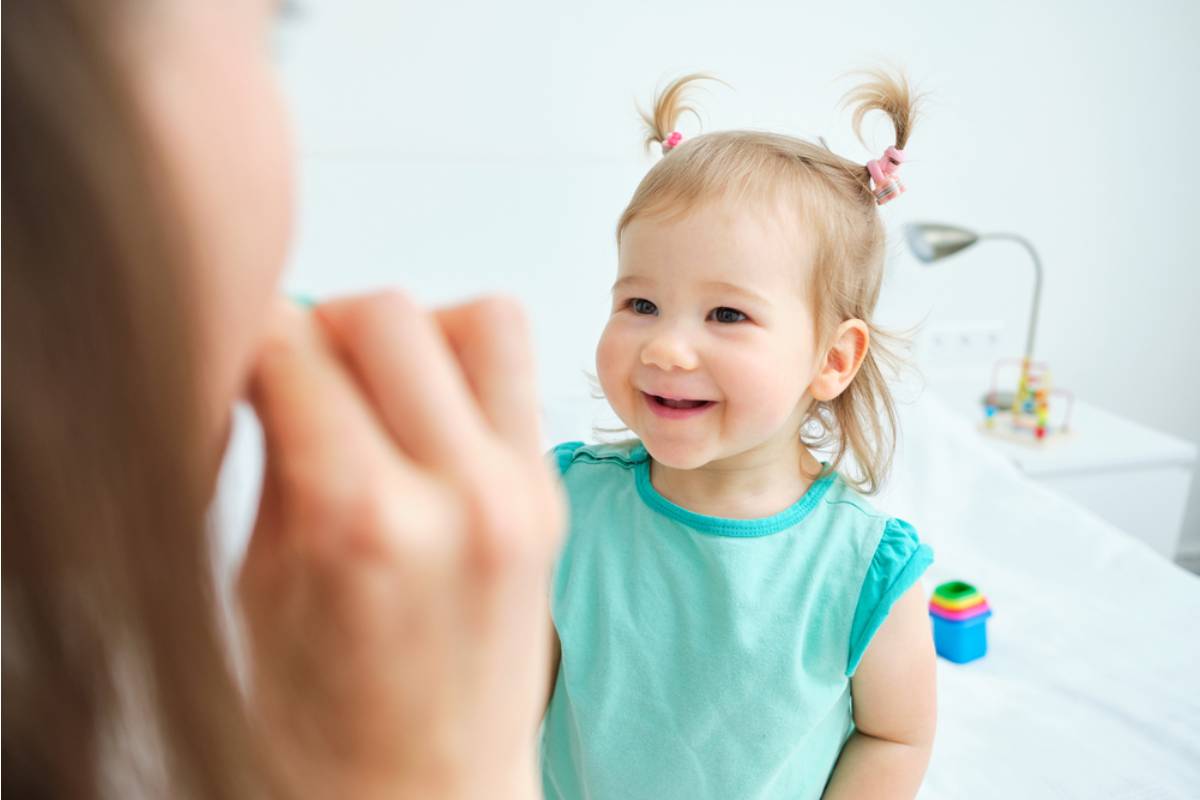
Her Three-Year-Old Always Had an Answer for Everything, Until Her Parents Realized She Wasn’t Actually Trying to Explain Herself

A person shared his story about life with a three-year-old daughter who had developed impressive language skills surprisingly early. She could express emotions, carry on conversations with adults, and come up with elaborate explanations for ordinary things. The problem was that when her parents asked why she had done something, her answers often became increasingly strange instead of making any sense.
One example involved a toy that had apparently been thrown onto the floor. When asked why, the little girl explained that the toy was scared of the rain, even though there was no rain outside. A few more questions produced answers about being hungry, wanting to play, and eventually being mad, leaving her parent wondering why a simple question had turned into such a winding story.
Her Answers Seemed to Change Every Time
The parent noticed that this wasn’t just an occasional situation. Whenever she was asked to explain something, her answer could change several times before eventually landing on something that sounded more realistic. It made conversations surprisingly difficult because the parent couldn’t tell whether she genuinely believed each explanation or was simply saying whatever came into her head.
The child’s language ability made the situation even more confusing. Because she could speak so clearly and express complicated ideas, it was easy for the adults around her to assume she also understood her own behavior at the same level. But being able to form sentences and being able to understand the reasons behind one’s actions are two very different skills.
Sometimes the Story Had Nothing to Do With Reality
Her imagination also appeared during completely unrelated conversations. She might suddenly comment on the weather even though she had not been outside that day, or announce that she was no longer scared when nobody had been discussing fear. These statements seemed to appear from nowhere, which made the parent wonder whether she was deliberately saying unusual things because she knew adults would react.
That possibility seemed especially convincing because the adults around her often found her comments adorable. A three-year-old who says something unexpected can quickly become the center of attention, and children are remarkably good at noticing what gets a reaction. From the parent’s perspective, it sometimes seemed as though the little girl had discovered a reliable formula: say something unusual, receive attention, and repeat it later.
Then There Was the Constant “I Love You”
Her habit of saying “I love you, Mama and Dada” became another source of frustration. The child reportedly said it frequently, sometimes every few sentences, even when nothing particularly emotional was happening. While the parents obviously appreciated hearing that their daughter loved them, the repetition started to feel less like a heartfelt declaration and more like another way of keeping the adults engaged.
The phrase became especially predictable after discipline. Whenever she did something she wasn’t supposed to do and received the appropriate consequence, she would often respond with another declaration of love. Soon afterward, she might explain that Mama and Dada loved her too, creating a familiar little routine that left the parent both amused and exhausted.
The Parent Started Wondering If It Was Attention-Seeking
Because the behavior appeared so often, the parent began wondering whether attention was the real motivation. The child was an only child who spent most of her time around adults, with her parents providing most of her daily interaction. She wasn’t currently attending classes or activities, although she was scheduled to start pre-kindergarten soon.
That detail became important because several responses pointed out that adult interaction could be shaping the way she communicated. She had learned that certain words, jokes, declarations, and imaginative statements generated reactions from grown-ups. Rather than being a carefully planned strategy, however, the behavior could simply have been a three-year-old experimenting with how conversation works.
A Response From a Person Pointed Out the Obvious
One response from a person took a much simpler view of the situation: the child is three. The person explained that repeatedly asking her why she did something could put her in a position where she feels she must produce an answer, even when she genuinely doesn’t know. If the first answer isn’t accepted, she may simply keep trying different answers until she finds one that seems satisfactory to the adult.
That explanation changed the meaning of the strange responses. The little girl might not have been trying to confuse anyone at all. She could have been hearing the repeated question as a request for a particular answer and continuing to search for one, much like a child guessing what an adult wants to hear.
She May Simply Not Know Why She Did It
Another response from a person suggested that young children often don’t have enough self-awareness to explain their behavior accurately. Adults routinely assume that every action has a clearly identifiable reason, but that isn’t necessarily true for a preschooler. Sometimes a child throws a toy because the impulse happened before the child had any opportunity to think about the reason.
The person suggested that “I don’t know” might effectively be hiding behind some of the child’s stranger answers. Since the child knows that adults expect an explanation, she fills the silence with something that seems plausible to her. The result can sound hilarious, confusing, or completely unrelated, but it doesn’t necessarily mean she is intentionally inventing a story to manipulate anyone.
The “Right Answer” Might Have Been the Real Goal
A particularly interesting response from a person suggested that the eventual answer about being mad might not even have been a sudden moment of honesty. Instead, it could have been the answer the child believed her parent wanted. After hearing the same question several times, she may have realized that an emotional explanation was more acceptable than talking about rain or hunger.
That would explain why the answers kept changing. The child wasn’t necessarily uncovering deeper layers of motivation as the conversation continued. She may simply have been adjusting her response each time the previous answer failed to satisfy the adult, without understanding that adults were looking for genuine self-reflection rather than a correct response.
Three-Year-Olds Are Still Learning How “Why” Works
Several people pointed out that questions involving cause and effect can be surprisingly difficult for very young children. Asking “why” sounds simple to an adult because adults automatically connect actions, emotions, intentions, and consequences. A three-year-old is still developing those connections and may not understand that the question requires a logical explanation.
One response from a person even shared that their own child didn’t really understand “why” questions in the cause-and-effect sense until around five. That doesn’t mean every child follows the same timeline, but it illustrates how dramatically children’s understanding can develop between the toddler and preschool years. A child can have an impressive vocabulary while still struggling with concepts that seem obvious to adults.
The Imagination and Reality Lines Can Be Blurry
The strange weather comment also made more sense from that perspective. Young children can move between reality, memory, pretend play, and imagination without clearly announcing which world they’re talking about. An adult might hear a statement about rain and immediately compare it with the actual weather outside, while a child may simply be continuing an imagined idea.
The same thing can happen during ordinary conversation. A child might combine something she saw yesterday with something she imagined this morning and something she heard from an adult, then present the whole thing as one perfectly reasonable thought. To an adult, it sounds completely disconnected, but to the child, the connections may be obvious.
She Was Not Necessarily Being Manipulative
One of the strongest themes in the responses was that the child probably wasn’t secretly scheming to control the adults around her. At three years old, she is still developing impulse control, emotional understanding, social awareness, and the ability to predict how her behavior affects other people. Calling her behavior manipulative would give her much more intentionality than she is likely capable of having.
A response from a person who had worked with children ages three to five emphasized how different a three-year-old can be from even a five-year-old. A preschool teacher can see enormous changes in children’s ability to understand their own behavior during those years. What looks like deliberate behavior from an adult perspective can often be much more spontaneous and experimental in a young child.
The Constant “I Love You” Had Another Side
The repeated declarations of love also received a more sympathetic interpretation. Rather than treating them as an annoying attention trick, several responses suggested that the child had discovered one of the easiest ways to connect positively with her parents. Saying “I love you” reliably gets a warm reaction, so naturally she keeps using it.
There was also an important distinction between seeking attention and behaving badly for attention. Wanting attention from parents is not inherently a problem, especially for a young child whose primary social world consists of those parents. The repetition may have been tiring for the adults, but the underlying desire to connect with them was perfectly understandable.
Her Parents Were Her Entire Social World
The parent explained that the daughter mostly interacted with adults because she stayed home with her family. Her father worked remotely, her mother was a stay-at-home parent, and they had chosen not to enroll her in activities partly to save money. She was expected to start pre-kindergarten within a few weeks, which meant her social environment was about to change considerably.
That detail made some responses suggest that more interaction with other children could be helpful. It wasn’t presented as evidence that anything was wrong with her. Instead, spending time around peers could give her a new environment in which to practice conversation, cooperation, conflict, pretend play, and communication without adults constantly interpreting or responding to every statement.
Some People Thought School Might Change Everything
Starting pre-kindergarten could provide an interesting test of the situation. The child would suddenly have teachers and other children responding to her words in very different ways. She would have to learn that not every statement receives a long adult conversation and that other children may not automatically react to everything she says.
That kind of environment could naturally encourage different communication habits. She would also get more opportunities to observe how other children explain themselves, play pretend, disagree, and recover from mistakes. The behavior that seemed unusual at home might become much less noticeable once she had a larger social world.
The Better Response May Be to Stop Asking “Why” So Much
One of the most practical suggestions was to stop treating every unwanted behavior like a mystery that needed to be solved. Instead of repeatedly asking why the child threw something, an adult could simply acknowledge what happened and explain the expected behavior. If the toy was thrown, the important lesson might be that toys aren’t for throwing, rather than discovering the philosophical reason behind the throw.
This approach could also remove the pressure to manufacture an explanation. If the child says the toy was scared of rain, the adult doesn’t necessarily have to challenge the statement or demand another answer. The imaginary explanation can simply exist while the parent addresses the actual behavior that needs correcting.
The Strange Answers May Eventually Become Funny Memories
What currently felt exhausting could someday become one of those childhood stories the family tells repeatedly. The image of a three-year-old confidently explaining that a toy was thrown because it was afraid of imaginary rain is exactly the kind of strange childhood logic that adults remember years later. At the moment, however, hearing variations of the same explanation hundreds of times can test even the most patient parent.
The responses ultimately offered a much different interpretation than the parent initially suspected. Instead of a child deliberately manufacturing nonsense for attention, people saw a young child experimenting with language, imagination, connection, and explanations. The twist was that the behavior wasn’t necessarily evidence of a problem at all, but rather evidence that a very young person was still figuring out how conversations, emotions, and the world itself worked.