Eliza Karazah’s Son Sabar, 2, Started Using His Dinosaur Toys as Weapons After His Baby Brother Arrived, and She Blames Screen Time

A pterodactyl toy was the last straw for Eliza Karazah. Her son Sabar cut his grandfather’s cheek with it, and that moment ended what she had once called a sweet toddler obsession. Karazah told Newsweek that dinosaur toys and dinosaur videos turned into weapons and triggers after her second son was born, and that the real issue, in her view, was screen time.
Sabar was two and a half when the obsession began. The details she shared give other parents a close look at how a harmless interest can turn into something harder to manage during a big change at home.
The 15-Pack That Started the “Dino-mance”
According to Newsweek’s account, Karazah’s husband, Balpreet, bought a 15-pack of miniature plastic dinosaurs to cheer Sabar up while he was sick in the spring. Karazah called what followed the “Dino-mance.” Sabar played with all 15 at once and carried them everywhere.
He soon wanted dinosaur clothes, dinosaur movies and anything else with a dinosaur on it. Karazah said dinosaurs were “the Beatles to him.”
His screen use grew with the interest. He watched dinosaur movies, documentaries and YouTube videos, plus dinosaur-themed episodes of Sesame Street. He also watched parts of Jurassic Park and The Land Before Time, with the scary and sad scenes skipped.
When Play Turned Physical After the Baby Arrived
The mood shifted around the time Sabar’s younger brother was born. Karazah was recovering from a C-section upstairs, and Sabar was often looked after downstairs with dinosaur media on.
She described his play as “playfully violent,” and said he could not regulate himself. He stomped, screamed, headbutted and hit. He smashed the toy dinosaurs together, threw them and used them to strike family members. The cut on his grandfather’s cheek from the pterodactyl was the “final straw,” Karazah told Newsweek.
The family cut off dinosaur media and took the toys away a little at a time. “First the sharp ones. Then the big ones. Then the tiny ones,” she said. Her conclusion: “The issue was the screen time.”
What a Child Development Educator Says
Newsweek also spoke with Kaitlynn Blyth, a childhood development expert and family life educator who founded the New York-based family learning company Happy Day Play. She said intense interests in one toy or topic are very common, and that dinosaurs give young children names, sizes and categories they can master.
That fits research. A 2007 study in Developmental Psychology, based on surveys and interviews with 177 parents, found that nearly one-third of young children have extremely intense interests, and that they appear very early in life and are far more common in boys.
For Blyth, the obsession was not the problem. “Hurting people is the line,” she said, adding that pretending to be a dinosaur is normal play. She questioned whether a full ban is the answer, because it removes the object without addressing the feeling behind it. She suggested playing dinosaurs with the child so an adult can shape the story and teach rules.
Blyth also suspected the behavior was tied to the changes at home after the baby’s arrival, and that Sabar may have been using the dinosaurs as a way to work through emotions he could not put into words.
What Pediatric Guidance Says About Aggression and a New Sibling
The American Academy of Pediatrics’ parenting site, HealthyChildren.org, says toddlers often lash out because their self-control is still limited. Its advice is to set clear rules, teach the child to use words instead of hitting, praise good behavior and use time-outs only sparingly. It adds that parents should call the pediatrician if a child injures someone, if aggression is frequent or lasts more than a few weeks, or if the child is sent home from child care or school.
On the sibling side, a Cook Children’s KidsHealth guide says it is common for an older child to feel jealous of a newborn and act out. It suggests keeping rules consistent while asking what feeling may be driving the behavior, and setting aside daily one-on-one time with a parent.
Screens are a separate thread. A 2020 study in Frontiers in Human Neuroscience by researchers at Cardiff University and King’s College London looked at 33 children aged 4 to 8 with brain imaging. It found that solo doll play produced more activity than tablet play in a brain region tied to social processing. The study does not link screen time to aggression, and it is a small study of older children, so it speaks to how kids play rather than to Sabar’s behavior.
Where the Family Is Now
Karazah says the weaning process is ongoing and that things are much calmer. Sabar now uses words to describe his feelings, paints, dances and hugs. He still sometimes stomps and roars, and the family ignores that and steers him back to words.
She does not put the blame on her son. She told Newsweek the fault lies with the adults in the house, pointing to screen time and the stress of a newborn, and said she wants to reintroduce the dinosaurs thoughtfully once the whole family is ready.
Parents who have seen a similar change in an older child can read another family’s account of a 2-year-old who started hitting after the new baby came home on Parent Diaries.
Get stories like this by email. Sign up for The Parent Diaries Letter.
This article was produced with AI assistance and edited for accuracy against the sources linked above.
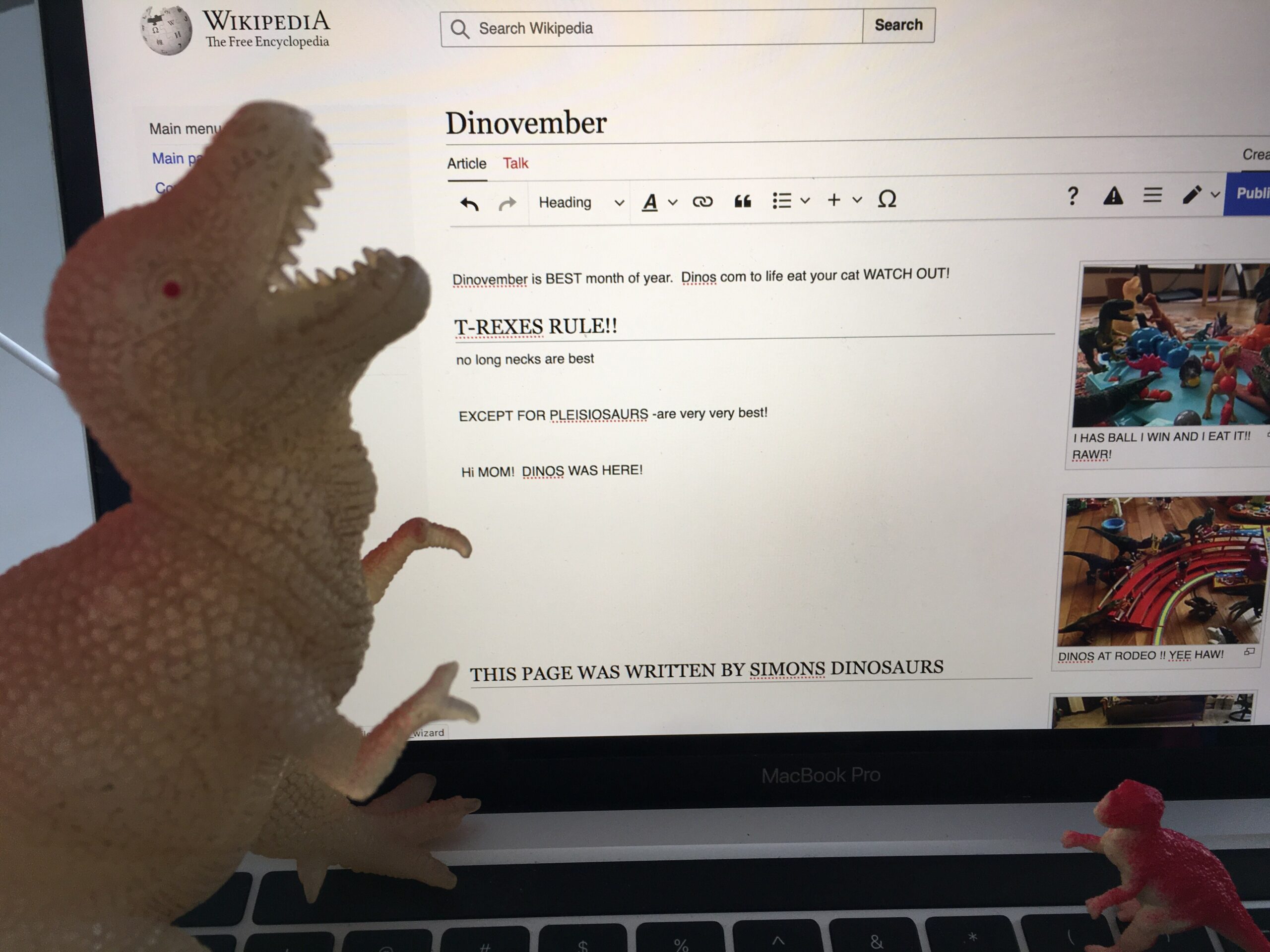
Image: Xanthopan – CC BY-SA 4.0/Wikimedia Commons