After Four Years of Infertility, Two IVF Cycles With No Healthy Embryos and Her Husband’s Cancer, Lauren Tassi Got a Positive Test at 41 With No Treatment

Ten embryos came out of two IVF cycles, and not one was healthy enough to transfer. Lauren Tassi, a 41-year-old from Los Angeles, reached that point in early 2025, after what she counts as four years of infertility that began with her husband’s cancer diagnosis. In early June 2026 she saw two lines on a home pregnancy test, with no fertility treatment cycle behind it, as she described in a first-person essay published by Newsweek on Nov. 15.
She is now in her second trimester, and she and her husband, Alex, expect their first child in February 2027.
A Wedding in April 2022, Then Hodgkin Lymphoma
Tassi and Alex married in April 2022. A month later Alex noticed swelling in his neck, and that summer he was diagnosed with Hodgkin lymphoma. Tassi stopped birth control around the same time and became pregnant in her first cycle, but the pregnancy ended in miscarriage when her first prenatal appointment found no heartbeat.
Before chemotherapy, Alex froze his sperm. Cancer Research UK says chemotherapy for Hodgkin lymphoma can reduce the number of sperm a man produces and that men can usually have sperm collected and stored before treatment starts. The Leukemia & Lymphoma Society adds that freezing before therapy is best because semen quality and sperm DNA can be affected by even a single course of chemotherapy.
Alex finished six months of chemo, then developed sepsis from his chemo port and spent a month in the hospital. Tassi wrote that he has since recovered.
Two IUI Attempts, Then Ten Abnormal Embryos
In May 2023 the couple tried intrauterine insemination with Alex’s frozen sperm. Two attempts, a month apart, did not work. His post-chemo sperm test looked normal, and several months of trying on their own also brought no pregnancy, so they turned to IVF in early 2024.
The April 2024 egg retrieval produced nine eggs and five embryos. Genetic testing found abnormalities in all five, and the doctor advised against implanting any of them. After a six-month break spent on a fertility dietitian, acupuncture and supplements, a second cycle in January 2025 produced five more embryos. All five were abnormal as well.
The American Society for Reproductive Medicine explains that in preimplantation genetic testing cells from an IVF embryo are checked for chromosome problems before transfer, and that all women have some chromosomally abnormal eggs. Its patient booklet on age and fertility says more of a woman’s eggs have too few or too many chromosomes as she gets older, that embryos with abnormal chromosome counts usually do not result in pregnancy or end in miscarriage, and that IVF success is generally under 20% per cycle for women 40 and older.
Four Donated Embryos and a Car Accident
Through her fertility posts on social media, Tassi connected with a woman who offered four genetically normal donated embryos. In summer 2025 the couple was cleared for a transfer. The first transfer failed, and a second followed.
Seven days after that second transfer, a car hit Tassi during a morning walk. She was taken to the emergency room by ambulance with wrist and ankle injuries that were later found to be fractures. An ER blood test confirmed a very early pregnancy, but a repeat test two days later showed a likely chemical pregnancy. She spent six weeks in a wheelchair and needed surgery and physical therapy.
Other Parent Diaries families have taken similar roads, including Kelli O’Hara, whose embryo frozen before radiation became her son at 46, and a Gwinnett County teacher who became a mom at 41 after several egg retrievals.
Six Months of Changes and Two Lines in June
Over the next six months Tassi took hormone-supporting vitamins, started a GLP-1 medication, aimed for at least seven hours of sleep a night, changed her diet and had regular hormone blood tests. She planned to return to the clinic for a donor embryo transfer.
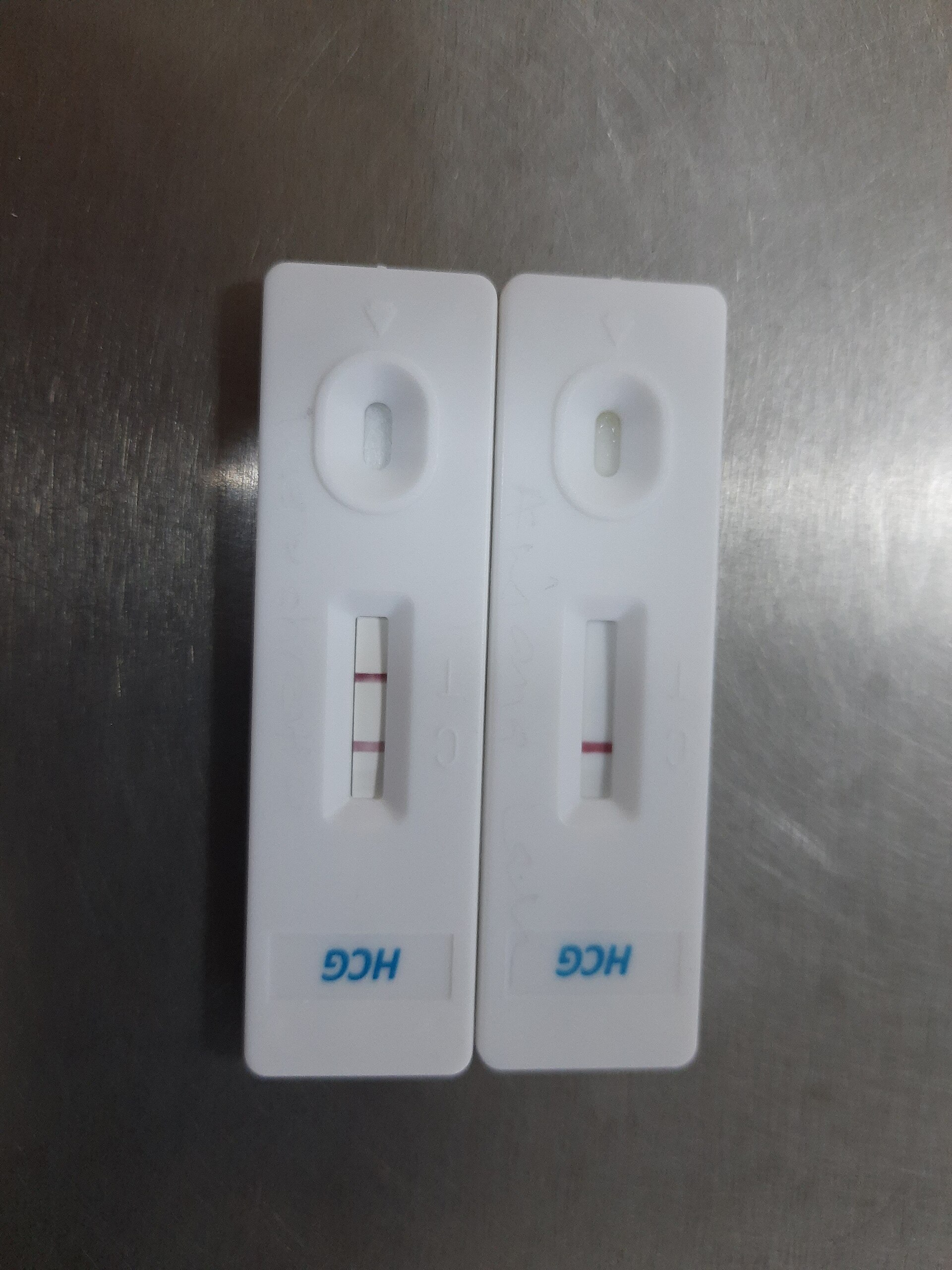
In early June 2026 she missed her period, and a home test showed two lines. She was pregnant naturally at 41, without needing the donor embryos. Tassi wrote that she was in disbelief and tempered her excitement because of the earlier loss.
Her message to others facing infertility is to keep hope, noting that the path can be natural conception, IVF or adoption.
Get stories like this by email. Sign up for The Parent Diaries Letter.
This article was produced with AI assistance and edited for accuracy against the sources linked above.
Image: Ajay Kumar Chaurasiya – CC BY-SA 4.0/Wikimedia Commons