Kelli O’Hara Went to a Doctor for Help Having a Baby and Left With Breast Cancer, and an Embryo Frozen Before Radiation Became Her Son at 46

“…for help with having a baby and left with cancer.” That is how Kelli O’Hara describes going to her doctor in the spring of 2018, when a mammogram ordered during her search for answers about getting pregnant turned into a breast cancer diagnosis, according to Boston Magazine.
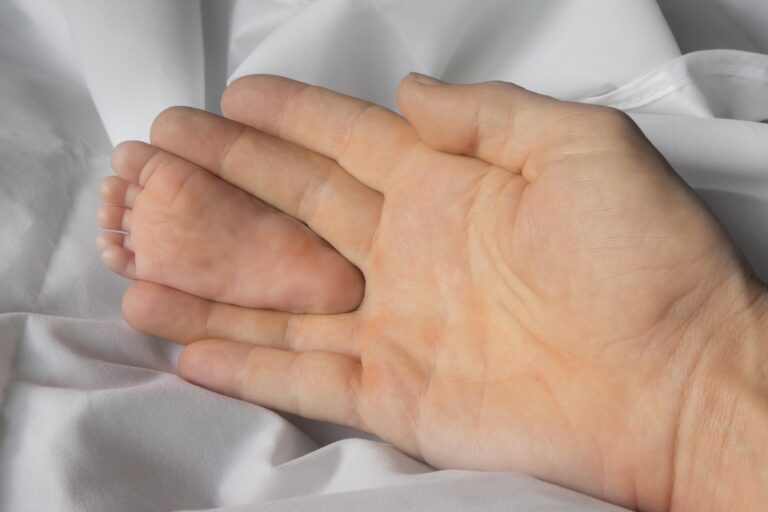
Eight years later, on May 26, 2026, one of the embryos created before her radiation became her son, Finnegan. She was 46 when he was born.
2018: A Mammogram, a Diagnosis and a Month of Decisions
In spring 2018, O’Hara was 37. Boston Magazine reports that she was working for the Weather Channel, buying her first home near Boston and ready to start a family. A fertility specialist had told her that pregnancy would be challenging after 38.
After months of trying to conceive, her OB-GYN ordered bloodwork and a mammogram. O’Hara sensed during the mammogram that something was wrong. About two weeks later, Brigham and Women’s Hospital diagnosed her with invasive ductal carcinoma that was estrogen-positive and stage 1A.
Breast cancer ran deep in her family. According to the magazine, both of her grandmothers, a great-aunt, an aunt and a cousin had also had it. She learned as a child that her father’s mother had died of breast cancer that was diagnosed too late.
After a month of testing, her surgeon offered two options: a double mastectomy with expanders and implants, or a partial mastectomy followed by a month of radiation. O’Hara chose the partial mastectomy and had the surgery on her left breast in August 2018.
About a month after surgery, in September 2018, her doctors recommended IVF before radiation began. Her team retrieved 16 embryos. The plan she had chosen called for a month of radiation after surgery, which is why the embryos were created and frozen first.
Why Doctors Freeze Embryos Before Cancer Treatment
The order of events in O’Hara’s case follows a pattern cancer centers describe. The Dana-Farber Adult Fertility Preservation (Oncofertility) Program says that cancer treatments, including chemotherapy, radiation and surgery, can affect fertility in both women and men. The program calls egg and embryo banking “well-established ways of preserving fertility in females.”
Dana-Farber also notes that the process often delays the start of treatment, so it is not right for every patient and is used when the cancer team believes it can be done safely.
The nonprofit Young Survival Coalition says the full embryo-freezing process takes two to six weeks, and that patients facing chemotherapy before surgery should ask their doctors whether treatment can be delayed. The group also says that ovarian stimulation and the resulting hormonal changes do not adversely affect cancer recurrence risk.
Because O’Hara’s tumor was estrogen-positive, the hormone question matters. The UK charity Breast Cancer Now says the hormone injections raise estrogen levels, which worries some women, and that early studies suggest ovarian stimulation does not seem to affect the growth of breast cancer cells, though more research is needed. It adds that drugs such as letrozole or tamoxifen can be given alongside the injections, and that stimulation usually takes about two weeks. The charity also cautions that fertility preservation is not always successful and does not always end in pregnancy.
The Young Survival Coalition adds that thawed embryos are placed in the uterus or in a gestational carrier, and that usually no more than two are transferred per cycle to lower the chance of a multiple birth. That is the same two-embryo approach O’Hara’s doctors proposed for her second transfer in 2025.
The National Cancer Institute reported on a Swedish study in JAMA Oncology that followed 425 women who preserved fertility around breast cancer diagnosis. About 6 percent of them died over 23 years, compared with 13 percent of a matched group, although experts cautioned the groups differ in ways that make direct comparison difficult. Only 9 of the 425 later used their stored embryos, eggs or ovarian tissue.
Emily Tonorezos, director of the NCI Office of Cancer Survivorship, called the survival results “very reassuring evidence.” The NCI also noted that nine U.S. states have coverage mandates for fertility preservation, and that out-of-pocket costs can exceed $15,000 where insurers do not cover it.
The NCI report quoted other experts as well. Jennifer Levine of Weill Cornell Medicine, who was not involved in the study, said such procedures “should be considered a standard part of treatment for those who want it.” Ann Partridge of Dana-Farber, also not involved, said earlier fears that preservation or pregnancy could fuel breast cancer have largely been put to rest.
2025 and 2026: Transfers, Positive Tests and Finnegan
In the years after the diagnosis, the embryos stayed frozen. Boston Magazine reports that O’Hara was later diagnosed with PTSD and that, during another round of IVF in the pandemic, she preserved more eggs. She worked with nurse Shannon Lynch and Dr. Serene Srouji at the Brigham’s infertility center.
By 2025, seven years after her diagnosis, she had started a small PR company and flipped two homes. In spring 2025, a transfer of one embryo failed. Her doctors then told her that transferring two embryos could bring a success rate of nearly 70 percent.
On Sept. 11, 2025, she had the second embryo transfer, with two embryos. Her pregnancy test in late September was positive, and further positive tests followed on Sept. 29, Oct. 21 and Nov. 5. The pregnancy that followed produced one child.
At 1 a.m. on May 26, 2026, O’Hara gave birth to Finnegan. She was 46, and he is biologically hers.
The magazine also tallied what the effort took: 139 injections, 257 pills, 58 blood draws, 16 ultrasounds, seven surgeries and five pregnancy tests.
For families facing a cancer diagnosis while hoping to have children, the story shows the timeline the fertility programs describe. The embryos were created in September 2018, before radiation. The transfers that led to Finnegan came seven years later.
Get stories like this by email. Sign up for The Parent Diaries Letter.
This article was produced with AI assistance and edited for accuracy against the sources linked above.
Image: jimcintosh – CC0/Wikimedia Commons