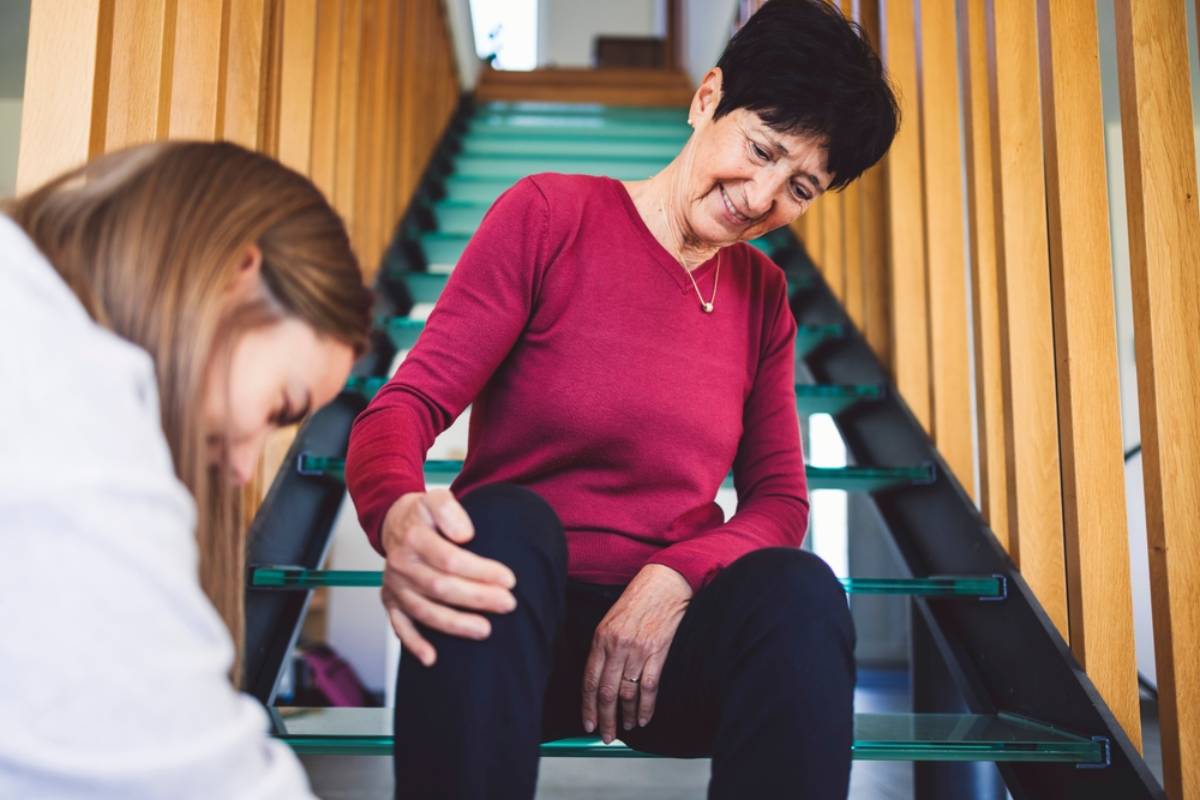
A Daughter Says Her Parents Refused to Prepare Their Three-Story Home for Old Age, and One Fall Changed Everything

A person shared his story about a problem many families quietly worry about as their parents get older: whether staying in the family home is actually realistic. The idea often sounds comforting at first, because nobody wants to leave a place filled with memories, familiar rooms, and decades of belongings. But staying safely can require much more than a few grab bars and good intentions.
The person explained that aging in place can involve emergency response systems, regular wellness checks, medication management, home modifications, and some form of dependable daily contact. Families can easily go from saying, “She wants to stay home,” to assuming that she simply will. The dangerous part is everything that is supposed to happen between those two decisions.
Her Parents Were Still Living Three Floors Up
One response from a person described a family who had already run into the problem from another direction. Her parents were both in their 80s and still living in a three-story home with stairs leading to both the front and back doors. Even worse, the only bathroom on the main level was so small that making it accessible would require major construction.
She and her sister had repeatedly tried to explain that the house might suddenly become impossible for their parents to manage. They were not demanding an immediate move, but they wanted their parents to make decisions while they were still able to choose for themselves. Their concern was less about age itself and more about what could happen after one unexpected change.
Nobody Wanted to Make the Choice Ahead of Time
According to the response, the biggest obstacles were cost and denial. The parents viewed their paid-off home as financially safer than the alternatives, even though the house itself was becoming increasingly difficult to navigate. From their perspective, staying put meant avoiding a large new expense.
The problem was that the house’s financial value did not automatically make it physically suitable. A property can be completely paid off and still become expensive in other ways once mobility issues appear. That is where a family can discover that saving money on housing does not necessarily mean saving money on care.
Then Came the Warning Everyone Had Predicted
Another response from a person put the fear into painfully simple terms. Families sometimes wait until one parent falls down the stairs, breaks a hip, or faces another serious medical problem before discussing whether the house can still work. Suddenly, everyone expects a renovation to happen during a short rehabilitation period.
What looked like a long-term planning problem becomes an emergency project almost overnight. Decisions that could have been made calmly months or years earlier now have deadlines, contractors, medical appointments, and family pressure attached to them. The house has not changed overnight, but the family’s ability to cope with it has.
One Family Watched That Exact Scenario Happen
One person said this had just happened in their own family. Her father had been dealing with cancer for years, his condition was worsening, and the family home had two stories with several steps leading inside. There was also no bathroom on the first floor.
After her father fell, her mother apparently began discussing whether a bathroom could somehow be added to the small first floor while he was in rehabilitation. The family had already offered to help them buy a different house several times, but those offers had been rejected. Now the father was living in the living room and using a commode, turning the center of the family home into a makeshift care space.
The Living Room Became Something Else Entirely
Another response from a person explained why that kind of arrangement can be so difficult. Once a living room becomes a sick room, the rest of the house begins to revolve around medical equipment, cleaning supplies, mobility devices, and bedside care. The family may still technically be living at home, but the home no longer functions in the way it once did.
There is also an emotional shift that can be harder to measure. A room once used for television, conversations, meals, and family gatherings can become the place where everyone focuses on illness and caregiving. Instead of the home adapting quietly to aging, the family’s entire daily life can begin adapting around the crisis.
Visitors Started Disappearing
The same person shared another detail that was perhaps even more heartbreaking than the physical challenges. Their father’s living arrangement had become so difficult that visitors stopped coming as often because the house no longer felt comfortable or inviting. The family noticed that grandkids sat awkwardly on couches instead of playing the way they once had.
Neighbors would sometimes come inside, see the situation, and quickly leave because they did not want to interfere. What had once been a familiar family home had started to feel like a place where everyone was waiting for the next decline. The person said it made the end seem closer than it really was simply because the house itself had changed so dramatically.
Another Family Discovered a Hidden Problem
A different person shared an even more complicated situation involving an aging relative in a three-story townhouse. The woman reportedly refused to acknowledge that she was struggling and insisted that she could still take care of herself despite having increasing difficulty moving around. The family was already worried, but they soon discovered that some major information had been kept from them.
They learned that she had apparently received a dementia diagnosis the previous year and had not told anyone. Around the same time, a longtime companion had decided he was finished with the relationship, leaving her without the housing and financial stability the family had assumed she had. What began as a concern about living independently quickly turned into a much larger crisis.
There Was No Easy Backup Plan
The woman in that story had very little money and ultimately ended up in a long-term care setting covered through Medicaid. The family member explaining the situation admitted that a nicer facility or private memory care was financially out of reach. Bringing the woman into their own home was also not considered a workable option.
That experience highlighted another uncomfortable truth about aging in place. A family may believe someone has several choices, only to discover that the available options disappear once health, housing, and finances change at the same time. By the time everyone sees the full picture, the person needing care may have far fewer decisions left to make.
Some Families Found a Surprisingly Simple Solution
Not every story in the discussion ended in crisis. One person shared that her grandmother moved into a one-bedroom ground-floor condo and ended up loving it. The smaller space was easier to manage, and the new location placed her closer to the rest of the family.
She also appreciated having building management and maintenance workers available when something needed attention. The condo fees may have been an added expense, but she saw value in not having to manage an entire house alone. In that case, downsizing was not treated as a defeat but as a practical trade.
The Yard Had Become More Work Than Joy
Another person explained that their mother had once been responsible for snow removal, lawn care, and all the other jobs that come with maintaining a house. Eventually, she sold it and chose a three-bedroom apartment because it gave her enough room for family and a separate space for herself.
The important difference was not simply square footage. Laundry was on the same floor, outdoor maintenance was no longer her responsibility, and there were fewer everyday obstacles waiting for her. She was not giving up everything she loved, but she was giving up the chores that had slowly become harder to manage.
Some People Were Already Planning Their Exit
The discussion also included people who were nowhere near their later years but were already thinking about the same problem. One person admitted that they had never even wanted a large dream house and would happily trade it for condo living. Their main obstacle was finding a smaller home that actually offered enough outdoor space and made financial sense.
Another person described a future retirement centered around hotels or communities with walking paths, exercise classes, recreation, and maintenance handled by someone else. The appeal was not simply avoiding stairs. It was the idea of living somewhere designed to make everyday life easier rather than continuously figuring out how to make an old house work.
The Housing Market Was Part of the Problem Too
A response from a person pointed out that moving is not always as simple as telling an older homeowner to sell and buy something smaller. In some areas, small accessible houses are rare, while the available options may be rundown, poorly designed, or located far away from family. For people who rely on hobbies, space, or a particular neighborhood, downsizing can come with sacrifices that have nothing to do with age.
Another person in their mid-60s described trying to find one-floor living after a divorce and running into the same issue. The available choices either came with expensive monthly fees or were in developments that did not suit the lifestyle they wanted. The result was a housing market where knowing what you need does not guarantee that you can actually find it.
Some People Chose to Prepare Before They Needed Help
One of the more proactive stories came from a person who had already moved into a retirement community with an apartment. They viewed that decision as their own version of aging in place because the building was designed around accessibility and had long-term care attached.
The person explained that they had watched other families install stair lifts and retrofit bathrooms, only for a serious health problem to eventually force another move anyway. They had also helped empty and sell the contents of older relatives’ homes and knew how difficult that process could be for adult children who were also working and raising families. Planning ahead, in their view, meant making sure someone else would not have to make every decision later.
Another Family Designed the House Around the Future
Not everyone believed moving was necessary. One person said they planned to stay in their current home without placing responsibility on their adult children because the house had a main-level bedroom, main-level laundry, wide hallways, and financial preparation for in-home support services.
Another person described buying a home that had already been designed for accessibility because the previous owner’s mother had used a wheelchair. The house included an accessible bathroom and a ramp leading from the garage. In those cases, aging in place was not simply a hope attached to an ordinary home. The house had been deliberately chosen or built with future needs in mind.
A 91-Year-Old Mother Had Planned for What Her Family Could Not Predict
One particularly touching response came from a person caring for an elderly mother after their father died at home under hospice care. Five daughters had rotated overnight shifts to care for their father, and they were now doing the same for their mother as her needs gradually changed. The family still did not know exactly what the future would require.
What made the mother’s situation different was the preparation she had done years earlier. She already had a wooden ramp leading to a large covered porch, several bathrooms with walk-in or roll-in showers, and other accessibility features throughout the house. Her family could still face difficult decisions, but they were not starting from zero.
The Real Twist Was That Moving Did Not Always Mean Giving Up
Across all these stories, the biggest surprise was that some older adults initially resisted moving and later discovered they actually preferred their new homes. One person said their parents were not excited about leaving their house but eventually adjusted well after moving into an independent apartment within a retirement facility. They enjoyed having meals handled and having medical services and medication supervision available.
Another person described a grandmother who was thrilled after moving into a smaller, more manageable home near family. The pattern was not that every older adult suddenly loves downsizing. It was that the feared loss of independence sometimes turned out to be a different kind of independence, with fewer chores, fewer hazards, and more time for living.
The Problem Was Never Just the House
The original person’s concern ultimately went beyond staircases, bathrooms, and square footage. Aging safely at home depends on whether the person has a realistic plan for emergencies, medication, monitoring, personal care, transportation, and the possibility that their needs could change quickly. A house can be modified, but a complete care system cannot be improvised overnight.
The stories also showed why these conversations are so uncomfortable for families. Older parents may see moving as giving something up, while their children may see preparation as a way to protect future choices. Sometimes both sides are trying to preserve independence, but they are imagining very different versions of what independence will look like.
The Decision Looks Different Before the Emergency Arrives
One response from a person captured the central lesson in a simple way: families often discover that the house “won’t work anymore” in the blink of an eye. A parent can seem mostly fine one month, then face pneumonia, a fall, rehabilitation, or another medical crisis that changes the entire situation. When that happens, the family is forced to make decisions under pressure instead of choosing among options calmly.
That is why some people in the discussion argued for visiting care communities before they are needed, researching costs, learning what paperwork is required, and understanding how different levels of care work. Others preferred to build accessible homes or arrange services that would allow them to remain where they were. Either way, the stories suggested that the most important part of aging in place may happen long before anyone needs a walker, a hospital bed, or a stair lift.