A Homeowner Says Six Neighborhood Kids Climbed Into His Pool Without Permission, Then Their Mom Told Him He Should Share It Because Not Everyone Can Afford One

A person shared his story about buying a house in 2009, shortly after the housing crash, when he managed to get what he described as a very good deal. Because he had money left over after purchasing the property, he eventually added a couple of expansions and built a pool in the backyard. It was a major investment, but it was also something he had planned and paid for himself.
Most of the surrounding neighbors were described as hardworking, lower-income families, and the homeowner said he actually liked the majority of them. He had no problem being generous with people he knew and trusted, especially if they treated his property respectfully. The trouble began when a new family moved in three houses away and quickly became impossible to ignore.
The New Neighbors Made an Immediate Impression
The new family didn’t exactly blend quietly into the neighborhood. They had three broken-down cars sitting in their front yard while the father worked on them, and they regularly blasted music from outdoor speakers late at night. The homeowner also noticed beer cans, pizza boxes, and cigar wrappers being left in the woods behind his house, just beyond his property line.
None of those things involved the pool directly, but together they created a pattern. The homeowner had already begun to see the family as people who didn’t pay much attention to how their behavior affected others. Then one morning, that pattern crossed directly onto his property. What happened next made the earlier annoyances suddenly seem much smaller.
A Strange Alert Came From the Backyard
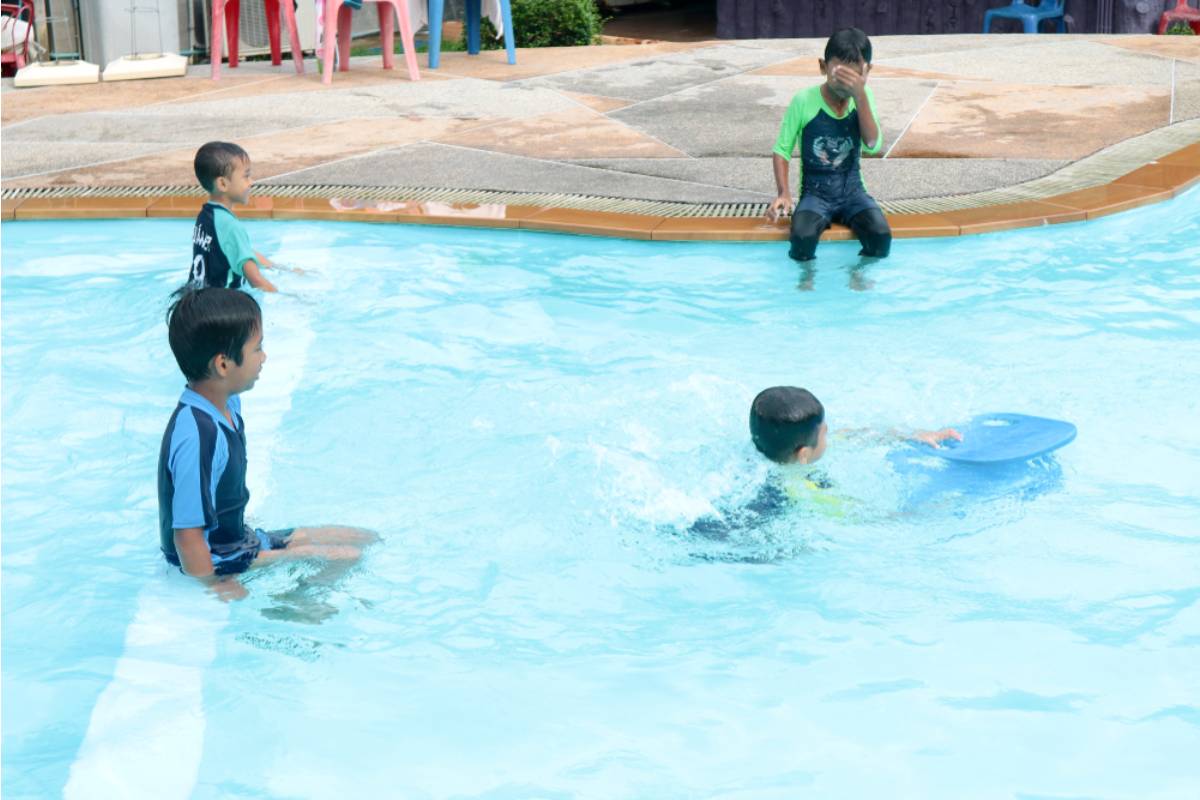
The homeowner was woken up by a notification telling him that movement had been detected in his backyard. He checked his camera expecting to see an animal or perhaps something harmless moving around outside. Instead, he discovered six children he didn’t recognize swimming in his pool.
The children weren’t standing around hesitantly or looking for someone to ask permission. They were actively using the pool, playing games, and even dunking on the basketball hoop nearby. At some point, the hoop was damaged during their impromptu visit, turning an unauthorized swim into a situation involving property damage as well.
Six Kids Had Somehow Decided the Pool Was Theirs
The homeowner had never invited the children over. He didn’t know them, didn’t know their parents well, and had certainly never agreed to let them use his pool without supervision. Yet there they were, treating the backyard like a neighborhood recreation center.
The most unsettling part was that the homeowner hadn’t even known they were there until his camera alerted him. If something had gone seriously wrong before he checked the notification, nobody nearby might have realized what was happening. A private pool had suddenly become a place where six children were swimming without the homeowner’s knowledge.
The Police Were Called
Rather than confronting the children himself, the homeowner called the police non-emergency number. Officers came to the property, removed the children from the pool area, and took them back home. According to the story, the children were considered too young for charges.
That might have been the end of the incident if their mother had simply apologized and made sure it never happened again. Instead, the homeowner soon learned that the family had a completely different understanding of what had happened. The police leaving the property wasn’t the end of the confrontation. It was only the beginning.
Then Came the Knock at the Door
About an hour later, the homeowner heard loud knocking at his front door. When he answered, the mother from the new family was standing there, and she wasn’t there to apologize for her children entering the property.
Instead, she told him he shouldn’t have a pool if he didn’t want everyone who saw it to use it. She reportedly argued that not everyone could afford a pool and therefore he needed to share. The homeowner was stunned by the logic because, from his perspective, the entire point of owning a private pool was that it belonged to him and not to everyone passing by.
The Homeowner Actually Had a Different View
The homeowner explained that he wouldn’t necessarily have objected to children he knew swimming in the pool. If he were friends with the family and trusted the parents, he might have been willing to invite them over and supervise the situation himself.
That was completely different from discovering six unfamiliar children in his backyard without warning. A private invitation meant he could make the decision himself, prepare the pool, supervise the children, and understand who was using his property. The neighborhood mother’s argument erased all of those distinctions with one simple idea: if someone could see the pool, they should be allowed to use it.
The Responses Focused on a Bigger Problem
A response from a person immediately pointed out that the homeowner needed to make sure the property was properly secured. Another response emphasized locking any gates or doors that could provide access to the pool. The advice wasn’t really about being unfriendly to children, but about preventing another unauthorized entry.
Other responses suggested putting up clearly visible signs stating that the property was private. Several people also recommended positioning cameras where anyone entering the property would be recorded. The overall message was that the homeowner needed to make it extremely difficult for anyone to pretend they didn’t know they were somewhere they weren’t supposed to be.
The Pool Created a Serious Safety Concern
Many responses focused on the fact that a pool isn’t like an ordinary backyard feature. Six children entering without adult supervision created a dangerous situation even before anyone considered questions about ownership or property rights. The homeowner hadn’t invited them, hadn’t agreed to supervise them, and didn’t even know they were there until his camera sent an alert.
A response from a person urged the homeowner to check the requirements that applied in his area and make sure the pool was secured accordingly. Others suggested a fence with a locked gate and additional measures that would prevent children from simply walking into the pool area. The concern was especially strong because the homeowner now knew that neighborhood children had already attempted to access it.
The Basketball Hoop Made Things Even Worse
The pool incident wasn’t the only problem. The children had also been playing around the basketball hoop and damaged it while they were in the backyard. That meant the homeowner was now dealing with unauthorized entry, unauthorized use of his pool, and damage to his property.
A response from a person suggested keeping a record of the damage along with the police call and any future incidents. Others recommended documenting every interaction with the family rather than relying on verbal conversations. The idea was to create a clear history showing that the homeowner had repeatedly made it known that the property wasn’t open for unsupervised neighborhood use.
Then the Liability Worries Took Over the Discussion
The most common concern from the responses involved what could happen if someone were seriously injured in the pool. Several people brought up the concept of an “attractive nuisance,” explaining that swimming pools can create special legal concerns because children may be drawn to them even when they aren’t invited.
The exact rules can vary depending on location, so the responses repeatedly encouraged the homeowner to check local requirements and speak with his insurer or a qualified attorney. They also stressed that simply telling children not to enter might not be enough in every jurisdiction. For the homeowner, that meant the problem had suddenly become much more serious than an annoying neighborhood dispute.
People Warned Him Not to Make Casual Exceptions
One response from a person gave an especially important warning: the homeowner shouldn’t suddenly invite the children over just to keep the peace. Even if he felt generous after the confrontation, allowing them to swim once could create a completely different expectation in the future.
Another response described how quickly a friendly invitation could become a source of confusion about responsibility. The homeowner’s original position was actually simple: friends could be invited when he wanted them there, but strangers couldn’t decide for themselves. The six children had already crossed that line, so several people urged him not to blur it afterward.
The Camera Had Already Become the Unexpected Hero
Fortunately, the homeowner wasn’t relying on a neighbor’s word about what happened. His backyard camera was the reason he discovered the children in the first place, and it potentially provided a record of the unauthorized visit. Several responses suggested adding more cameras or making sure important areas of the property were continuously monitored.
One response from a person even suggested having cameras near the warning signs so there could be little dispute about whether people saw them. Others recommended documenting future conversations as well, where legally permitted. The homeowner had initially installed the camera for ordinary security, but it had now become one of the most useful pieces of evidence in the entire situation.
Some Responses Wanted the Family Officially Warned
A number of people suggested making the boundary unmistakable in writing. They recommended sending a clear message or letter telling the family that neither the parents nor their children had permission to enter the property or use the pool unless they were specifically invited.
The point wasn’t to start a neighborhood war. It was to remove any possibility of the mother later claiming that she thought her children were welcome. After six children had already been found swimming there, several responses felt that the homeowner should make his position unmistakably clear and keep a record of the communication.
The “Not Everyone Can Afford a Pool” Argument Fell Apart
The mother’s most memorable argument was also the easiest one to turn around. She apparently believed that because the homeowner had something other people couldn’t afford, he should share it with them. A response from a person jokingly applied the same logic to expensive boats, pointing out that people don’t generally assume they can use someone else’s property simply because they can’t afford their own.
The homeowner’s pool wasn’t a public amenity. It was attached to a privately owned home and had been paid for as part of the homeowner’s personal property improvements. The fact that someone could see it from the neighborhood didn’t create an automatic invitation. That was the basic point the mother seemed unwilling to accept.
Then the Story Became a Warning About the Future
Several responses suspected the first incident might not be the last. Once the children had successfully entered the backyard, there was a possibility they could try again, especially if the family believed the homeowner’s objections were merely temporary.
A response from a person described the first unauthorized swim as a possible test of how much the homeowner would tolerate. Others advised treating another appearance as a reason to contact authorities again rather than attempting to negotiate with the children. The homeowner had already discovered how quickly a simple backyard intrusion could become a major problem.
Other People Had Seen the Same Thing Happen
One person shared a similar experience involving a former homeowner’s pool. A woman had apparently waited outside until the homeowner came out to take the trash to the curb, then asked whether her grandchildren could use the pool because they had been allowed to swim there years earlier. The new homeowner refused because the children were strangers and there were concerns about responsibility.
Another person described growing up near a family with a pool where children were occasionally invited over when the adults were home. The difference was that those invitations came from the actual pool owners. The children understood that swimming there was a privilege, not a neighborhood entitlement, and that respecting the rules was what allowed the invitations to continue.
The Homeowner’s Real Problem Wasn’t the Pool
By the end of the discussion, it was clear that the swimming pool was only one piece of a much larger neighborhood problem. The family had already been associated with late-night noise, abandoned trash, broken-down cars, and now children entering private property. The pool incident simply crossed a line that could no longer be ignored.
The homeowner didn’t seem interested in keeping his pool exclusive out of spite. He even acknowledged that he might happily let people swim if he knew them and trusted them. What he objected to was the assumption that strangers could take something he had paid for simply because they wanted it.
The Twist Was the Mother’s Reaction
The strangest part of the entire encounter wasn’t that six children had entered the pool. It was what happened after they were caught. Instead of apologizing for the unauthorized visit, their mother reportedly arrived at the homeowner’s door and argued that he was wrong for refusing to share.
That transformed the situation from a group of kids making a bad decision into a dispute with an adult who appeared to believe the homeowner’s property should be available to her family. The homeowner had expected a conversation about trespassing. Instead, he received a lecture about why owning a pool supposedly gave him an obligation to let the neighborhood use it.
Now the Backyard Needed More Than a Pool
The responses ultimately pushed the homeowner toward the same conclusion from several different directions. He needed to make sure the pool and property were secured according to applicable local requirements, keep the cameras running, document incidents, and communicate his boundaries clearly. People also encouraged him to contact his insurance company and seek professional legal advice about the specific rules where he lived.
The pool had started as one of the rewards of buying a house at a good price after the housing crash. Years later, it had unexpectedly become the neighborhood’s most attractive target. The homeowner had paid for it, maintained it, and built it on his own property, but six children had apparently decided that seeing it was enough to justify using it.
The Neighborhood Pool Was Never a Neighborhood Pool
The final lesson from the responses was remarkably consistent. Being able to see someone’s property doesn’t make it communal, and being unable to afford something doesn’t give a person permission to use someone else’s belongings. A neighbor can be generous, but generosity only means something when the owner gets to decide when and how it is given.
For this homeowner, the next chapter was likely to involve more locks, stronger boundaries, better documentation, and considerably less trust in the idea that everyone would simply respect the property. The most ironic part was that the family didn’t need to be excluded forever if they had approached the homeowner respectfully in the first place.
Instead, six unauthorized swimmers and one very confident mother turned a backyard pool into the clearest possible lesson about the difference between being invited and simply deciding you’re entitled to show up.