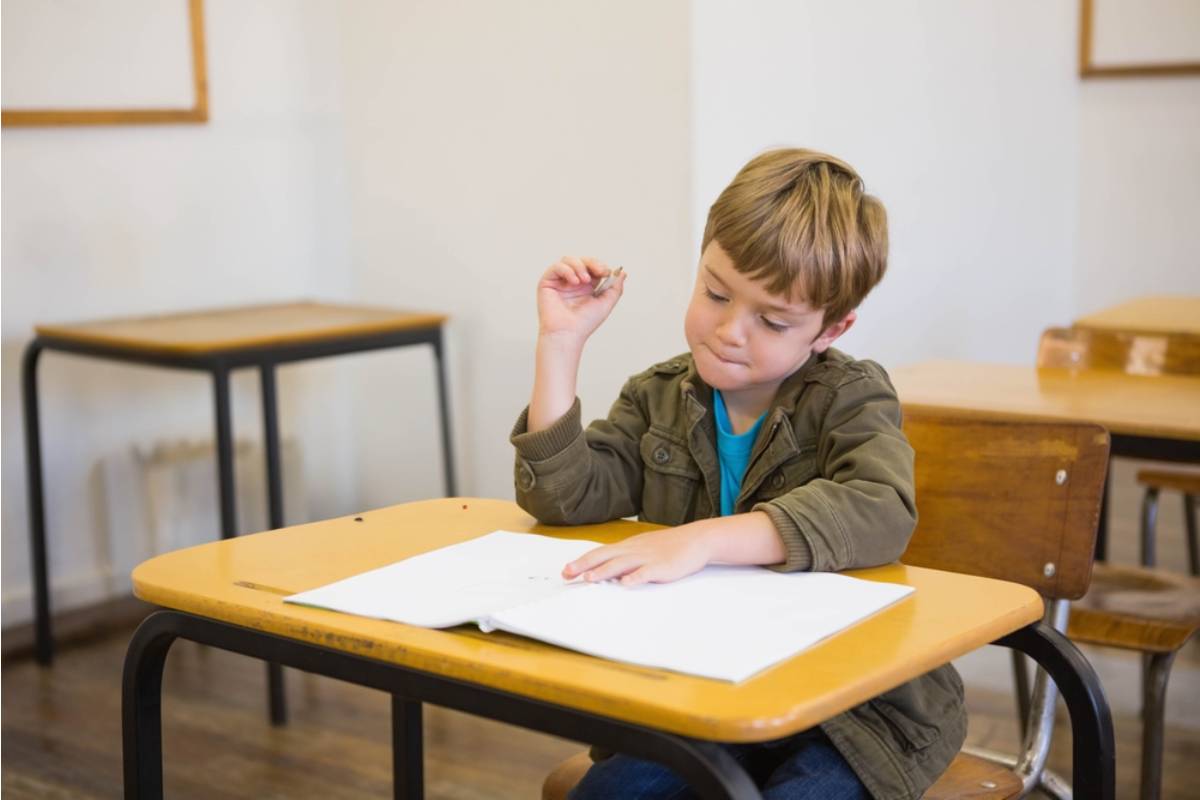
A Mom Found Out Her Son Had Been Practicing Multiplication Under His Desk During Silent Reading Because He Was Behind and Too Embarrassed to Ask for Help Out Loud

Rachel thought her son was simply a quiet reader until his teacher called her about something she had noticed during independent reading. While the rest of the class read novels, ten-year-old Mason had been hiding a multiplication worksheet under his desk and practicing problems instead. He wasn’t misbehaving or avoiding his work. He was trying to catch up without letting anyone know he was struggling.
The Message From Mrs. Collins
Rachel was folding laundry when her phone buzzed with an email from Mason’s teacher, Mrs. Collins. The message began normally, but the last sentence made Rachel stop folding a towel.
Could we talk about something I’ve noticed during silent reading?” the teacher had written. Rachel immediately wondered whether Mason had been distracting other students or refusing to read. Instead, Mrs. Collins said she had noticed him doing extra math work beneath his desk.
The Worksheet Beneath the Book
Mason had been assigned twenty minutes of independent reading that morning. Mrs. Collins walked between the desks, checking that students were settled with their books.
When she reached Mason, she noticed his library book was open, but his eyes kept moving toward his lap. She crouched beside him and saw a multiplication worksheet tucked beneath the book, covered with erased answers and tiny pencil marks.
The Question That Embarrassed Him
Mrs. Collins quietly asked Mason why he was doing multiplication during reading time. He immediately pushed the worksheet beneath his book and whispered, “I just need to practice.”
She asked whether he had finished the assigned reading. Mason nodded, but his face had turned red. Then he quietly added, “I’m bad at multiplication, and everyone else already knows it.”
Rachel Reads the Email Twice
Rachel reread the teacher’s message several times. Mason had never told her he was struggling with multiplication, even though she regularly helped him with homework.
She thought about the previous few weeks and remembered him taking unusually long to finish basic math problems. Whenever she asked whether he needed help, he always answered, “No, I get it.”
Now Rachel understood that “I get it” had not meant what she thought.
The Conversation After School
When Mason came home, Rachel didn’t mention the email immediately. She waited until he had eaten his snack and started working on his homework.
Then she placed a blank piece of paper beside him and asked, “Can I ask you something about multiplication?” Mason looked at her suspiciously and said, “What about it?”
Rachel told him she knew he had been practicing during reading. Mason froze.
Mason Finally Admits the Truth
He stared at the table for several seconds before saying, “I don’t want you to think I’m dumb.”
Rachel immediately told him she didn’t think that. Mason shook his head and said, “You don’t know how slow I am.”
He explained that several classmates could answer multiplication questions before he had even finished writing them down. When the teacher asked questions aloud, Mason sometimes knew the answer but was afraid to raise his hand because he needed more time.
The Part Rachel Had Missed
Mason had started practicing multiplication facts underneath his desk because he didn’t want anyone to see him using flashcards or asking for help.
He had been taking worksheets from an old math folder and solving them during quiet activities. If he got an answer wrong, he erased it and tried again before anyone could notice.
Rachel felt a mixture of pride and sadness.
Mrs. Collins Explains What She Saw
At the parent conference, Mrs. Collins told Rachel that Mason was not refusing to learn. In fact, she said, he was doing something unusually determined.
“He knows he’s behind,” Mrs. Collins explained. “He’s trying to fix it himself because he’s embarrassed to admit he needs more practice.”
Rachel asked whether Mason’s grades had changed. Mrs. Collins said his understanding was improving, but his speed with multiplication facts was still causing problems with more advanced work.
The Classroom Moment That Hurt
Mrs. Collins described an incident from the previous week. She had asked the class to solve a multiplication problem mentally, and several students called out answers almost immediately.
Mason had written the correct answer on his paper but didn’t raise his hand. When another student shouted a different answer, Mason erased his own and copied it.
Rachel felt her stomach tighten when she heard that.
The Teacher Changes One Thing
Mrs. Collins decided not to make Mason publicly demonstrate his multiplication skills. Instead, she began giving him extra processing time before asking for answers.
She also arranged for him to practice facts in a small group twice a week. Mason wasn’t told that he was receiving “special help” in front of the class. He simply joined three other students who were working on the same skills.
Mason Doesn’t Like the New Arrangement
The first afternoon, Mason came home annoyed. “I don’t need a math group,” he complained.
Rachel asked why, and he said, “Because everyone will know I’m bad.”
She reminded him that the group included other students who were also practicing multiplication. Mason still wasn’t convinced.
A Surprising Discovery
During the second small-group session, Mason realized one of the other students was struggling with the same facts. His classmate Tyler kept mixing up sixes and sevens.
Mason showed Tyler a trick he had been using to remember one of the harder facts. Tyler immediately understood it.
When Mrs. Collins noticed, she told Mason, “That’s a really good explanation.”
Mason smiled.
The First Time He Asked for Help
A few days later, Mrs. Collins wrote a difficult multiplication problem on the board. Mason worked on it quietly, then raised his hand.
“I don’t know how to start this one,” he said.
The room didn’t explode with laughter. Nobody pointed at him. Mrs. Collins simply walked over and asked him to explain what he already knew.
Mason showed her the first step.
His Fear Doesn’t Come True
After class, Mason admitted to Mrs. Collins that he had expected everyone to think he was stupid.
She told him, “You asked a question. That’s what students are supposed to do.”
Mason nodded but still looked uncertain.
Then Tyler walked past and said, “Hey, Mason, can you show me that six times seven trick again?”
Mason laughed.
Rachel Finds the Hidden Folder
One Saturday morning, Rachel was cleaning Mason’s room when she found a folder underneath his bed.
Inside were nearly thirty multiplication worksheets. Some were covered with corrections, while others had been folded into quarters and stuffed into the back of the folder.
Rachel found one page where Mason had written the same multiplication fact twenty times.
At the top he had written, “Don’t forget this one.”
The Note He Had Written Himself
Tucked behind the worksheets was a small piece of paper. Mason had written, “If I practice enough, nobody will know.”
Rachel sat on the floor holding the note for several minutes.
She realized Mason hadn’t been trying to hide from math. He had been trying to hide how badly he wanted to be good at it.
The Conversation About Being Behind
That evening, Rachel showed Mason the note.
He looked embarrassed and said, “I don’t want to be the kid who doesn’t know stuff.”
Rachel told him that every student had things they learned earlier and things they learned later. She explained that being behind in one skill didn’t mean he was behind as a person.
Mason was quiet for a moment before asking, “Can I still practice by myself?”
Rachel smiled and said, “Of course. I just don’t want you practicing alone because you’re afraid to ask for help.”
The Game That Changed His Attitude
Mrs. Collins later introduced a multiplication game where students worked in pairs instead of racing against the entire class.
Mason initially tried to stay quiet, but when he solved several problems correctly, his partner gave him a high five.
The next round, Mason started answering faster.
He wasn’t suddenly perfect, but he wasn’t hiding his paper anymore.
The Test He Almost Didn’t Turn In
A few weeks later, Mason took a multiplication test. He finished most of the questions but became stuck on the final page.
Instead of staring at the paper until time ran out, he raised his hand and asked for clarification about one instruction.
Mrs. Collins explained it without giving him the answer.
Mason finished the page and turned in the test.
The Score That Surprised Him
Mason didn’t get every problem right, but he scored significantly higher than he had on his previous test.
When Mrs. Collins handed it back, she wrote one sentence at the top: “You are getting stronger.”
Mason carried the paper home carefully.
Rachel expected him to talk about the grade, but instead he said, “I asked for help when I got stuck.”
She smiled and told him that was the part she was most proud of.
He Stops Hiding the Worksheets
Eventually, Mason stopped taking multiplication sheets beneath his desk during reading time.
He still practiced almost every day, but now he did it openly during the time his teacher assigned for math practice.
Sometimes he worked with Tyler. Sometimes he worked alone. Sometimes he asked Mrs. Collins for another explanation.
Nobody treated any of those things like they were embarrassing.
The Question at the Kitchen Table
One night, Mason was doing homework when he suddenly asked Rachel, “How long does it take to stop being behind?”
Rachel looked at him and said, “Sometimes longer than you want.”
Mason sighed.
Then Rachel added, “But you don’t have to hide while you’re catching up.”
He nodded and returned to his worksheet.
The New Habit
Months later, Mason still wasn’t the fastest student in the class. He didn’t need to be.
When he didn’t understand something, he had stopped erasing his work and pretending he knew the answer. He circled the problem, raised his hand, and asked what he was missing.
The little boy who once practiced multiplication beneath his desk had discovered that asking for help didn’t expose a weakness. It showed that he cared enough to keep learning.