A Mom Says Another Parent Proudly Pulled Out the Spoon She Uses to Discipline Her Son at a Birthday Party, and the Whole Conversation Took a Turn She Never Expected

A mom shared that her daughter had recently started at a new daycare, which meant she was suddenly meeting a crowd of parents she had never known before. One of the first chances to get acquainted came at a birthday party filled with little children, casual conversations, and the usual chaos that comes with toddlers running around together. She expected the gathering to be fairly ordinary, even though she barely knew anyone there.
At first, nothing about the party seemed especially unusual. The children were playing, some were getting a little too physical with each other, and the adults were trying to keep up with everything happening around them. Then a conversation about discipline started, and the entire mood of the afternoon changed.
The Conversation Started With Kids Playing Too Roughly
The mom said a couple of children had started horse playing a little too roughly, which naturally led the adults toward a discussion about how they handled bad behavior. That was when one mother confidently announced that she punished her son by hitting him when he did something wrong. She did not speak about it quietly or cautiously, either.
Instead, she seemed almost proud of her approach. The mom listening could hardly believe what she was hearing, especially because all the children at the party were only around three or four years old. What happened next made the conversation even more uncomfortable.
Then the Wooden Spoon Came Out
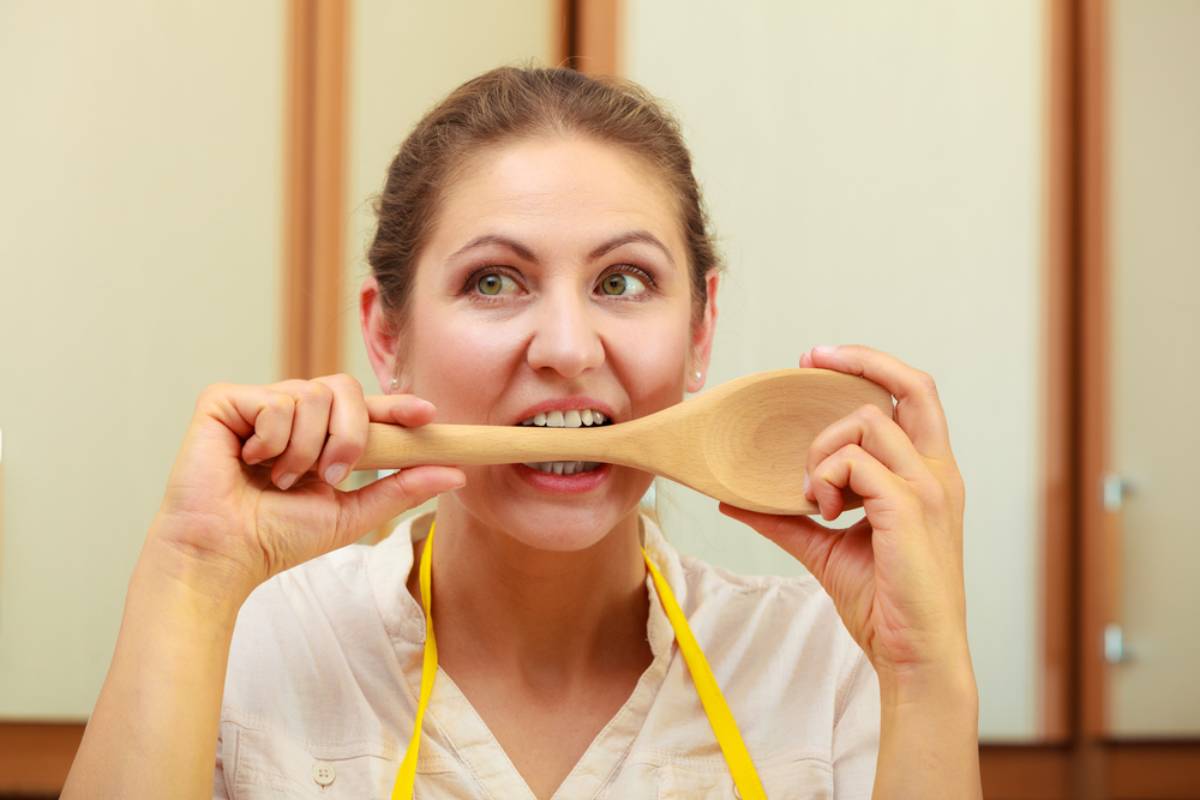
The other mother reached for a wooden spoon and showed it to everyone at the table. She explained that she carried it with her everywhere so she could use it whenever her son misbehaved. The most startling detail was that the child’s name had actually been written on the spoon.
The mom who shared the story said the moment felt surreal. She had expected a conversation about timeouts, boundaries, or other ordinary parenting strategies, but instead she was staring at what had essentially become a dedicated discipline tool. It was one thing to hear a parent admit to spanking, but seeing the object they carried for that purpose made the situation feel much more deliberate.
Other Parents Started Sharing Their Own Stories
Rather than ending the conversation there, several other parents joined in. They began sharing their own experiences with spanking, apparently treating the practice as a normal part of raising young children. The discussion quickly became a group conversation about physical punishment.
The mom realized she was sitting in a room where she appeared to be the unusual one. She had never hit her children, so she simply said so. According to her, the response was not an argument or even a debate, but a collection of blank stares.
Her Parenting Choice Suddenly Made Her the Odd One Out
For the mom, the silence was almost as surprising as the spoon. She had expected people to have different opinions about discipline, but she did not expect her own choice to avoid hitting her children to seem so unusual among the group. For a few seconds, it seemed as though nobody knew what to say.
She later described the experience as one of those moments that makes the year feel strangely out of place. The children were tiny, the setting was supposed to be cheerful, and yet the adults were casually discussing hitting them as though they were talking about bedtime routines. The contrast stayed with her long after the party ended.
A Splash Pad Party Made the Scene Even Stranger
The mom later added an important detail about where the party had taken place. It was a splash pad gathering, meaning the children were already running around in swimsuits and playing in the water. During the event, the mother whose child was being discussed apparently had another uncomfortable moment involving her son and his swimsuit.
At one point, the boy pulled his suit down while trying to pee. The mom said she did not see any visible marks on him, including on his backside, but the incident still made the earlier conversation harder to forget. She could not stop thinking about how casually the wooden spoon had been presented.
She Realized the Spoon Wasn’t Just a Figure of Speech
There was something particularly unsettling about discovering that the spoon was an actual object the mother carried around. It was not an offhand reference to spanking or something mentioned in the heat of a frustrating parenting moment. The spoon had a specific purpose and the child’s name on it made that purpose unmistakable.
That detail became the center of the story for the mom. Other parents might have been describing what they did when their children acted out, but this mother had apparently prepared for discipline in advance. The more the mom thought about it, the stranger the entire exchange seemed.
The Legal Reality Added Another Layer to Her Concern
The mom also explained that local authorities would not necessarily intervene simply because a parent admitted to spanking. She said that in her area, spanking was still considered legal unless it crossed a threshold involving bruising or other more serious physical evidence. That meant the disturbing conversation did not automatically translate into a situation where authorities would step in.
She found that reality deeply frustrating. From her perspective, something could feel completely wrong to a parent and still fall outside the circumstances that trigger intervention. She said she had asked her daughter’s teacher to keep an eye out, and the teacher agreed to pay attention.
One Response Brought Up a Painful Childhood Memory
A response from a person revealed why the subject could stir up such strong emotions. The person recalled being very young and thinking they would never treat their own children the same way their parents had treated them. That memory had stayed with them for decades.
Another response came from a person who remembered being chased with a belt as a small child. They described hiding beneath a kitchen table while the family dog suddenly became protective and stood between the child and the adults. The person said the memory remained vivid even decades later and influenced their decision never to hit their own children.
Another Parent Remembered What Spanking Did to Her Sister
A different person shared a story about growing up with frequent physical punishment in the household. They remembered seeing a handprint on their sister after she had been spanked and said the experience frightened them deeply. The fear became so strong that they tried very hard never to misbehave.
But the fear did not disappear when childhood ended. The person said loud yelling also stayed with them, because they had spent part of their early childhood hiding in small spaces whenever the adults screamed. As an adult, they learned that many of the memories they thought involved their parents fighting were actually moments when their parents were yelling at their sister.
Some Parents Said Their Own Experiences Changed Their Choices
Several people described having moments in childhood that shaped how they wanted to parent later. One person said being physically punished made them promise themselves they would not repeat the cycle with their own children. Another described accidentally reacting physically toward a child and immediately feeling horrified by their own behavior.
One particularly striking response came from a parent who remembered instinctively swatting a young child in a stressful moment. The child responded with the simple observation that hitting was something people were not supposed to do, which forced the parent to confront what had just happened. That parent said the experience made it difficult to imagine presenting hitting as a deliberate and acceptable lesson.
The Parent Carrying the Spoon Became the Biggest Mystery of the Day
As the conversation unfolded, the mom kept returning to one basic question in her own mind. Why would anyone carry a wooden spoon specifically so they could hit a three or four year old when the child misbehaved? She could understand that people sometimes lose their temper, but the spoon seemed to suggest planning rather than a split-second reaction.
That distinction was also noticed by a person responding to the story. They said an impulsive reaction during an overwhelming moment was different from intentionally carrying an object designed for punishment. The spoon, in their view, represented something that had been considered, chosen, and repeated as a parenting method.
The Conversation Wasn’t Limited to One Background
The mom initially wondered whether the attitudes might be connected to the culture of the area where she lived. Other responses suggested they had experienced similar differences after moving between regions, especially between parts of the South and other parts of the country. The mom confirmed that she was from Texas and had grown up being spanked herself.
Yet she emphasized that her own childhood did not make her want to repeat the practice. In fact, she felt it had the opposite effect. Her experience left her determined to raise her children without physical punishment, even though doing so meant making a very different choice from the one she had seen growing up.
Education and Careers Did Not Predict Who Spanked
One detail surprised the mom almost as much as the spoon itself. She explained that the parents discussing spanking were not simply people she would have stereotyped as uninformed or lacking education. She said two of the mothers were engineers, while the mother who had shown the spoon was a nurse.
That realization challenged one of the assumptions people in the conversation had made. The debate was clearly not as simple as educated people versus uneducated people, or one type of family versus another. Parents with very different backgrounds could still arrive at completely different ideas about discipline.
By the End, the Birthday Party Felt Very Different
What began as a simple birthday celebration ended up giving the mom a much deeper look into the parenting beliefs of people around her daughter’s new daycare. Instead of leaving with only memories of kids splashing around and playing together, she left thinking about a named wooden spoon and a room full of adults discussing spanking casually. The contrast was impossible for her to ignore.
The story also brought out a wave of personal memories from people who had experienced similar discipline as children. Their responses ranged from painful childhood recollections to moments when parents realized they wanted to break the pattern themselves. For the mom who witnessed the spoon at the party, the biggest surprise was not simply that another parent spanked her child, but how openly and proudly she treated it as part of everyday parenting.