A Mom Says Her 16-Month-Old Has Books in Nearly Every Room of the House, and Her Family Warned the Collection Might Be Stealing Her Childhood

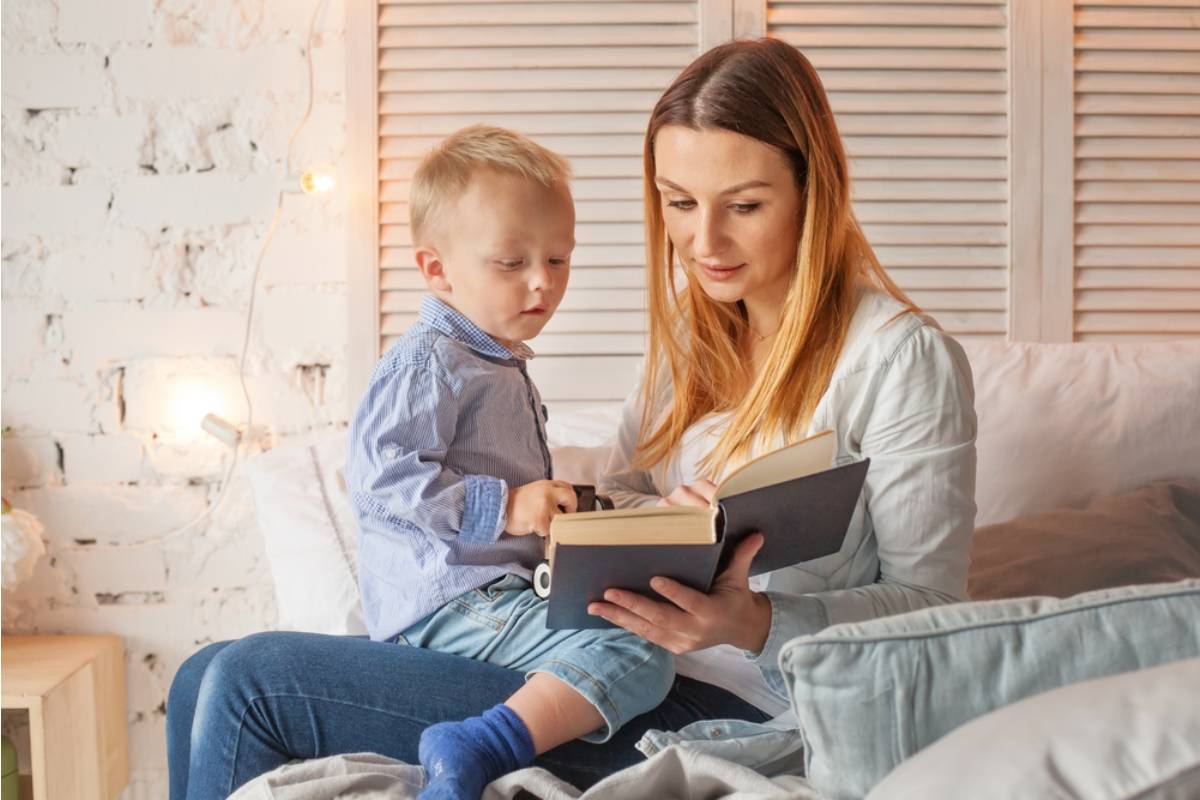
A mom said her 16-month-old daughter had developed an unusually strong obsession with books, and honestly, she couldn’t have been happier about it. She loved books herself, so watching her toddler reach for them again and again felt like a little family tradition beginning early. Before long, however, the books weren’t staying in one corner of the house.
They appeared in the bathroom, bedroom, kitchen, living room, hallway, and even the car. The toddler seemed perfectly content surrounded by stories, pictures, and colorful pages wherever she went. Her mom began wondering whether there was actually such a thing as having too many books.
The Charity Shops Made It Very Easy
The mom explained that many of the books came from charity shops, which made building the collection surprisingly inexpensive. Every time she found another interesting children’s book, it was tempting to bring it home because her daughter genuinely enjoyed them. There wasn’t a grand plan to create a personal library; it simply happened one bargain book at a time.
Soon, the family had reached the point where their daughter seemed to own more books than toys. The parents had boundaries when it came to buying toys, but somehow those same rules never seemed to apply to books. As the collection grew, the mom started wondering whether her family was seeing a problem where she only saw a happy child.
Then Grandma Took a Look Around
Everything became more complicated when the mom’s own mother visited for the weekend. Grandma noticed the sheer number of books scattered throughout the home and immediately had concerns about the collection. She also wasn’t impressed by the condition of some of them, since many were secondhand and had the inevitable dog-eared pages and worn covers.
The toddler sometimes accidentally snagged pages while handling the books, which made the situation look even less tidy. To the mom, those marks were signs that the books were actually being loved and used. To Grandma, however, the growing pile looked like something that needed to be controlled.
The Other Grandma Had Similar Concerns
The mom’s mother wasn’t the only relative who questioned the situation. Her mother-in-law also believed that having so many books might eventually interfere with the toddler’s ability to play independently with toys. The two grandmothers seemed to share the same basic concern, even though the little girl appeared perfectly happy.
That left the mom wondering whether she was unintentionally encouraging an unhealthy habit. She wasn’t forcing her daughter to sit down and read or turning every story into an educational exercise. Her daughter simply liked books, and her instinct was to nurture an interest she clearly enjoyed.
She Wasn’t Trying to Turn Her Toddler Into a Scholar
The mom emphasized that there was no pressure surrounding the books. She wasn’t trying to make her daughter academically advanced or create a tiny prodigy before she could even pronounce every word. The books were simply another thing her toddler enjoyed exploring.
That distinction mattered to her because she felt the adults around her were overthinking the situation. If a toddler loves stacking blocks, nobody immediately wonders whether there are too many blocks. If a child loves drawing, parents usually buy more paper and crayons without worrying that the child will forget how to play with everything else.
One Person Had a Simple Rule
A person shared his story about having a large collection of children’s books and offered a remarkably straightforward standard. In his view, there was no reason to limit books if the family could afford them, the books were appropriate, and the child loved them. From that perspective, the number itself wasn’t the problem.
The idea struck a chord because it separated books from ordinary clutter. A pile of books that a child actually uses is very different from a pile of forgotten objects occupying every available surface. The real question seemed to be whether the collection was serving the family or slowly taking over the house.
Another Response Took the Joke Even Further
One response from a person offered a hilarious way to determine when someone had finally crossed the line. According to the joke, the family hadn’t collected too many books until the floor joists started bowing under the weight. Another person joked that once that happened, the solution was simply to switch to an e-reader and start collecting a different kind of book.
The exchange turned a potentially serious parenting debate into something much lighter. After all, there is something wonderfully ridiculous about imagining a family calmly adding another children’s book while the entire house begins sinking several inches. The humor also captured what many people seemed to believe: loving books isn’t exactly the worst problem a child could have.
But Some People Thought the House Needed Boundaries
Not everyone believed that unlimited books were automatically a good idea. A person responded that books could still become clutter, even if they happened to be educational or enjoyable. From that perspective, the issue wasn’t the books themselves but whether they had taken over spaces that were supposed to remain usable.
Another person suggested that the family establish shelves or designated storage areas and become more intentional about book care. That seemed like a reasonable middle ground because nobody was arguing that the toddler should stop reading. The goal was simply to make sure the collection remained a collection rather than becoming an obstacle course.
Then the Mom Revealed Something Important
The discussion took an interesting turn when the mom clarified what her house actually looked like. She explained that when she said there were books in every room, she didn’t mean books were covering the floors and furniture. Each room had a small box where the books were kept.
That meant the bathroom had its own little selection for when the toddler was nearby, while the bedroom and other rooms had their own boxes. When the books were finished with, they went back into their designated containers. Suddenly, the situation sounded much less like a chaotic library explosion and much more like a carefully organized system.
The Dog-Eared Pages Were Actually Part of the Story
The condition of the books also became less troubling once the circumstances were considered. Most had been purchased secondhand, so they already carried some signs of previous use before the toddler ever touched them. Some became more worn because a 16-month-old was naturally going to handle them like a 16-month-old.
A response from a person pointed out that books weren’t being purchased merely to sit untouched on a shelf. A worn cover or dog-eared page could simply mean that someone had actually enjoyed the story. In a strange way, the imperfections were evidence that the books were doing exactly what they were supposed to do.
The Library Offered a Different Solution
Several people suggested that the family make greater use of their local library. Libraries could give the toddler a constant supply of new stories without requiring the family to find permanent storage for every single one. Once a book stopped being interesting, it could simply go back instead of occupying another box at home.
That idea also solved another problem the mom hadn’t necessarily considered. Toddlers change interests incredibly quickly, meaning the books that seem irresistible at 16 months may be completely ignored later. Borrowing could keep the experience fresh without requiring the family to constantly expand its own collection.
Some Families Had Hundreds of Books
The responses revealed that this family was hardly alone in having a serious book habit. One person described a home with hundreds of children’s books, regular library visits, and a constant stream of secondhand finds. Another family reportedly had multiple shelves dedicated entirely to children’s books and still struggled with the temptation to bring home more.
For these families, books were treated differently from ordinary possessions because they could be revisited repeatedly. A favorite story might be read dozens or even hundreds of times before the child finally moved on. That made the collection feel less like unnecessary clutter and more like a rotating entertainment system that happened to involve paper.
Then Came the Argument About Toy Skills
The grandparents’ concern about independent play also received some pushback. A response from a person pointed out that enjoying books doesn’t automatically prevent a child from learning how to play with toys. A toddler can spend time looking through a picture book and later build something, stack blocks, play pretend, or explore another activity.
The important factor appeared to be variety rather than forcing an artificial balance. Children don’t necessarily need parents to ration every enjoyable activity so that each category receives exactly the same amount of attention. Sometimes a child simply discovers something she loves, and the best response is to give her room to enjoy it.
The Real Problem Wasn’t Actually Books
As the discussion continued, a more sensible distinction emerged. The real problem wasn’t having 20 books, 50 books, or even several hundred books. The problem would be allowing any collection to become so overwhelming that it interfered with walking, playing, cleaning, storage, or everyday family life.
That meant the mom didn’t necessarily need a strict numerical limit. She needed a practical boundary based on space, condition, usefulness, and whether her daughter still enjoyed the books. If the containers had room and the family could manage them, there was little reason to panic.
Some Books Eventually Had to Leave
A few people suggested periodically removing books the children had outgrown. Baby books could be donated once they were no longer interesting, while damaged books that couldn’t reasonably be passed along could be recycled. This approach allowed the collection to evolve rather than endlessly expand.
One person described using a little free library to exchange old favorites for new discoveries. Another relied heavily on public libraries and only bought the books that became genuine favorites. That way, the family could still enjoy a huge variety without requiring their home to store every story forever.
The Mom May Have Accidentally Found the Best System
By the end of the discussion, the original question had quietly transformed into something more useful. The issue wasn’t whether a toddler should have lots of books, but how a family could support a child’s love of reading without letting possessions become overwhelming. The mom’s boxes in different rooms already provided a surprisingly practical answer.
Her daughter could reach for a book when she wanted one, the books had designated homes, and the collection didn’t have to compete with toys for every inch of floor space. The family could continue using charity shops while occasionally donating books that had served their purpose. Suddenly, what initially sounded like an unstoppable book invasion had a perfectly manageable solution.
And Then There Was One Detail Nobody Could Really Argue With
The funniest part of the whole situation may have been the simplest: the little girl actually loved the books. She wasn’t being forced to read, wasn’t being drilled with educational exercises, and wasn’t ignoring everything else because her parents demanded that she become a reader. She was simply a toddler who had discovered something fascinating and kept asking for more.
That makes the final answer to the question surprisingly complicated. Yes, there can technically be too many books if they become clutter, but there may be no reason to impose a limit simply because someone thinks the number looks excessive. In this case, the real twist was that the family’s biggest problem wasn’t an overabundance of books at all—it was adults trying to convince a toddler that she was enjoying the wrong thing.