A Mom Says Her 6-Year-Old Sits in Front of the Mirror Whenever She Cries, and She’s Starting to Wonder Why Her Daughter Needs to Watch Herself

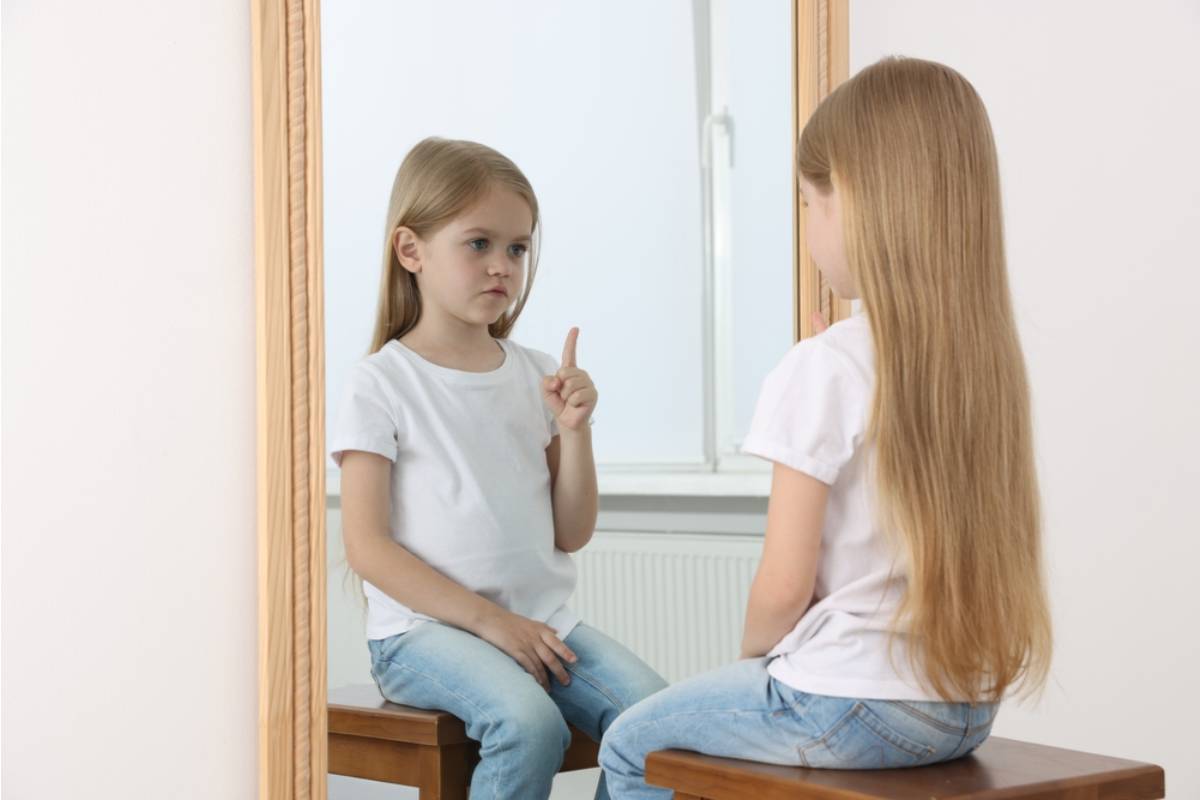
A mother noticed something unusual about her six-year-old daughter whenever the girl became upset. Instead of simply crying wherever she happened to be, the child would make her way toward one of the large mirrors in the house and sit directly in front of it. She had apparently been doing this for several years, making the behavior familiar but no less puzzling to her mother.
The pattern was especially noticeable after the girl had been corrected for something she had done. Once the tears started, she would settle herself in front of the mirror and watch her own reflection as she cried. Sometimes she would even deliberately let herself drool, turning the whole scene into something that looked strangely theatrical.
She Wasn’t Just Looking at Her Reflection
The mother explained that her daughter seemed particularly interested in seeing what happened to her face while she was crying. She would watch the tears, observe her expression, and occasionally make the crying more dramatic. The detail that really caught her mother’s attention was the way she sometimes made herself dribble while staring into the mirror.
It left the mother wondering whether there was something deeper behind the behavior. A child crying after being disciplined was hardly unusual, but deliberately sitting in front of a mirror made the situation feel different. She wasn’t sure whether her daughter was processing her emotions, soothing herself, being dramatic, or simply fascinated by what crying looked like.
Then Other Parents Started Remembering
A person shared his story about having done almost exactly the same thing as a child. He remembered sitting in front of a mirror while crying and eventually concluded that the habit had not exactly predicted some dramatic outcome in adulthood. His lighthearted explanation immediately made the behavior sound much less mysterious.
Other responses from people revealed that the memory was surprisingly common. Several people said they had also watched themselves cry as children, sometimes specifically because their eyes looked different when they were upset. What seemed strange to one parent suddenly looked like a forgotten childhood ritual that many people had apparently carried out in private.
The Eyes Were Sometimes the Main Attraction
One person remembered being fascinated by how bright their eyes became while crying. Another recalled having unusually blue eyes as a child and being amazed at how vivid they appeared when tears filled them. For those children, the mirror may not have been about sadness at all, but about discovering what their face looked like during an unusual physical experience.
Someone else described paying attention to red cheeks, wet eyelashes, and bright eyes. The person joked that it created the perfect image of a tragic little princess dramatically suffering through some enormous injustice. It was funny in hindsight, but it also offered a simple explanation for why a child might keep returning to the mirror.
Some Kids Apparently Want an Audience
The story took an even funnier turn when another parent described a six-year-old who would open a window and sit beside it while crying. According to the parent, the arrangement made sure everyone could appreciate the child’s suffering. It was the emotional equivalent of hanging a giant sign outside that said, “Something terrible has happened here.”
Another response described a child who would pause in the middle of a tantrum to check whether anyone was watching. If the audience wasn’t sufficiently impressed, the child would apparently relocate and continue the performance elsewhere. The stories suggested that children can sometimes combine genuine emotion with a surprisingly strong sense of theatrical presentation.
The Mirror May Have Made the Feelings Feel Real
Not every explanation was about attention or drama. One person suggested that seeing their own tears helped make their emotions feel tangible. Instead of simply experiencing sadness internally, the child could look at the reflection and see physical evidence that the sadness was happening.
Another person compared it to looking at a bruise after getting hurt. A bruise provides visible proof that something happened, while tears can provide visible proof that someone is genuinely upset. For a young child still learning how emotions work, seeing that physical evidence may be surprisingly comforting.
Some People Still Do It as Adults
The mother may have expected the responses to be filled mostly with childhood memories, but several people admitted that they still gravitate toward mirrors while crying. One person said they were in their twenties and had only recently realized they continued doing it. Another person approaching forty admitted to the same habit.
That made the girl’s behavior seem less like an odd childhood quirk and more like something some people naturally do when emotions become intense. Adults simply tend to have more opportunities to hide the habit in bathrooms, bedrooms, or other private spaces. The mirror can quietly become part of the emotional process without anyone else ever knowing.
One Person Found It Soothing
A particularly interesting response came from someone who said looking in the mirror while crying actually helped them calm down. Seeing their own distressed face apparently created a strange mixture of sympathy and validation. At the same time, seeing how dramatic the crying looked could make them realize they were caught in an emotional moment and help them regulate.
That explanation offered a different perspective on the girl’s behavior. Perhaps she wasn’t trying to make herself more upset simply for attention. She could have been watching herself because the reflection gave her something concrete to focus on while she worked through feelings she was still learning to understand.
The Tears Became Something to Study
The girl’s fascination also had a very physical side. Several people remembered watching tears roll down their faces and even trying to catch them with their tongues. One parent said their child seemed to need to see and feel the tears, becoming more upset if someone wiped them away too quickly.
That detail made the mirror seem almost like a tiny science experiment. A child could see the tears forming, watch them travel down the cheeks, notice the changes in the face, and discover what crying actually looked and felt like. To an adult, it might look strange, but to a curious six-year-old, it could simply be another thing about the human body worth investigating.
The Dramatic Crying Was Sometimes Deliberate
There were also stories suggesting that some children exaggerate their crying once they know a mirror is nearby. One person described a child whose genuine upset seemed to become much more dramatic when a reflection entered the picture. The crying could shift from ordinary tears into a full production, complete with exaggerated expressions.
Another parent said they sometimes called the behavior out, only for the child to start laughing. That moment suggested that children can know exactly how ridiculous their own dramatic performance looks while still being genuinely upset. The two things aren’t necessarily opposites.
But One Story Changed the Mood
Most of the responses were playful until one person shared a much more serious childhood experience. That person explained that they had grown up with severe emotional and verbal abuse and had spent much of childhood obsessing over visible signs of pain. They remembered drawing crying faces, tears, injuries, storms, frightened expressions, and other images centered around suffering.
For that person, watching themselves cry in a mirror had eventually taken on a very different meaning. They described it as a way of validating their own pain when the adults around them repeatedly made them question whether their feelings were real. The mirror gave them something undeniable to look at when they otherwise felt alone and unheard.
The Warning Was About Context
The person was careful not to suggest that the little girl in the story was experiencing anything similar. Instead, they pointed out that the same behavior can have completely different meanings depending on the child’s circumstances. For one child, it could be curiosity, self-soothing, or simple dramatic flair, while for another it could potentially be connected to a much more troubling emotional environment.
That distinction became one of the most important parts of the entire discussion. A single unusual behavior rarely tells an entire story about a child. What matters more is the broader pattern, including how the child handles emotions, whether they feel safe expressing them, and whether other concerning behaviors appear alongside the mirror habit.
Some Kids Eventually Grow Out of It
Several people said their children eventually stopped doing it without any special intervention. One person remembered a daughter who could almost cry on cue and seemed destined for a career in acting, only for the behavior to disappear during the elementary school years. Another parent said their child used to make herself cry harder when she saw her reflection but eventually grew out of the habit.
The adults sharing these memories seemed to agree on one thing: childhood can be wonderfully strange. Children experiment with emotions, expressions, reactions, and even their own reflections. What looks bizarre to a parent today can become a funny story about childhood years later.
The Mother Wasn’t the Only One Confused
The original mother was clearly trying to determine whether she should be concerned, but the responses gave her plenty of reasons to step back and observe before assuming the worst. People described children watching themselves cry, checking their faces during tantrums, looking at reflections in windows, and even positioning themselves where an audience could appreciate their suffering. The behavior appeared in enough different forms to make the mirror itself seem less important than the child’s reason for using it.
Still, the serious response added an important layer to the story. It showed why dismissing every unusual behavior as “just being dramatic” isn’t always wise. A child can be playful and theatrical while also needing emotional validation, and parents may learn more by calmly asking what the child is experiencing than by immediately labeling the behavior.
The Mirror May Simply Be Her Way of Understanding Herself
For the six-year-old at the center of the story, the mirror may simply be a fascinating window into an emotion she hasn’t completely figured out yet. She can feel sadness inside her body, but the reflection lets her see that sadness on her own face. The tears, red cheeks, wet eyelashes, and dramatic expressions become visible clues about something that otherwise exists only as a feeling.
That possibility makes the habit seem far less alarming. Rather than being a mysterious warning sign, it could simply be part of a child’s messy process of learning what emotions look like and how they feel. And if the family’s mirror has become her preferred classroom, she may eventually graduate from it just like many of the other children whose parents remembered doing exactly the same thing.
Then There Was the Funniest Possibility
After all the explanations, one possibility remained wonderfully simple: she might just think she looks interesting when she cries. Children can be fascinated by almost anything unusual about themselves, from crossed eyes to funny faces to the way their voices sound when they are upset. Perhaps this six-year-old discovered that crying dramatically changes her appearance and decided it deserved a front-row seat.
That would also explain the occasional drooling, the prolonged staring, and the apparent willingness to keep observing herself. She may not be staging a psychological mystery at all. She might simply be a six-year-old who discovered her reflection during a meltdown and thought, in her own way, “Wow, so that’s what I look like.”
What Started as a Strange Habit Became a Childhood Mystery
The mother began with a simple concern about why her daughter repeatedly sat in front of a mirror while crying. By the end, the story had uncovered a whole collection of childhood memories involving mirrors, tears, dramatic tantrums, bright eyes, wet eyelashes, and children apparently determined to witness their own suffering. Some people remembered it as pure curiosity, while others connected it to emotional regulation or a need for validation.
The biggest twist was that the strange behavior wasn’t necessarily strange at all. Dozens of people recognized some version of themselves or their children in the little girl’s habit, while one serious story reminded everyone that context matters. For now, the mirror may simply be the place where a six-year-old watches herself learn what it means to feel something deeply, dramatically, and very visibly.