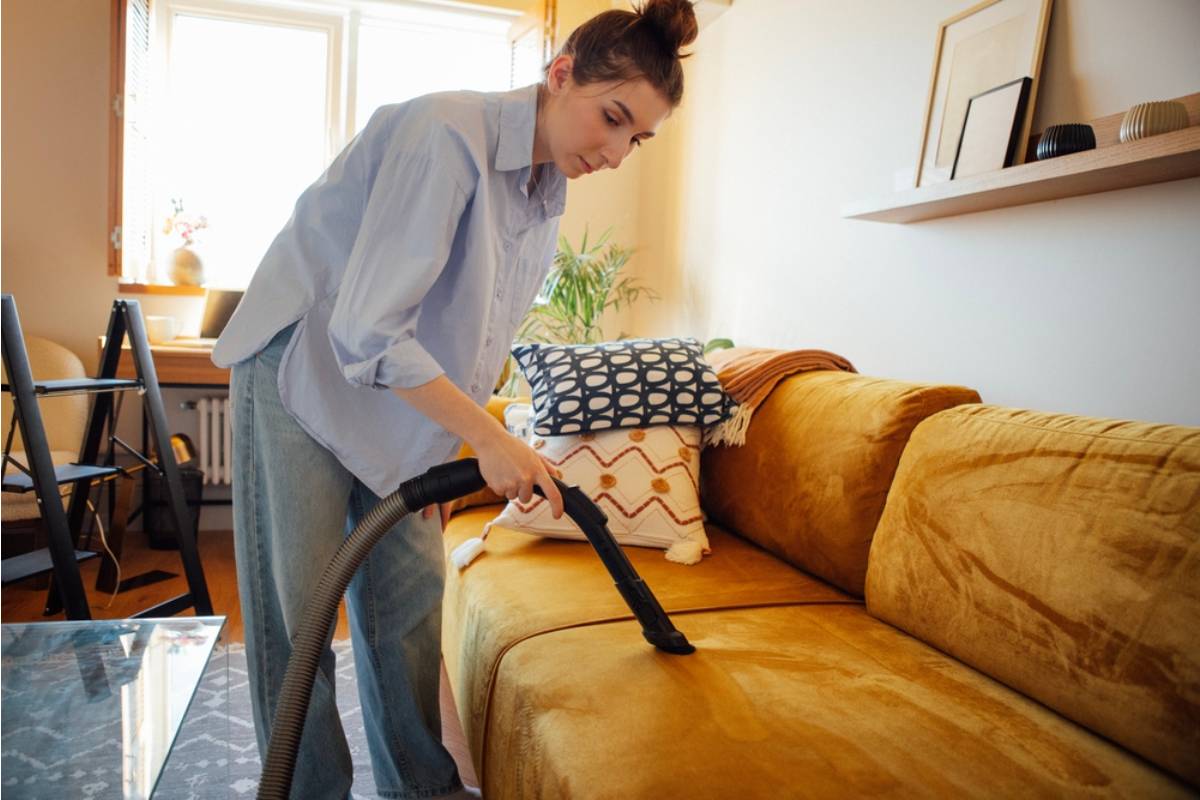
A Mom Says Her Husband Asked If She Ever Washes the Floors After She Vacuumed Twice That Day, and She Was Ready to Send Him Into Orbit

A person shared her story after her husband asked whether she ever washed the floors, and the timing alone nearly sent her over the edge. She explained that they have a 16-month-old child, which means their home can go from tidy to chaotic in a matter of minutes. Her husband is someone she loves deeply, but she admitted that questions like this first thing in the morning make her want to launch him into orbit.
The particularly frustrating part was that she was not ignoring the house. She vacuumed twice a day and usually mopped somewhere between one and four times a week, depending on what life with a toddler looked like. The floors happened to be a mess that particular morning because the previous day had been especially chaotic, but she felt like her husband had chosen to notice the one moment things were not spotless.
Their Toddler Could Undo Hours of Cleaning in Minutes
The mother explained that having a toddler completely changes how chores work. A room can be cleaned, only for toys, snacks, dishes, and random toddler discoveries to appear all over it again almost immediately. What looks like neglect from across the room can actually be the aftermath of someone spending much of the day keeping a very small human safe and entertained.
She said she simply does not want to put extra pressure on herself to keep the house in perfect condition. She also admitted that she is not naturally the kind of person who wants to run a spotless household every waking hour. For her, there is a difference between having a reasonably clean home and feeling like she has failed because the floor does not look perfect at every moment.
The Real Problem Was Not Actually the Mop
As the discussion grew, the issue became less about mopping and more about who was responsible for noticing what needed to be done. A response from a person immediately asked a question that cut straight to the heart of it: how often was the husband washing the floors? That seemed to capture the frustration behind the original post better than any cleaning schedule could.
Another person described having a husband who regularly asked when something had last been dusted, washed, or cleaned. The problem was not necessarily that the chore was being forgotten, but that the person asking often seemed to expect someone else to handle it. Suddenly, the floor was no longer just a dirty surface. It had become part of a much larger argument about shared responsibility.
The Word “We” Was Driving Other Parents Crazy Too
Several people pointed out another irritating pattern that comes up in households. A husband might say, “When was the last time we cleaned this?” even when the wife is the one who has been doing it repeatedly. One person joked that her answer would simply be, “I can tell you the last time I did. Can you?”
That wording apparently struck a nerve with a lot of parents. One person explained that everything she does becomes “we,” while everything her husband does becomes “I.” She could help clean the garage all weekend and still hear him tell someone that he had cleaned the garage himself, which made her worry about how invisible her own work sounded.
Some People Decided to Return the Favor
A few responses suggested fighting the “we” problem with a little linguistic revenge. One person said she started using “we” right back at her husband whenever something needed to be done. Suddenly, “we need to clean the kitchen” meant he could discover that the mysterious “we” included him after all.
Other people had their own sarcastic responses ready. One popular approach was simply suggesting that the husband feel free to tidy things himself. Another involved pretending the mop might need instructions on how to find his hands. The humor was clearly coming from a familiar place, because many parents seemed to recognize the exact kind of conversation being described.
One Household Had a Surprisingly Strong Cleaning Schedule
The original mother may have underestimated just how much cleaning she was already doing. She said she vacuumed the house twice a day and mopped one to four times per week, which made other parents immediately point out that this was already a substantial amount of work.
Some people said they barely mop at all because toddlers spend so much time on the floor anyway. Others said they sweep constantly and spot-clean but only bring out the full mop occasionally. Compared with those routines, the mother’s cleaning schedule suddenly looked less like a failure and more like a full-time side quest.
Then the Robot Vacuum Entered the Chat
A response from a person suggested the most modern solution possible: buy a robot vacuum. The suggestion was partly practical and partly hilarious, especially because someone jokingly described the device as a potential spy. The original mother immediately liked the concept and reacted enthusiastically to the idea of having a robot handle the floors.
That sent the conversation in an entirely new direction. Parents started sharing stories about their robot vacuums, the names they had given them, and the strange relationships their children had developed with the machines. What began with a complaint about floor maintenance had suddenly turned into a discussion about household robots with personalities.
The Robots Were Apparently Terrifying to Toddlers
One person explained that her baby was terrified of the robot vacuum. Another said her toddler had accidentally turned theirs on and immediately started crying for someone to pick him up, despite having been the one to press the button.
The stories only got funnier from there. One parent compared the machine to a giant scorpion, while another joked that a robot that gets lost inside its own house would make a terrible spy. It was a bizarre but welcome detour from the original frustration, and it gave the conversation a much lighter mood.
Some Parents Had Given Their Floor Robots Actual Names
Apparently, robot vacuums are not just appliances in some households. People proudly shared names like Ralph, Rosie, Bart, Dust Vader, Clanker, and Rocky. One family had even nicknamed theirs after something much less flattering, proving that household chores can apparently come with full character development.
The naming tradition fit perfectly with the chaos of life with children. These little machines were quietly wandering around the house while parents chased toddlers, cleaned messes, and tried to stay ahead of the next disaster. At least the robot could handle one job without asking whether anyone had washed the floors lately.
The Toddler Was Creating a New Mess Faster Than It Could Be Cleaned
A response from a person summed up the problem perfectly by pointing out how quickly a toddler can dismantle an entire house. This was not a situation where the floor stayed dirty because nobody cared. It was a moving target that changed throughout the day.
Another parent explained that she often avoided spending too much time cleaning because leaving the house was easier. Parks, beaches, playgrounds, cafes, and other places allowed the child to make a mess somewhere that did not require her to immediately clean it up. In a strange way, going outside had become part parenting strategy and part cleaning strategy.
One Mom Explained the Nightly Explosion
Another person described what happened in her own house after daycare. In just a couple of hours, food could cover the table and floor, every toy could be dumped out, snacks could appear in random places, and bottles could somehow end up underneath the couch.
Her husband had recently taken some time off and finally saw the entire routine for himself. He got to witness firsthand why she needed time to decompress once the toddler was asleep instead of immediately launching into another round of cleaning. Sometimes seeing the chaos happen in real time seemed to explain more than any argument could.
Even Mopping Became a Debate Among Parents
The conversation eventually turned to how often floors actually need to be mopped. Some parents said once a month was plenty, while others admitted they only did it every few months unless something truly terrible happened.
One parent pointed out that having a toddler constantly crawling or playing on the floor made frequent use of cleaning chemicals complicated too. Others preferred frequent vacuuming and spot cleaning because dragging out a bucket and mop felt like an enormous production. There was no universal schedule, which only reinforced the original mother’s point that household routines are not one-size-fits-all.
The Mother Was Already Doing More Than She Thought
As more responses arrived, it became clear that the mother had probably been judging herself against an impossible standard. She was cleaning frequently while also caring for a 16-month-old, yet one question from her husband had made her feel like she was falling short.
A response from a person reminded her that she was not a maid and that caring for a toddler was already a huge responsibility. Another person said that the house could be imperfect and she could still be doing a great job. Those responses seemed to hit much harder than the jokes about mops and robot vacuums.
One Comment Made Her Tear Up
The turning point was not actually about cleaning at all. A response from a person told the mother that she was a caretaker first and that she did not have to treat homemaking like a job she was constantly clocking into. The message struck such a chord that the mother admitted it made her tear up.
Another response reinforced the same idea by saying that most people would struggle to keep a toddler occupied all day and maintain a spotless house at the same time. The mother was doing a lot, even if the floor looked messy that morning. For a moment, the conversation stopped being about chores and became about giving an exhausted parent some credit.
The Husband Might Eventually Learn What the Day Actually Looks Like
One person suggested a practical experiment that could make the invisible work much more visible. She recommended that the mother spend an entire evening or day away from the house while her husband handled the toddler alone. The hope was that experiencing the routine firsthand might change how he understood the workload.
The idea carried an interesting twist because the mother would not need to make a speech or create a spreadsheet of chores. Her husband could simply experience the constant interruptions, messes, cleanup, and childcare himself. Sometimes the fastest way to understand why a floor is dirty is to be the person trying to keep a toddler from immediately making it dirty again.
The Floor Was Never Really the Main Story
By the end of the conversation, the dirty floor almost felt like a distraction from the real issue. The mother was not refusing to clean, and there was plenty of evidence that she already cleaned more than many parents said they did. What hurt was feeling as though her ongoing effort was invisible while the occasional mess was immediately noticeable.
A response from a person had effectively captured the deeper point: a household belongs to everyone who lives in it. Whether the solution is more shared chores, fewer expectations, a robot vacuum, or simply accepting a little chaos, the goal is not a perfect floor. The goal is making sure one parent does not feel responsible for proving every morning that they have been working hard enough.