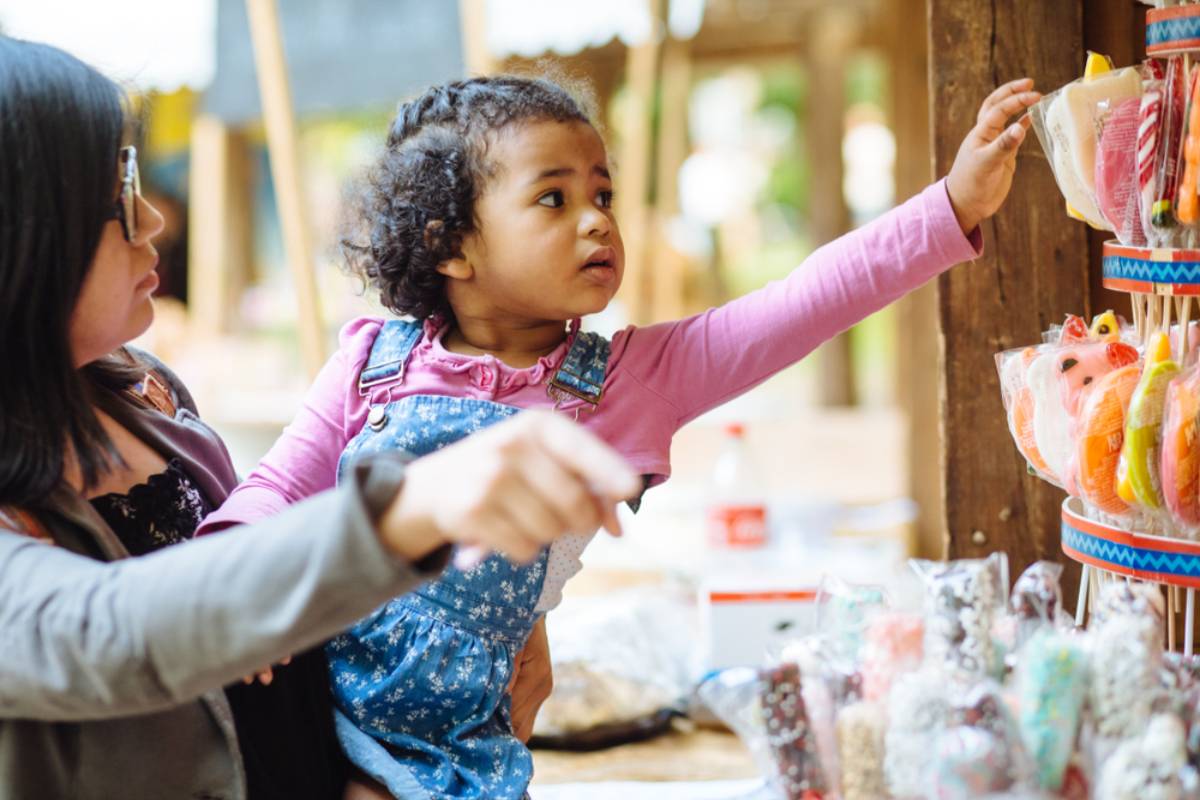
A Mom Says Her Toddler Keeps Melting Down Over Toys and Candy at the Store, Until She Realizes the Displays May Not Be the Biggest Problem

A mom shared her story about how difficult ordinary shopping trips had become with her toddler. She said she could hardly walk through a store without her child spotting something tempting and immediately deciding it needed to come home. What should have been a quick trip for household essentials could suddenly turn into a full negotiation.
The problem became especially frustrating because many of the tempting items seemed to be placed exactly where a small child could see them. Toys appeared in busy aisles, while candy and other treats sat within easy reach near the checkout. The mom began wondering whether stores were deliberately making life harder for parents.
The Ball in the Bread Aisle Changed Everything
One shopping trip apparently pushed the frustration to another level. The toddler spotted an inexpensive-looking ball display sitting right in the middle of the bread aisle, where there was no escaping it. Within moments, the child was determined to have the ball and was not particularly interested in hearing that the family had come to buy bread.
The situation quickly became a battle between groceries and toddler emotions. The child ended up on the floor yelling for the ball while the mom tried to keep the shopping trip moving. Suddenly, finding the right loaf of bread felt like the least complicated part of the entire outing.
Checkout Was Its Own Kind of Challenge
The checkout area created a different problem because it was filled with small items that were easy for little hands to reach. The mom described having to pull candy away from her toddler while also trying to scan and pay for everything. There was barely enough time to put groceries on the counter, let alone manage another negotiation.
She couldn’t help noticing that many of these treats were positioned unusually low. From an adult’s perspective, the placement looked like ordinary merchandising, but from a toddler’s perspective, it was practically an invitation. The child could see the colorful packages without even needing to look up.
A Person Shared a Surprisingly Simple Strategy
Then a person shared a very different approach that had worked with their own young children. Instead of avoiding toy sections, the parent deliberately took the children there during shopping trips. The idea was to make seeing toys a normal part of going to the store rather than treating every toy display like a forbidden treasure.
The children were allowed to look and talk about what they liked without automatically getting anything. The parent might agree that a toy was cute or point out that the child already had something similar at home. Over time, the excitement surrounding every new toy appeared to fade.
Looking Without Buying Became the New Routine
The strategy became almost like a small ritual. The children could browse, admire things, and then continue shopping without expecting a purchase. If they found something they really loved, the parent could take a picture of it and save the idea for a birthday or holiday list.
That simple change seemed to remove much of the mystery. Instead of seeing a toy and immediately thinking, “I must have that,” the children learned that seeing something they liked did not automatically mean taking it home. Another person said the same approach had worked for their children too.
Pictures Became More Powerful Than Tantrums
Another person explained that taking pictures of toys for Santa had been especially helpful. A child could point out exactly what they wanted, and the parent could acknowledge the request without promising an immediate purchase. The picture became a way to remember the toy without turning the shopping trip into a showdown.
There was also an unexpected benefit for the parent. The photo served as a reminder later, when the child might have completely forgotten about the toy they had desperately wanted. What felt like the most important object in the store could suddenly become yesterday’s news.
Some Parents Let Their Kids Hold the Toys
Other parents had found an even more relaxed version of the same idea. One person said their child could sometimes hold a toy or stuffed animal while they continued shopping. The important part was that everyone understood the toy was going back before they reached the checkout.
Another parent described letting a child gently play with toys that were not packaged, such as bouncing a ball a few times or hugging a stuffed animal. Eventually, the routine became simple: enjoy the toy, say goodbye, and move along. The child apparently became comfortable with the idea that fun did not always have to end with a purchase.
One Child Discovered the Better Target
The story even took an amusing turn when a parent revealed that their child had figured out where the real opportunities were. Toys might be exciting, but fruit and fruit pouches were apparently much more likely to receive an enthusiastic yes. The child began heading straight toward snacks that were actually allowed instead.
That little detail showed how quickly children can learn the rules of a shopping trip. Once they understand that certain things are off-limits while others are fair game, they may stop wasting energy fighting every single boundary. In this case, the toddler seemed to have decided that fruit was the safer investment.
Another Family Treated the Toy Aisle Like a Museum
A person remembered doing something similar as a child with their sibling. Their mother had apparently established the rules before they even entered the store, but she still allowed them to visit the toy section. Looking was part of the experience, while buying something was not an automatic part of it.
The children eventually treated the toy department almost like a place to browse rather than a place where they were guaranteed a reward. They could see the newest toys, talk about what looked interesting, and then leave empty-handed. The routine removed much of the drama before it had a chance to start.
Some Parents Took the Marketing Lesson Further
Another parent chose to explain the situation from a completely different angle. Instead of simply telling their child that they could not have something, they explained that stores and advertisers were trying to convince people to spend money. The child was encouraged to recognize the tricks rather than simply feel defeated by them.
The approach turned an annoying shopping trip into a small lesson about advertising and consumer habits. Bright packaging, familiar characters, and carefully positioned products suddenly had a purpose the child could understand. Instead of thinking the product was calling their name, the child could learn that someone had deliberately designed it to get attention.
But Another Person Said There Was a Bigger Lesson
Not everyone thought the displays themselves were the main problem. A person responded that children naturally ask for things they see, and getting upset after hearing “no” can be part of growing up. The bigger challenge, in their view, was helping children understand that wanting something does not mean they are entitled to have it.
That perspective shifted the conversation away from store layouts and toward boundaries. A child may complain, cry, or even have a tantrum, but eventually they need to learn that the answer can remain no. Avoiding every possible temptation might make shopping easier temporarily, but it does not teach a child what to do when temptation eventually appears.
Learning to Hear No May Be the Real Parenting Challenge
Another person argued that parents cannot realistically rearrange every grocery store, department store, or checkout lane around their child’s preferences. Eventually, children will see something they want and have to deal with being disappointed. Learning how to handle that disappointment can become an important part of growing up.
That does not mean a parent has to ignore how frustrating aggressive marketing can be. The original mom’s complaint still resonated because deliberately placing tempting products at children’s eye level can make an already difficult shopping trip even harder. But the responses suggested that parents may have more control over the situation than they initially realize.
The Most Unexpected Twist Was Simply Exposure
The biggest twist in the discussion was that some parents had stopped treating toy displays as something to escape. By intentionally letting their children browse without buying, they had made the toys less exciting. What once felt like a rare opportunity became another ordinary part of going to the store.
In the end, the battle may not have been about the ball, the candy, or the checkout display at all. It was about whether seeing something automatically meant getting it. For several families, the answer became clear through repetition: sometimes you can look, sometimes you can take a picture, sometimes you can put the item on a future wish list, and sometimes you simply walk away.
The Store Was Not Going to Stop Selling Toys
The original mom’s frustration made sense because the displays were clearly designed to catch attention. Parents shopping with toddlers cannot always take the perfect route through a store or prevent every colorful package from appearing in their child’s line of sight. Even adults can find themselves tempted by strategically placed snacks and products.
But the responses offered a different way of looking at the problem. Instead of trying to win every battle by avoiding the temptation, some parents were teaching their children how to encounter it without falling apart. And perhaps that was the lesson hiding behind all those toy displays: the hardest part of shopping with a toddler may not be keeping them from seeing what they want, but teaching them that wanting something is not the same as getting it.