Dad Says His Toddler’s Friend Drew on the Walls, Threw Toys Into the Pool, and Told His Wife to “Shut Up” During One Very Chaotic Playdate

A person shared his story after what was supposed to be a simple playdate at his home turned into an afternoon of frustration. His 2.5-year-old son is generally well behaved, with the occasional tantrum but a strong understanding of how to treat people and belongings. The family had worked hard to teach him that other people’s homes, things, and rules deserved the same respect as his own.
At first, there was nothing unusual about having one of his friends over to play. The child’s mother was there too, so the parents assumed they would have plenty of adult supervision during the visit. Instead, things quickly went in a direction nobody in the household expected.
The First Problem Appeared on the Walls
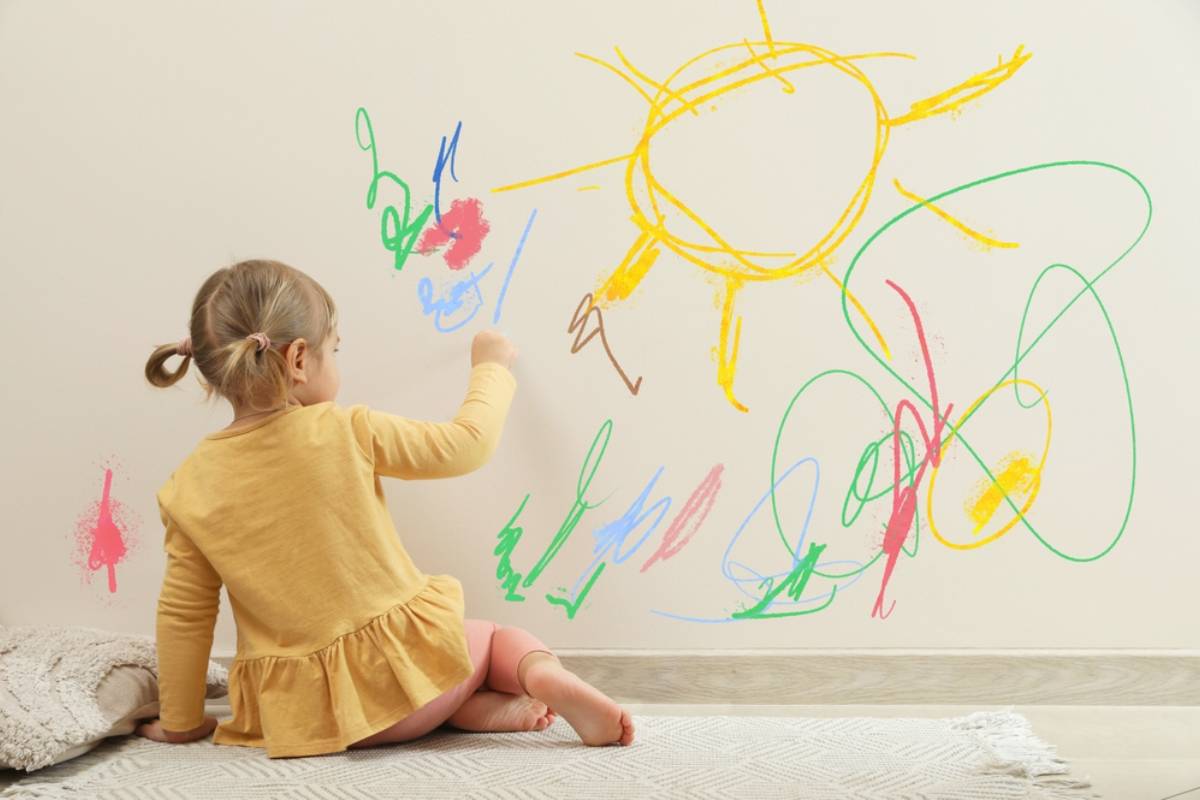
The trouble began when the visiting child apparently decided the walls would make a great place to draw. The child’s mother did not immediately stop him, so the homeowner’s wife stepped in and told the child that drawing on the walls was not allowed. Rather than accepting the correction, the child reacted strongly and stomped outside.
That moment already had the homeowner wondering what kind of boundaries the child was used to at home. His wife had not been harsh or unreasonable, yet the response made it seem as though being told no was a completely unfamiliar experience. What made the situation even more awkward was the other mother’s casual attitude toward what had just happened.
Then the Toys Went Into the Pool
Outside, the situation became even more difficult to ignore. The visiting child began throwing the homeowner’s son’s toys into the pool, including some items that were not meant to get wet and others that were valuable. Instead of being shocked or quickly intervening, the child’s mother appeared to treat the incident as little more than something that happened during a normal afternoon with kids.
For the homeowner and his wife, that was a very different matter. These were not random objects sitting outside, but their child’s belongings that had been deliberately tossed into the water. Watching it happen while the other parent remained largely unconcerned made the situation feel less like a childish mistake and more like a complete lack of boundaries.
The Family Had One Simple Rule About Food
Then came lunchtime, which introduced another point of conflict. The family has a strict rule that food stays at the table and not on the couch, partly because the couch is expensive and partly because they have taught their own child to eat without sitting in front of the television. They understand that different households have different expectations, but they believe guests should follow the rules of the home they are visiting.
The homeowner’s wife prepared lunch and expected the children to eat where they were supposed to. The visiting child, however, apparently had different plans and climbed onto the couch with his food. What had started as a relatively ordinary house rule was about to become the biggest confrontation of the afternoon.
Being Told to Move Only Made Things Worse
The wife politely asked the child to get off the couch while he was eating. The child simply told her no, and once again the mother did not step in to reinforce the request. The wife then became more direct and explained that the child needed to move because food was not allowed on the couch.
Instead of backing down, the child crossed another line by telling the woman to shut up. That was the moment the situation changed from an annoying playdate into something much more serious for the adults in the room. The homeowner was especially disturbed that the child’s mother still did not appear to think her son’s behavior required immediate correction.
The Television Became the Next Battle
With the child refusing to move, the homeowner’s wife finally turned off the television. She told him that he could either move away from the couch or be moved so the house rule could be enforced. The visiting child responded with another tantrum, this time because a show he had been watching was suddenly gone.
The reaction might have been predictable for a toddler, but it added another layer to an already exhausting situation. The adults had now gone from dealing with damaged property to disrespectful behavior and a battle over a household rule. Meanwhile, the homeowner’s own child was quietly watching everything unfold.
The Biggest Surprise Was the Other Parent
Throughout the afternoon, the homeowner noticed that the visiting child’s behavior was not the only thing bothering him. The bigger problem was that the child’s mother seemed to have a remarkably relaxed response to nearly every incident. She did not appear especially concerned when the child drew on the walls, threw toys into the pool, ignored instructions, or spoke disrespectfully to another adult.
That left the homeowner and his wife in an uncomfortable position. They were suddenly expected to enforce their own rules while another parent sat nearby and offered very little support. It raised a question they had not expected to face during a routine playdate: how much responsibility should one family take for someone else’s child inside their home?
Their Son Was Watching the Whole Thing
One response from a person pointed out that the situation was also an important moment for the homeowner’s son. The child had the chance to see firsthand that another child could make choices his family considered unacceptable. Instead of simply getting angry about the behavior, the adults could use the experience to explain why those choices were wrong.
The homeowner said they had already done exactly that. They praised their son for not copying his friend’s behavior and treated the afternoon as a teachable moment. In the middle of all the chaos, there was at least one small victory because their own child had seen the difference between being respectful and simply getting away with whatever he wanted.
Some People Recommended Ending the Playdates
Several responses took the situation in a very straightforward direction. They argued that the child and his mother should simply not be invited back into the home after what had happened. The reasoning was less about punishing the child and more about protecting the household from repeated damage and stress.
One response from a person suggested that future meetings could happen somewhere neutral, such as a park, where there would be less opportunity for the child’s behavior to damage someone’s belongings. Another person noted that with children this young, some parents prefer to arrange playdates only with families whose parenting styles they already know. The common theme was that nobody should feel obligated to repeatedly expose their home to the same problems.
Others Said House Rules Should Be Enforced Immediately
Another response from a person took a more hands-on approach to the problem. Their view was that children can understand house rules, even when those rules are different from what they follow at home. If a child makes a mess or breaks a rule, the child can be expected to help clean it up or the playdate can end.
That advice also came with an important reminder about fairness. Parents should be willing to let other adults correct their own children when those children are clearly behaving badly in someone else’s home. According to this perspective, respect between families works both ways, and nobody should be expected to tolerate destructive behavior simply because the person causing it is young.
The “Shut Up” Moment Crossed a Line
For many people responding to the story, the biggest issue was not actually the couch or even the toys in the pool. It was the fact that the visiting child told an adult to shut up after being given a reasonable instruction. Several people said that would have been the moment they immediately stepped in with consequences if the child were their own.
One response from a person essentially argued that a child speaking that way to any adult would have been enough to stop everything. The fact that it happened in someone else’s home made it even more serious in their eyes. A toddler can certainly lose control, but the adults around that toddler still have a responsibility to teach what happens after a boundary is crossed.
The Homeowner Was Not Looking for a Family Feud
Interestingly, not every response encouraged a dramatic confrontation. One person pointed out that deciding someone is no longer welcome in your home does not require an explosive argument or a long speech. A family can quietly decide that certain behavior is not acceptable and simply stop offering its home as the meeting place.
That distinction seemed important because the homeowner was not asking how to start a feud with another family. He was trying to figure out how to protect his belongings, maintain his household rules, and keep future playdates from becoming disasters. There is a big difference between setting a boundary and turning one bad afternoon into a lasting family war.
The Two Parenting Styles Could Hardly Have Been More Different
The story also highlighted just how differently two families can approach the same behavior. The homeowner’s family has clear expectations around property, food, television, and how children speak to adults. The visiting family appeared much more relaxed, which may have been perfectly normal in their own home but created problems when those expectations collided somewhere else.
One response from a person made a broader point that children often learn from what they see around them. When a behavior repeatedly receives little reaction from adults, a child may begin to assume there is nothing wrong with it. From the homeowner’s perspective, that made the lack of parental intervention almost as concerning as the child’s actions themselves.
Someone Offered a Different Perspective on Toddlers
Not every response agreed that the visiting child should simply be labeled as badly behaved. One person pointed out that a 2.5-year-old is still very young and may not have the same understanding of social expectations that adults assume. In their view, the two children may simply have very different temperaments, with one naturally being more careful and the other being more chaotic.
That perspective does not necessarily excuse what happened, but it does add some nuance to the story. Toddlers are still learning impulse control, boundaries, and how their actions affect other people. The bigger question may not be whether the child was naturally messy or impulsive, but whether the adults responsible for him were willing to step in and help him learn.
The Playdate May Have Revealed More Than Anyone Expected
By the end of the afternoon, the homeowner had learned something about more than just another child’s behavior. He had seen how quickly different household expectations could collide, especially when one parent expected their home to be treated a certain way and the other seemed comfortable letting the child make his own rules. What started with crayons on a wall eventually included soaked toys, couch rules, a television meltdown, and an insult directed at an adult.
The biggest twist, however, may have been how little of the conflict came from the children alone. The homeowner could have handled a toddler making mistakes much more easily if the other parent had been willing to step in, apologize, and help correct the behavior. Instead, the family was left wondering whether the easiest solution was also the simplest one: keep the friendship between the children, but take future playdates somewhere far away from the living room.