A Teacher Says a Student Asked to Borrow a Coat From the Lost and Found Every Morning and Return It Every Afternoon Before the Bus Came

A quiet routine inside a small-town middle school became the subject of conversation after a teacher noticed something unusual happening near the front office every morning. A student would walk in before classes started, carefully choose the same worn winter coat from a box of forgotten items, and return it before leaving for the afternoon bus.
At first, nobody thought much of it, but the repeated pattern eventually raised questions. What the teacher discovered behind the habit revealed a situation far more complicated than anyone expected.
The Morning Routine That Caught a Teacher’s Attention
Mrs. Karen Whitmore had worked as a seventh-grade teacher at Pine Ridge Middle School for nearly fifteen years, and she knew most students by their daily habits. She noticed when someone started eating lunch alone, when a normally energetic student became quiet, or when a child suddenly stopped participating in class. That was why she began noticing Marcus Hill walking into the front office every morning before the first bell.
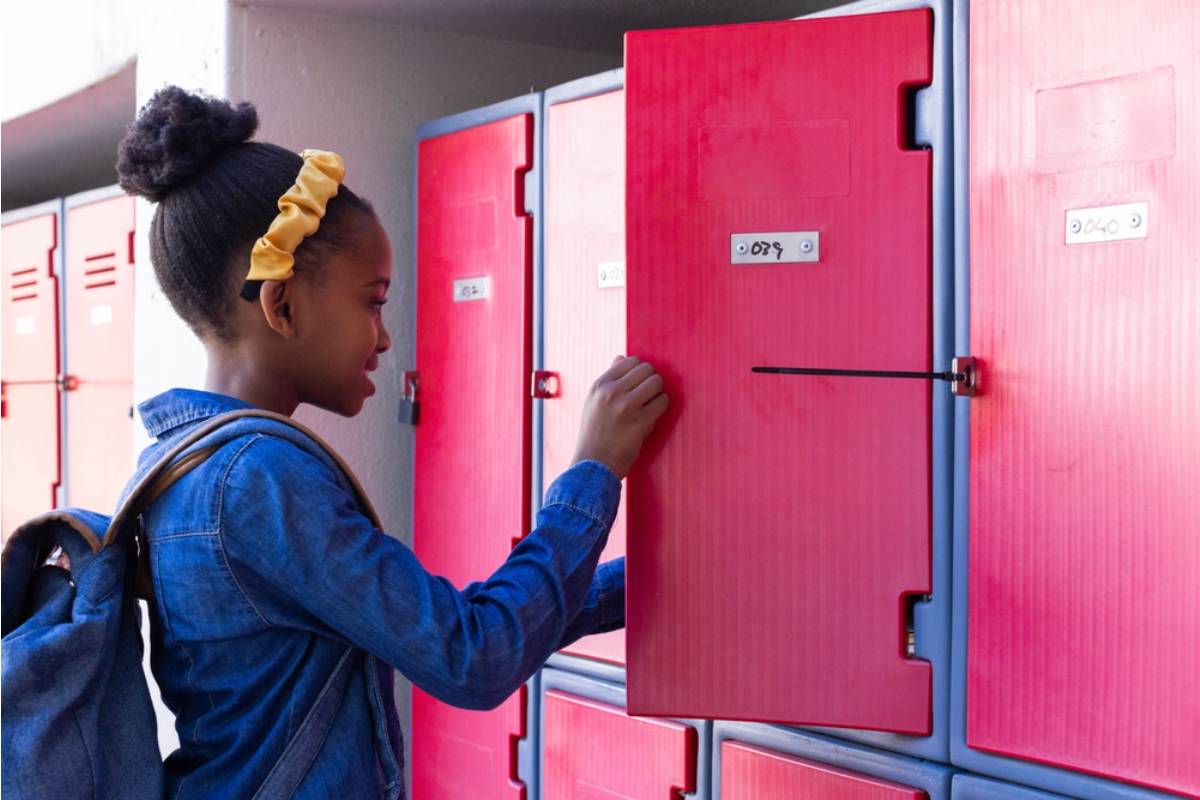
Marcus was not a troublemaker or a student who usually needed attention. He was polite, finished his assignments, and often helped classmates organize their supplies. The unusual part was that he always stopped at the lost and found cabinet near the office before heading to class.
At first, Mrs. Whitmore assumed he was searching for something he had misplaced. After several weeks, she realized Marcus was not looking for his own missing item. He was borrowing the same old navy-blue coat hanging on the side of the cabinet.
The Strange Request Made Before First Period
One morning, Mrs. Whitmore happened to be walking past the office when she heard Marcus speaking with the receptionist, Linda. His voice was quiet as he asked if he could take the coat again for the day. Linda smiled and handed it to him without hesitation, but Mrs. Whitmore noticed the careful way Marcus folded the coat over his arm.
After Marcus left, Mrs. Whitmore asked Linda about it. The receptionist explained that Marcus had asked permission weeks earlier and promised to return the coat every afternoon. She said he had never forgotten once.
Mrs. Whitmore found the arrangement unusual because Marcus was wearing a thin sweatshirt underneath his backpack straps, even on colder mornings. She wondered why he needed a coat only during school hours and why he never took it home.
The Question That Changed Everything
Later that week, Mrs. Whitmore waited until Marcus stayed behind after class to organize his notebook. She approached him gently and asked about the coat. She made sure her tone sounded curious rather than suspicious because she did not want him to feel embarrassed.
Marcus looked down at the floor and held his notebook tightly against his chest. For a moment, he seemed like he might avoid answering, but then he quietly admitted that his family only had one warm coat at home.
His mother used that coat when she went to work early in the morning, and his younger sister needed it when she walked to the elementary school nearby. Marcus said he borrowed the lost and found coat because he did not want to make his family feel bad about not having enough winter clothing.
The Hidden Struggle Behind a Simple Coat
Mrs. Whitmore was surprised because Marcus had never mentioned any problems at home. He always arrived prepared, smiled during conversations, and acted like everything was normal. She realized that many students carried challenges that teachers might never see.
Marcus explained that he had found the coat in the lost and found after someone donated it to the school. It had been there for months, and nobody had claimed it. He asked the office staff if he could use it during the school day and promised to return it because he knew other students might need forgotten items too.
He was not trying to take advantage of the system. In his mind, he was simply borrowing something that was sitting unused.
The Teacher Notices More Than the Clothing
After that conversation, Mrs. Whitmore started paying closer attention to Marcus’s situation. She noticed small details she had previously overlooked. His backpack was carefully repaired with old stitching, his shoes showed signs of heavy use, and he often avoided conversations about weekend activities.
One day during a classroom discussion about family traditions, students talked about vacations, holiday trips, and activities they enjoyed. Marcus stayed quiet and focused on his paper. Mrs. Whitmore recognized that silence was not always a sign of disinterest.
She decided she needed to help without making Marcus feel singled out.
A Private Meeting With the School Counselor
Mrs. Whitmore contacted the school counselor, Daniel Reyes, and shared what she had learned. She was careful not to describe Marcus in a way that made him seem helpless. She explained that he was responsible, thoughtful, and simply facing a situation where he needed support.
Mr. Reyes checked school records and discovered that Marcus’s family had recently experienced financial difficulties after his father moved away. His mother was working extra hours, but keeping up with household expenses had become challenging.
The counselor told Mrs. Whitmore that the school had resources available, including clothing assistance and family support programs. The challenge was finding a way to offer help without making Marcus feel ashamed.
The Conversation Marcus Never Expected
A few days later, Mr. Reyes invited Marcus to his office for what seemed like a normal student check-in. Marcus looked nervous because he thought he might be in trouble for borrowing the coat.
Instead, the counselor explained that the school wanted to make sure he had everything he needed to succeed. He told Marcus that asking for help was not a weakness and that many families experience difficult periods.
Marcus admitted that he was afraid people would treat him differently if they knew about his situation. He said he liked school because it was one place where he felt like he could simply be a student.
The Donation Box That Became a Community Effort
After getting permission from the principal, the school quietly organized a winter clothing collection. They did not announce it as being connected to Marcus. Instead, they presented it as a general effort to make sure students had access to warm clothing during the colder months.
Parents, teachers, and community members donated jackets, sweaters, gloves, and backpacks. Many people were surprised to learn how many students needed assistance but never asked for it.
The lost and found cabinet that once held forgotten items became a place where students could find things they genuinely needed.
The Day Marcus Returned the Coat for the Last Time
Several weeks later, Marcus walked into the office carrying the navy-blue coat. He placed it carefully back inside the cabinet and thanked Linda for letting him borrow it.
Linda noticed he was wearing a new jacket from the school donation program. Marcus smiled and said he wanted to make sure the old coat was available for someone else.
Mrs. Whitmore watched from the hallway and realized the small routine that had caught her attention had created a much larger change. A simple act of borrowing had led the school to recognize a need that had been invisible.
The Student Who Inspired Other Students
After the story quietly spread among staff members, teachers began noticing more students asking about available resources. Some students donated items they no longer used, while others became more understanding when classmates needed support.
Marcus never wanted recognition, but his actions showed other students that accepting help could be part of being responsible. His choice to return the coat every day demonstrated respect and consideration for others.
Mrs. Whitmore later told colleagues that Marcus had taught the school an important lesson about dignity. Sometimes the students who need the most help are the ones trying hardest not to ask for it.
The Unexpected Note Left in the Office
Near the end of the school year, Linda found a handwritten note tucked inside the pocket of the old coat. Marcus had written that the jacket had helped him get through a difficult time and that he hoped another student would feel the same comfort.
He thanked whoever had originally donated it, even though he never knew their name. The note stayed inside the office for several weeks because staff members wanted to remember the impact of a simple kindness.
The coat was eventually donated again, but the lesson behind it remained.
The Teacher’s Reflection After the School Year Ended
When the school year finished, Mrs. Whitmore thought about how easily she could have ignored the pattern she noticed. She could have assumed Marcus was just using a forgotten coat or simply accepted the routine without asking questions.
Instead, she learned that paying attention to small details can reveal important stories. Students do not always announce when they are struggling, and sometimes they hide difficulties behind good grades and polite behavior.
For her, Marcus’s experience became a reminder that teachers often see only a small part of what students carry with them each day.
The Last Conversation Before Summer Break
On the final day of classes, Marcus stopped by Mrs. Whitmore’s classroom before leaving. He thanked her for helping him and said he was glad she asked about the coat instead of ignoring it.
Mrs. Whitmore told him she admired how he handled the situation. She explained that returning the coat every afternoon showed honesty and kindness, even when he was the person who needed help.
Marcus left the classroom smiling, knowing that the school saw him for more than the challenge he had faced.
The Memory That Stayed With Everyone
Years later, teachers at Pine Ridge Middle School still remembered the student who borrowed a coat from the office and returned it every afternoon. The story was not remembered because of the coat itself, but because it showed how a small observation could uncover a much bigger human experience.
The incident changed how the school approached student support. Staff members became more aware of quiet signs that a student might need assistance.
What began as a simple daily habit became a reminder that compassion often starts with noticing something others overlook.