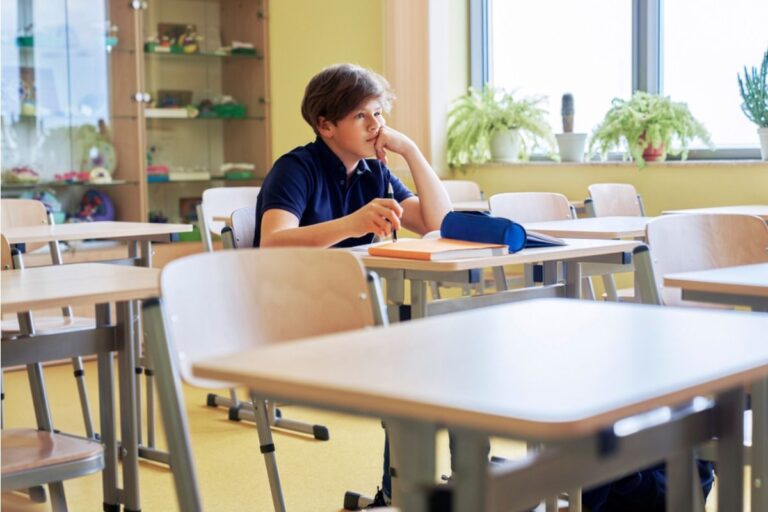
A Teacher Says a Student Behaved Completely Differently at School Than at Home, and One Parent’s Answer Left the Whole Team Stunned

A teacher shared his story about a student whose behavior had become increasingly difficult to manage in the classroom. The child would leave class without permission, struggle to tolerate frustration, and sometimes respond to ordinary situations by screaming or throwing chairs. What made the situation even more confusing was the repeated response from home that the child supposedly did not behave that way there.
At first, the teacher understood why a parent might be surprised by what the school was reporting. Children can behave differently depending on their surroundings, expectations, and the adults around them. But as the incidents continued, the teacher began to wonder whether the difference between home and school was not mysterious at all.
The Child Seemed to Have Almost No Boundaries
According to the teacher, the student appeared to have very few limits outside the classroom. There was reportedly little structure around screen time, bedtime, consequences, or expectations about behavior. At school, however, the child suddenly faced rules, schedules, transitions, assignments, and limits that could not simply be ignored.
The teacher believed that contrast mattered more than many adults realized. A child who had become accustomed to doing whatever felt comfortable might naturally struggle when placed in an environment where adults expected patience, cooperation, and self-control. The classroom was not necessarily creating the behavior, the teacher argued, but exposing it.
School Suddenly Became the Place Where Every Problem Appeared
The student reportedly spent large portions of the day trying to escape activities that felt boring or frustrating. Sometimes that meant leaving the classroom, while other moments escalated into loud outbursts or aggressive behavior. Each incident made it harder for the teacher to keep the rest of the class focused on learning.
What concerned the teacher most was that this was not happening in just one isolated moment. The behavior was becoming a pattern that affected lessons, classmates, and the adults responsible for maintaining order. Every time the child disrupted the room, the school had to stop teaching and start managing the crisis.
Then the Meetings Started
Eventually, the situation led to formal behavior meetings involving multiple adults at the school. The team discussed possible explanations, accommodations, check-ins, breaks, sensory tools, passes, and other supports that might help the student get through the school day. The teacher understood that children sometimes need significant support, but he felt something important was missing from the conversation.
The missing piece, in his view, was what happened after the child walked through the front door at home. School staff could create structure for several hours each day, but they could not control what happened during the other sixteen hours. The teacher felt the meetings were increasingly becoming a search for ways to make the school compensate for everything happening outside it.
The Teacher Felt Like Everyone Was Being Asked to Fix It
A person shared that the school team sometimes seemed to be receiving the same unspoken message: make the behavior manageable, whatever it takes. More accommodations were added, more adults were asked to monitor the child, and more strategies were discussed. Meanwhile, the teacher believed the underlying routines at home were rarely changing.
That left him increasingly frustrated because the classroom had limits of its own. Teachers had other students who needed instruction, support, and attention throughout the day. The challenge was not simply helping one child have a better afternoon, but finding a way for the entire classroom to function.
He Was Careful Not to Blame the Child
Despite the anger in his story, the teacher repeatedly emphasized that he did not believe the student was simply a bad kid. In fact, he described the child as cognitively capable and suggested that a lot of potential was hidden underneath the behavior. He believed the real tragedy was that the child had not been given the structure needed to develop better habits.
That distinction mattered to him. The child was still young enough to learn boundaries, tolerate frustration, and build new routines, but adults had to be willing to create those opportunities. From the teacher’s perspective, labeling the behavior alone would not teach the child how to behave differently.
Then He Realized This Was Happening Again and Again
What initially looked like one unusually difficult student eventually became something much bigger in the teacher’s mind. He said there were now several students in classrooms who displayed similar patterns of extreme behavior. Teachers were no longer dealing with an occasional difficult afternoon, but repeated situations that could consume entire lessons.
That realization changed the way he viewed the problem. A teacher might assume one disruptive student was an exception that could be managed with enough patience and planning. But when the same pattern starts appearing across multiple classrooms, the consequences reach far beyond one child.
Other Students Were Paying the Price Too
Every major outburst had an effect on the children sitting quietly nearby. When a student screamed, ran from the room, or threw something across the classroom, everyone’s attention shifted toward the disruption. Students who had arrived ready to learn could suddenly find themselves waiting while adults dealt with the crisis.
The teacher believed that part of the problem rarely received enough attention. The child causing the disruption needed support, but the children trying to complete their work needed a safe and predictable environment too. Balancing both needs became increasingly difficult when serious behavior happened frequently.
Parents Sometimes Questioned Why Teachers Were Reporting It
Several responses from other people showed that teachers had experienced similar conversations with parents. One person said they had become hesitant to make phone calls home because previous conversations had later been disputed. Another person explained that teachers often have no personal incentive to invent bad behavior because reporting it creates extra work for everyone involved.
That point came up repeatedly in the responses. Teachers described contacting families as something they often did reluctantly, especially when they knew the conversation could become uncomfortable. One person explained that most teachers would much rather contact a parent with positive news than spend an afternoon documenting another difficult incident.
Being Accused of Targeting a Child Added Another Layer
A person shared that after contacting a student’s mother about repeated classroom disruptions, the parent accused the teacher of targeting the child. The teacher’s response was essentially that inventing problems for a teenager would be an absurd way to spend an already exhausting workday. Another person said teachers simply do not have the time or emotional energy to manufacture conflicts with individual students.
For teachers, these accusations could make an already complicated situation even harder. Instead of discussing what the child was doing and what might help, the conversation could suddenly become an argument about whether the teacher had reported it accurately. That shift left some educators feeling as though they had to defend themselves before they could even begin helping the student.
Documentation Became a Form of Protection
Because of those experiences, some people said they now preferred written messages and detailed records when communicating with families. Emails and school messaging systems created a clear record of what had been discussed and when. For teachers, that documentation could become important when disagreements later arose about what had actually been said.
The discussion also revealed how much caution some educators now bring to family communication. What once might have been a simple phone call could instead become a carefully documented exchange. A person explained that keeping records was less about punishing parents and more about preventing misunderstandings from turning into larger disputes.
One Parent’s Fear Was Surprisingly Simple
A particularly striking response came from a person who described a parent refusing to enforce rules because the parent was worried the child would become angry. The concern was not that the rules were impossible, but that setting them might damage the relationship between parent and child. The teacher’s larger point suddenly became much easier to understand.
Children, after all, are allowed to become angry when adults set boundaries. A person responding to the discussion pointed out that they had been angry with their own parent plenty of times while growing up, and the relationship survived. The idea was simple but uncomfortable: avoiding every conflict with a child can create much larger problems later.
Another Family Learned That Lesson the Hard Way
One person shared the story of a child whose behavior had become so severe that he eventually faced repeated suspensions from school. The parent had previously admitted being unwilling to say no because she did not want her child to dislike her. By the following school year, the consequences had become far more serious than a temporary argument over rules at home.
The story was especially heartbreaking because the child was still the one living with the consequences. What may have started as an attempt to avoid upsetting him had gradually removed many of the boundaries that might have helped him learn to manage frustration. The adults around him were left dealing with a problem that had grown much larger than anyone initially expected.
Then Came the Behavior Meeting That Stunned Everyone
One person shared a story from a school where staff held a meeting about a freshman whose behavior seemed dramatically younger than his age. The student struggled to connect with classmates his own age and frequently sought out younger students instead. Eventually, an assistant principal managed to speak with the father after he had repeatedly refused to come into the school.
The school explained that the behavior was appearing in every class and was becoming impossible to sustain. Staff recommended three basic changes outside school: stricter screen limits, clearer boundaries, and counseling that was available without cost. The father asked what else he could do, but when the same recommendations were repeated, he became angry and refused to make those changes because his son might be upset.
The Conversation Ended With a Phone Click
According to the person who shared the story, the father eventually became furious while the school team was still on the call. He made it clear that he would not take away the phone, impose limits, or require counseling because he did not want his son angry with him. Then he ended the conversation.
For the people at the school, that moment captured the entire problem in a single exchange. They could spend hours designing interventions, documenting incidents, and changing classroom strategies, but they could not enforce a boundary inside someone else’s home. The responsibility was shared, and the teacher believed pretending otherwise only delayed the real solution.
The Teacher Had One Final Suggestion for Parents
After describing everything that had happened, the teacher offered parents one practical piece of advice. Instead of relying entirely on long meetings with behavior specialists, he encouraged them to spend time inside the classroom and observe their child directly. Even a brief visit, he argued, could reveal things that hours of discussion might never capture.
A parent might see a completely different child at home because home and school are fundamentally different environments. In the classroom, expectations are visible, consequences are immediate, and dozens of other children are competing for the teacher’s attention. Seeing that reality firsthand could change the entire conversation.
The Bigger Problem Was Hiding in Plain Sight
The teacher’s story ultimately became less about one difficult student and more about what happens when children, families, and schools operate under completely different expectations. A child may appear calm at home while struggling dramatically in a structured environment, and neither side automatically sees the full picture. That gap can make every meeting feel like a debate instead of a coordinated effort.
A person shared his story because he believed the behavior was a signal that adults needed to look beyond the classroom. The student still had the ability to learn, adapt, and improve, but the adults around him had to work together rather than simply passing responsibility from one place to another. Sometimes the most revealing part of a child’s behavior is not what happens during the crisis, but what happens long before the child ever walks through the school doors.